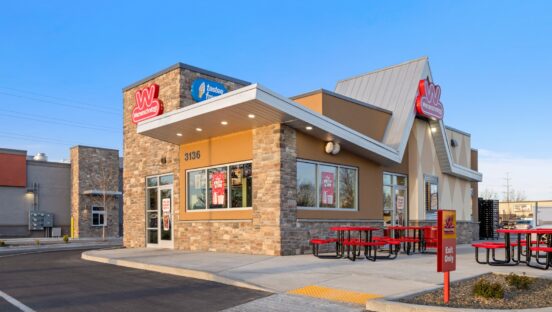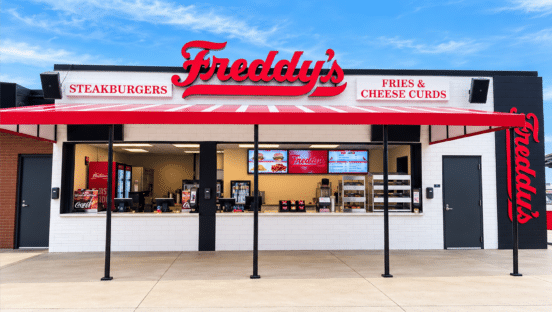
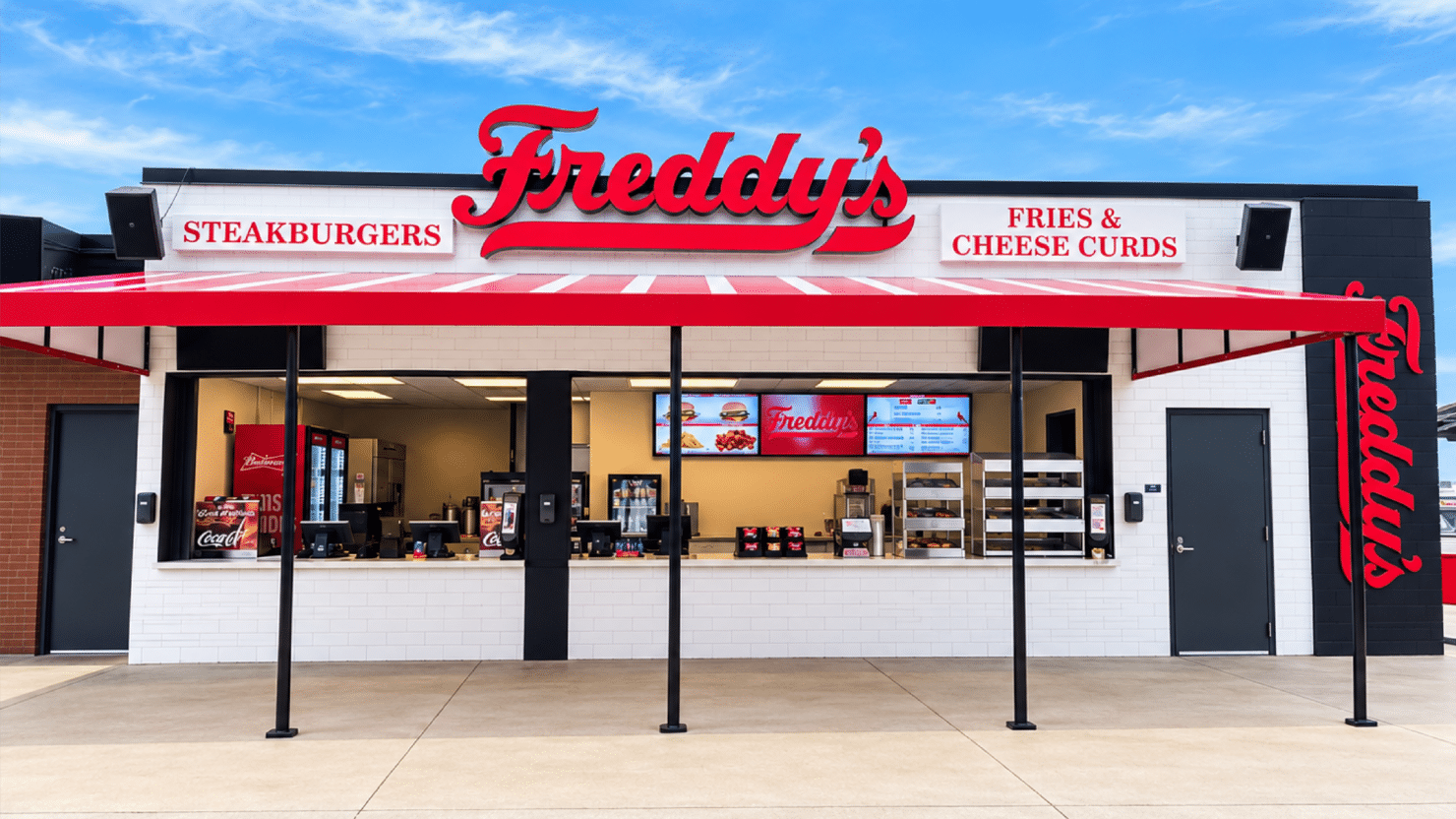
Rising real estate and construction costs are forcing restaurant brands to rethink their development strategies. For Freddy’s Frozen Custard & Steakburgers, smaller footprints and existing spaces offer franchisees a more economical path to growth.
The fast-casual brand—which recently celebrated its 600th restaurant opening—has long offered alternatives to traditional freestanding locations. In fact, its first two restaurants occupied second-generation spaces, and one operated without a drive thru.
“Real estate and construction costs have gone up significantly over what they were 10 years ago,” says Andrew Thengvall, chief development officer at Freddy’s. Higher capitalization rates have also made sale-leaseback deals less attractive.
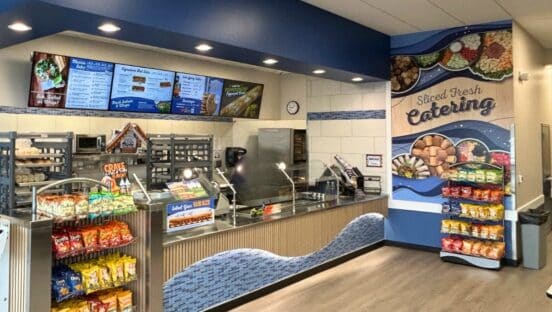
As a result, Freddy’s is placing greater emphasis on endcap, in-line, and second-generation locations that typically cost less to develop. Smaller restaurants also require fewer employees to operate, but their top-end sales can rival those of freestanding locations.
“We’re not taking a hit on the sales line,” Thengvall says. “They’re more efficient to run and cheaper to build.”
That doesn’t mean freestanding restaurants are going away. Freddy’s continues to support ground-up development when the economics make sense. Rather than favoring one format over another, the company evaluates each development option based on its potential return for franchisees.
Lower development costs also open the door to more prospective franchisees. Although multi-unit agreements have historically driven Freddy’s growth, the brand welcomes qualified single-unit operators.
Thengvall recently met with a husband-and-wife team from a small Georgia town who hope to bring Freddy’s to their community. Instead of imposing rigid development requirements, the company considers each prospective franchisee’s financial resources, experience, and market potential.
“We’ll sell one and we’ll sell 10,” he says.
Beyond traditional restaurants, Freddy’s operates in airports, stadiums, casinos, and college campuses, where menus and operating hours adapt to each environment.
At stadiums, for example, a limited menu helps concessionaires serve guests quickly during short breaks in the action. Airport locations offer something unavailable at traditional Freddy’s restaurants: breakfast, including steakburger and sausage breakfast bowls.
Thengvall identifies airports as a particularly promising growth channel, citing consistent passenger traffic and additional opportunities in the development pipeline.
Freddy’s is also open to expanding in travel centers, where it already operates a couple of locations—but with a caveat. As convenience retailers invest more in foodservice, the brand sees potential for dedicated restaurant spaces within larger facilities rather than limited-menu counters inside convenience stores.
For Thengvall, nontraditional development offers another benefit beyond restaurant sales: introducing Freddy’s to customers who might never encounter the brand otherwise.
“It’s an important piece of the puzzle because you’re exposing the brand to a group of people that may not otherwise see it,” he says.
As Freddy’s expands its development options, Thengvall says the priority isn’t any particular restaurant format. The goal is to match each franchisee with a location and development format that offers the strongest potential return.
To learn more about Freddy’s franchising opportunities, visit their website.
By Davina van Buren