
For many quick-service restaurant operators, the drive-thru is their biggest revenue channel. But a significant portion of the customer journey happens before traditional drive-thru technology even starts tracking it.
A survey of more than 2,000 quick-service leaders conducted by Envysion and TalkLPNews revealed that roughly two-thirds of restaurant revenue flows through the drive-thru, rising to 74 percent for enterprise franchisees with more than 50 locations. Yet fewer than 34 percent of those operators believe they have visibility into the pre-menu queue.
That gap matters because customers who haven’t ordered yet have little reason to stay when the line stalls.
“A customer is 10 times more likely to abandon a line before they placed their order than afterward,” said Scott Logie, head of product at Envysion, a Motorola Solutions company.
Envysion’s research found that a typical drive-thru lane loses an average of six cars each day to abandonment. At an average check of about $16.50, that adds up to roughly $100 in potential sales per day. Across a 30-location operation, the annual opportunity approaches $1 million.
The challenge is that traditional in-ground loop sensors typically begin measuring vehicles at fixed points such as the menu board and pickup window. They can tell operators how long part of the transaction took, but may miss customers waiting farther back in the queue or those who leave before ordering.
“What legacy loops actually do is help report on the apparent speed of the cars you think you served,” Logie said.
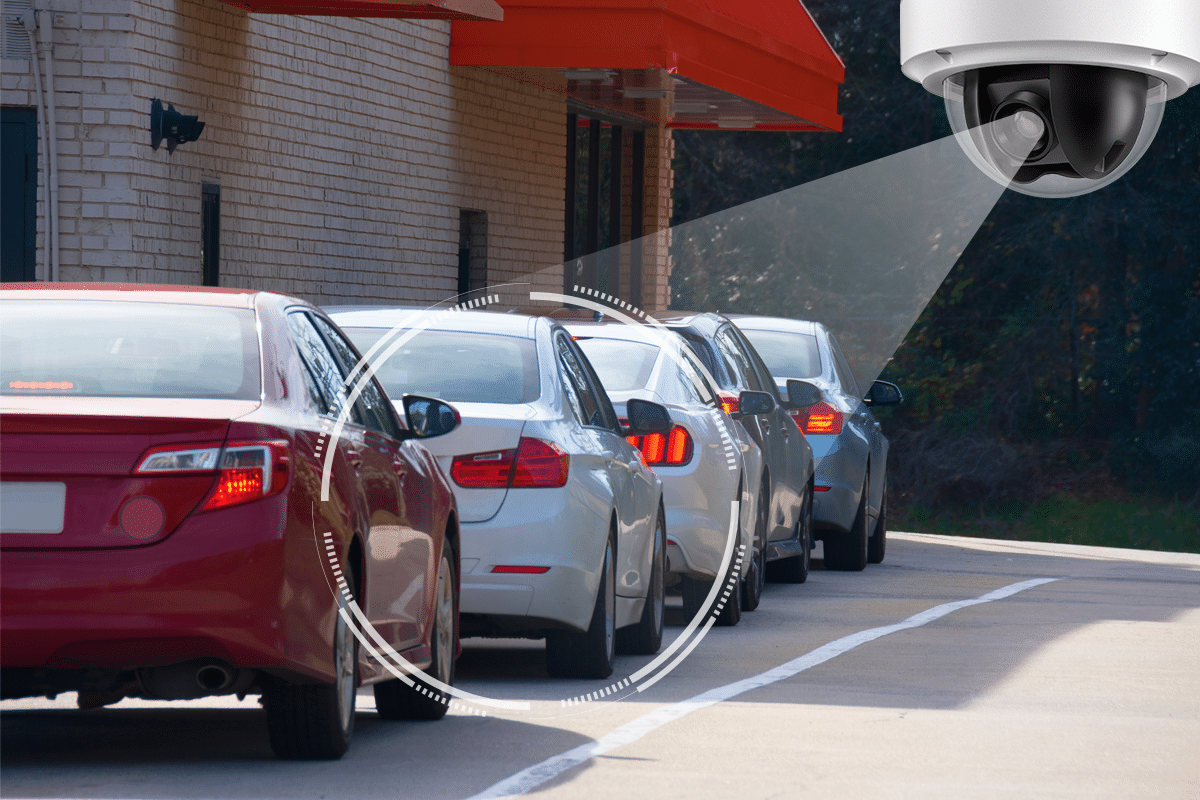
Camera-based AI offers another way to measure the drive-thru journey. By using cameras to track vehicles across the property, operators can see when queues begin building before the menu board and measure how long guests actually spend in the lane.
That information gives restaurant teams an opportunity to respond while a problem is happening. If the pre-menu queue starts growing during a lunch rush, managers can pivot in real time by sending out a handheld order taker to bust the line, shifting staff to order packing, or opening a second order point to keep vehicles moving.
The technology also connects vehicle activity with video and point-of-sale transaction data, giving managers more context when reviewing abandonments, long waits, or order accuracy problems after a rush.
For Logie, the goal isn’t to replace restaurant managers or the operating practices they already use.
“Introducing AI at the drive-thru empowers your managers,” he said. “It gives your crew better, actionable data, not more data, so they know exactly when to execute your operational playbooks.”
As drive-thru formats add multiple lanes, mobile-order pickup, and employees taking orders on tablets, visibility is increasingly important. Instead of measuring only what happens at two points in the lane, operators can see more of the customer journey and spot lost revenue before it drives away.
Ready to eliminate blind spots in your lane? Download the Accelerate 2026 Drive-Thru State of the Industry Report to see how top quick-service restaurant operators are using camera-based AI to capture lost revenue.
By Davina van Buren