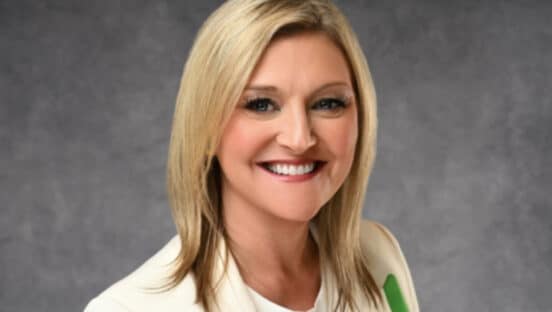
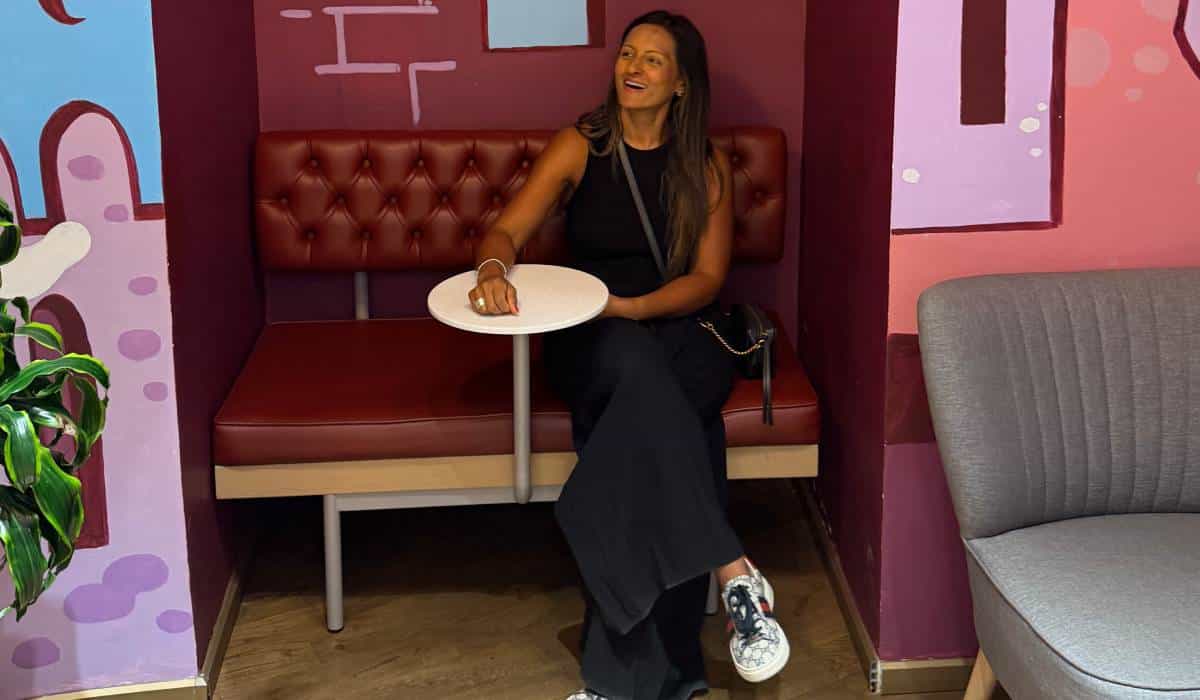
Beverley D’Cruz was walking through her neighborhood park, fresh out of a job, when a woman approached her from the opposite direction. She recognized her instantly. A year earlier, this woman had reached out after hearing D’Cruz speak at an event and asked to connect. D’Cruz meant to say yes right away, but life got in the way, and it took her a year to make the coffee chat happen—by which point the woman had been through a breast cancer diagnosis and treatment that upended her life. Now, on a park path neither of them had planned to be on, D’Cruz was the one who needed someone to talk to.
Today, D’Cruz serves as retail franchise director of Costa Coffee in the Middle East, overseeing the business across 11 countries, 500 stores, and six franchise partners. She spent nearly two decades at Yum! Brands, holding executive marketing roles for KFC and Pizza Hut across the U.K., Canada, and the Middle East before becoming the company’s first female general manager in the region.
Throughout it all, her operating belief has stayed disarmingly simple: One kind deed follows another. Leadership, to her, is less about titles and more about making time for people. What started as a missed connection and a chance meeting in a park turned into a standing biweekly coffee.

Register today to secure your spot at QSR and FSR’s Women in Restaurant Leadership Summit!
“[Leadership] is sometimes more than mentorship—it’s sponsorship,” D’Cruz says. “It’s standing up for someone, speaking up for them when an opportunity arises. It’s not so bad to sit down and have coffee with someone. One conversation is all it takes. Even if you’re not sure how or when it’ll pay off, it can help somebody.”
That belief was hard-won. Leadership, she’s learned, can be a lonely place. “Someone once described the role as very lonely,” D’Cruz says. “You can’t really ask anyone for affirmation; you have to be that for yourself.” She felt it most acutely in that first general manager posting, stepping into a male-dominated region as the only woman in the room.
“I asked myself, how am I going to have an impact? Am I going to be heard?” D’Cruz says. “The world has been designed where if I’m tough, I’m making an impact. If I’m not tough, I’m not getting results. I made it my mission to show that I could get results by still being kind, being brave, and being awesome.”
D’Cruz calls the philosophy behind that mission smart, heart, and courage—three pillars she sees as inseparable. Her smarts mean nothing without the heart of a leader, she says, which is what makes people want to follow her in the first place. And courage is what keeps that kindness from curdling into avoidance.
“At the beginning of your career, smart matters a lot because it’s how you go up the ladder,” D’Cruz says. “But as you start leading people, your heart enters the equation, because we all want to work for empathetic leaders who listen and drive results. And then you must care so deeply about others that you have the courage to make tough decisions and have tough conversations.”
That kind of courage was tested hardest not in a boardroom, but in the same loss that sent D’Cruz into that park in the first place. Losing her title forced a question she hadn’t had to answer before: who was she without it?
“There is you, and there is your title,” D’Cruz says. “Over time, we give so much of ourselves to our jobs that we interchange the two in our minds—so much so that when one gets taken away, the other doesn’t know who they are or what they stand for.”
That question, though, had already been forming for years, long before she lost the title altogether. Looking back at her own career, D’Cruz has come to see title less as the measure of growth and more as a ceiling.
“When you hit a ceiling, everybody’s titles become similar. I’m going to be CEO of this company or that one, but where next? What am I going to learn?” She says. “Well, I’m going to learn about a different geography, a different culture, a different consumer. That’s what excites me now.”
That shift is why she’s since learned to ask people not what they do, but who they are. It’s also, in hindsight, the question underneath that meeting in the park. Neither woman showed up for the other because of a title. They showed up because of who they’d always been—two people who’d decided to be there for each other and kept choosing it.
“I feel that I succeeded in my career because I wasn’t put into a box,” D’Cruz says. “When you ask people what their title is, you’ve boxed them into a role—and your expectations follow from that. What if we were to ask people what excites them instead? What keeps them up at night? They might blow your mind with what that question unlocks.”