For independent restaurant operators, getting the right ingredients at the right price can be difficult enough. Getting them at the right time presents another challenge.
A restaurant might receive its weekly delivery only to discover that an ingredient is missing. A chef might underestimate demand for a particular dish or suddenly need additional supplies to accommodate an unexpected rush. In those situations, the operator has to find another source, sometimes making an emergency trip to a wholesale store.
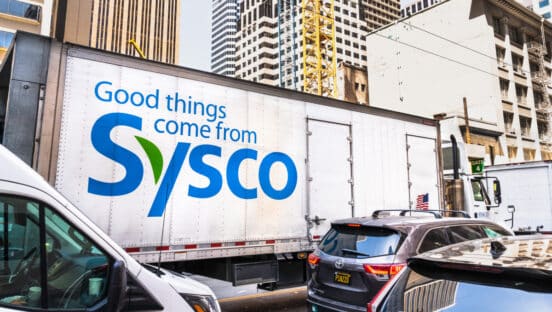
Sysco believes its planned $29.1 billion acquisition of Jetro Restaurant Depot could make those situations easier to manage while fundamentally changing how the company serves smaller restaurants.
Announced in March, the transaction would combine the country’s largest foodservice distributor with a leading cash-and-carry wholesaler, creating a business that can serve restaurants through traditional deliveries and physical warehouse stores.
During a September gathering with media in Charleston, South Carolina, Sysco representatives discussed how the combination could benefit independent operators, expand the company’s distribution capabilities, and introduce Restaurant Depot to communities it previously could not reach.
One of the clearest examples came from Charleston itself.
Restaurant Depot operates a warehouse approximately 15 minutes from the city’s downtown hospitality district. Sysco’s distribution facility in Columbia, South Carolina, is roughly 90 minutes away.
That difference could become particularly important when a restaurant needs an ingredient immediately.
Brenna Garrett, Sysco’s chief commercial officer, explains that the acquisition could give customers more flexibility when sourcing products, particularly when their needs fall outside a typical delivery schedule.
“Using Restaurant Depot’s inventory to help do fill-ins is one of the better to have pieces,” Garrett says.
Matt Jacobson, region president of Sysco Carolinas, points to the example of a Charleston hotel chef who occasionally needs to purchase products outside his regular deliveries. Today, that chef might choose among several wholesalers based on location, quality, or availability.
“Our hope is, from a broad mind president perspective, is that we can integrate those in a way that makes it a lot easier for [a chef] to do his job,” Jacobson says. “So it makes us a more valuable partner for him in the future.”
Two Different Models, One Customer Base
The deal represents a significant expansion of Sysco’s business model.
Sysco traditionally supplies restaurants, hotels, healthcare facilities, and other foodservice customers through a network of distribution centers and delivery trucks. Restaurant Depot, meanwhile, operates large warehouse stores where independent operators can purchase products directly, often on the same day they need them.
Those differences are central to the acquisition’s appeal.
Restaurant Depot serves more than 700,000 customers and operates 168 stores across 35 states, according to Sysco. The business generated approximately $16 billion in revenue in 2025.
Sysco, meanwhile, operates hundreds of distribution facilities and serves customers ranging from single-unit restaurants to major national chains.
The companies believe combining their operations will expand their reach without fundamentally changing the way either business works.
Restaurant Depot is expected to remain a standalone segment, with its existing leadership team continuing to oversee operations.
Importantly for independent operators, Sysco has committed to preserving Restaurant Depot’s low-price model.
The company explicitly stated that it would not raise prices at Restaurant Depot or change its existing operating model.
Instead, Sysco expects to generate savings primarily through purchasing efficiencies and improvements to its supply chain.
The company has projected approximately $250 million in annualized cost savings within three years of closing the transaction.
Beyond pricing, Sysco expects to expand product selection across both businesses, giving Restaurant Depot customers access to additional specialty items and Sysco customers more affordable alternatives.
“What Restaurant Depot does so well is value,” Garrett says. “They have an assortment with great prices.”
Garrett also sees an opportunity for the two companies to learn from each other’s product selections.
“We have a lot to learn from their assortment as well,” she says.
A New Avenue for Growth
Beyond the immediate benefits to existing customers, the acquisition could substantially expand Restaurant Depot’s national footprint.
Sysco has identified an opportunity to open at least 125 additional Restaurant Depot warehouses over the next two decades.
That would represent a major increase from the company’s current network, extending the cash-and-carry model into communities where opening a warehouse previously may not have made financial sense.
One of the biggest obstacles for Restaurant Depot has been the infrastructure required to supply new locations.
Sysco already has distribution centers, transportation networks, supplier relationships, and established operations across the country. Those resources could make additional warehouse locations viable.
Garrett says the two companies have complementary information that could help guide expansion.
Sysco has extensive data about where restaurants operate, which markets it currently serves, and where there are concentrations of potential customers outside its existing network.
Restaurant Depot, meanwhile, has its own experience evaluating locations and determining where demand could support a new warehouse.
“We know that there’s very little crossover of all the data we have of our customer base, we know where demographics have significant amounts of restaurants that we don’t service right now,” Garrett says.
The opportunity is particularly interesting in markets where Sysco already has a distribution presence but Restaurant Depot does not.
Expansion would also create opportunities for food producers to reach new markets through Restaurant Depot’s growing warehouse network.
“We win when our suppliers win, and this is a growth model,” Garrett says. “We need to make sure that we’re providing that assortment and the ability for that supplier to also grow with us.”
Solving Problems Before They Reach the Kitchen
While Restaurant Depot would give Sysco another way to fulfill orders, the company is also investing in technology intended to prevent product shortages in the first place.
Demand forecasting is a particularly complicated challenge in foodservice.
Restaurants experience fluctuations tied to weather, holidays, sporting events, tourism, and local festivals. A product that sells consistently during one week might suddenly experience a spike in demand the next.
Those changes can be difficult for distributors to anticipate, especially when they affect thousands of restaurants simultaneously.
Sysco is working to incorporate AI into its forecasting systems, using historical purchasing patterns alongside outside information to predict what customers will need.
Garrett explains that improving inventory accuracy begins with making sure products are available before orders are picked and loaded onto delivery trucks.
The company can analyze customer types, cuisine preferences, local events, and weather conditions to anticipate changes in demand.
That information could become valuable as Sysco integrates Restaurant Depot’s warehouse network into its operations.
For restaurant operators, better forecasting could mean fewer missing products, more accurate deliveries, and less disruption in the kitchen.
Jacobson says Sysco already collects regular feedback from restaurant customers through its sales consultants and regional leadership teams.
Those conversations influence purchasing decisions and inventory planning.
For example, if a restaurant begins ordering more of a particular chicken product, Sysco’s teams can adjust purchasing forecasts to accommodate the increased demand.
The company also has a process for escalating customer complaints, with regional leadership reviewing problems and determining how to address them. Jacobson says those operational improvements ultimately affect a restaurant’s ability to control expenses.
The Cost Equation
The acquisition arrives as restaurants continue navigating higher operating expenses.
During the Charleston presentation, the South Carolina Restaurant and Lodging Association highlighted how costs have changed since the pandemic.
According to the association’s figures, average restaurant operating expenses have increased approximately 36 percent, employee wages have climbed 41 percent, and wholesale food prices have risen roughly 35 percent.
Those pressures make purchasing decisions especially important for independent operators, which typically have less negotiating power than large restaurant chains.
Sysco believes its broader product assortment could help operators find alternatives that fit their budgets without sacrificing the quality or consistency of their menus.
Garrett also emphasizes the importance of products that reduce labor requirements in restaurant kitchens.
“Pre-made desserts or anything that takes labor out of the kitchen is going to take dollars off the restaurant, and that can obviously save him,” she says.
Transportation is another consideration.
Higher fuel expenses and delivery costs can affect both distributors and restaurant customers.
Sysco is working to improve truck routing and reduce unnecessary mileage while maintaining service levels.
Jacobson says the company is also exploring how to serve customers more efficiently, even when that requires adjustments to its traditional distribution approach.
“There are short-term sacrifices that might have to be made in the P&L to be able to get us there, but at the end of the day, we’re responsible for growth, and the way to grow is to be able to serve our customers in a way that they want to be served, and we just got to make sure that we’re doing that consistently,” he says.
The combined business could also eventually use the warehouse network to improve how inventory moves between locations.
Still, Garrett cautions against viewing the acquisition as a direct response to recent transportation costs.
“I mean, from my perspective, the Restaurant Depot [deal] happened well before the freight and all the fuel went up,” she says.
What Comes Next
The transaction remains subject to regulatory approval.
During the September meeting, Garrett says the acquisition was undergoing Federal Trade Commission review, with Sysco continuing to anticipate a closing during the third quarter of its fiscal 2027, which falls in early 2027.
The purchase agreement calls for Restaurant Depot shareholders to receive $21.6 billion in cash proceeds and 91.5 million Sysco shares.
The combined company would generate nearly $100 billion in annual revenue based on 2025 results, according to the companies’ announcement.
Sysco expects the transaction to increase its revenue by approximately 20 percent and provide opportunities for further growth through additional Restaurant Depot locations.
For Sysco, the acquisition represents an opportunity to expand beyond its traditional distribution model and reach independent restaurants that may not need or want regular deliveries.
The challenge will be bringing together two distinct businesses without disrupting the services and pricing that made each successful.
And while Sysco expects significant financial benefits from the transaction, Garrett emphasizes that its value to restaurant operators will ultimately depend on execution.
“Being in stock in full is critically important,” she says. “Restaurant Depot can help us with that.”