Jersey Mike’s has a clear destination for its restaurants. The sandwich giant wants average unit volumes to climb from roughly $1.4 million to $2 million.
Its path there is starting with transactions.
Same-store sales rose 2.3 percent in the second quarter, accelerating from 1.7 percent in Q1. The increase was driven primarily by transactions, and momentum carried into the third quarter, with comps tracking above 3 percent at the time of Jersey Mike’s inaugural earnings call on Wednesday.
The company expects same-store sales growth of 2.5 to 3 percent for the full year, including 3 to 4 percent in the third quarter. Pricing is expected to contribute 1 percentage point or less during the second half.
Jersey Mike’s made a deliberate decision in late 2025 to rely less on price and put more energy into traffic.
“We made a conscious decision last year in the fourth quarter to reduce the amount of price we took as a brand and focus our efforts on growing transactions for the long term, which we believe is a much healthier way to grow the business,” CEO Charles Morrison said during the brand’s Q2 earnings call.
READ MORE:
Making the Case for Why Jersey Mike’s is Just Getting Started
Jersey Mike’s Raises $1 Billion, but Shares Fall in Public Debut
Jersey Mike’s Reported Another Year of Growth in 2025
That pursuit is changing how Jersey Mike’s markets itself. Despite brand awareness of roughly 90 percent, the chain sees room to attract customers who know its name but visit infrequently, particularly Gen Z and Hispanic consumers.
Digital marketing accounted for less than 1 percent of spending before climbing above 20 percent in the first half of 2026. Loyalty registrations increased 22 percent year-over-year, and ad awareness among Hispanic guests rose 6 percent.
Morrison said Jersey Mike’s had done little call-to-action digital advertising before 2026. The shift gives the chain another tool to convert recognition into visits and eventually move customers into its loyalty ecosystem.
The opportunity is substantial. Jersey Mike’s has an estimated 12 million to 13 million loyalty users, including roughly 7 million active members. Those active customers visit approximately once per month. Morrison believes the database can eventually reach 30 million to 50 million users.
Digital sales also increased roughly 200 basis points during Q2 and accounted for 43 percent of sales. Jersey Mike’s sees that figure eventually reaching 60 to 70 percent.
Delivery represents just under 20 percent of total sales, but first-party delivery accounts for only roughly 3 percent. The company sees first-party delivery eventually reaching 10 percent of sales as more guests order through Jersey Mike’s own digital channels.
“We’ve seen that segment grow this year, but it’s from a very low base. But we do know that our marketing efforts are working to drive more customers to that channel and present them with a better value proposition, notably our loyalty program,” Morrison said.
The digital push is arriving alongside a more active product calendar, although Jersey Mike’s plans to keep limited-time offers to two or three per year.
Chicken salad brought new guests into restaurants and helped drive second-quarter sales acceleration. Mike’s Hot Italian, which first appeared earlier in 2026, returned with a regular sub priced at $8.95. Its food cost is below 20 percent of sales compared with an average food cost near 27 percent across the brand.
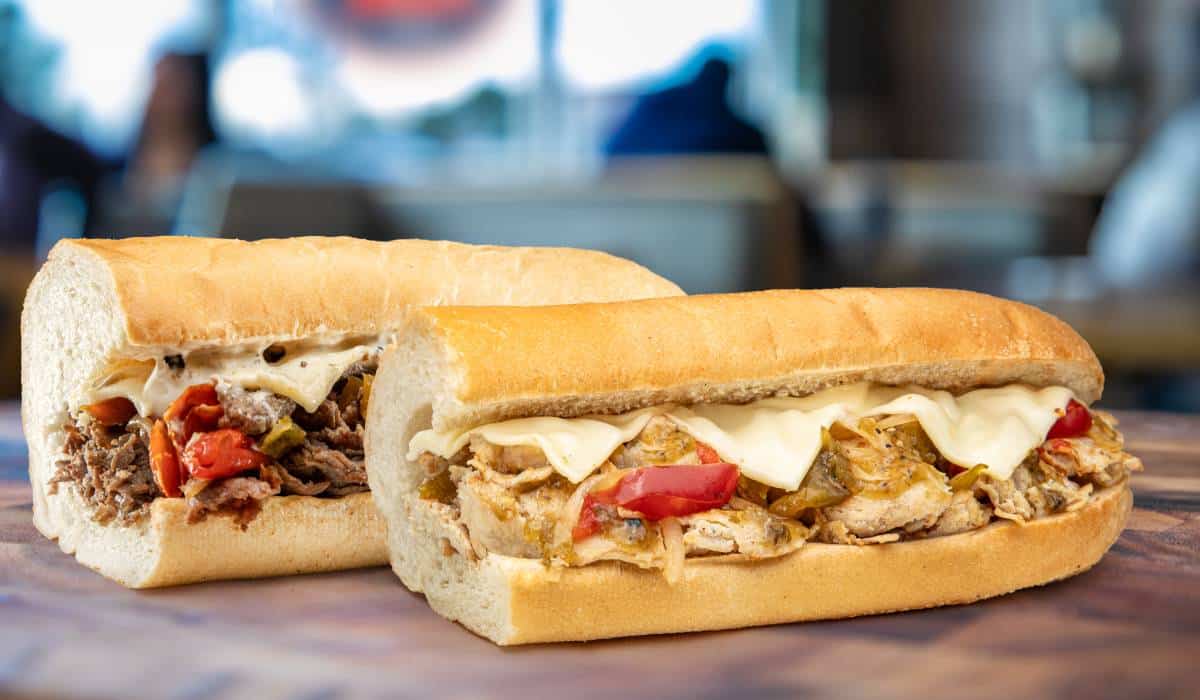
The company sees its flat grill as another source of menu opportunities. Hot subs and cheesesteaks can reach different occasions and younger customers without forcing restaurants to add an extensive list of new ingredients.
The sales opportunity is not confined to menu launches or digital ordering.
Catering represents roughly 3 percent of sales today, but Jersey Mike’s believes it can reach 10 percent in certain restaurants, particularly those surrounded by large daytime populations. Higher-volume locations already tend to produce a greater share of sales through catering.
Dayparts offer another opening. Lunch accounts for roughly half of sales, afternoon snack contributes 20 percent, and dinner represents 30 percent. Mike’s Hot Italian has shown an ability to push business toward dinner, and Jersey Mike’s is considering tests that could extend operating hours in select markets. Stores currently close at 9 p.m. nationwide.
Those initiatives feed into the $2 million AUV target. Importantly, Jersey Mike’s already has restaurants producing sales at or above that level. Morrison said there is no obvious real estate or demographic trait separating those locations from the rest of the system. Local franchisee execution, community engagement, and catering have proven more meaningful.
The payoff for franchisees could be significant. Current cash-on-cash returns exceed 40 percent, and Jersey Mike’s believes higher sales can push that figure further given the relatively low construction costs of its inline restaurants.
The chain is also expanding at a high-single-digit pace.
Jersey Mike’s opened 83 restaurants during Q2 and 130 in the first half, finishing the quarter with 3,378 locations and 8 percent net unit growth. New restaurants opened in 2026 are producing higher AUVs than the 2025 class did at the same point last year.
The domestic pipeline includes roughly 1,600 restaurants spanning approximately five years of development. More than 1,400 are signed and committed, with another 200 in final negotiations. Jersey Mike’s believes it can eventually operate more than 7,500 U.S. restaurants and 15,000 globally.
International development is beginning to contribute as well. The company has 600 stores committed outside the U.S. and finished Q2 with 30 locations in Canada. Jersey Mike’s is preparing to debut in the U.K. by year-end, with founder Peter Cancro overseeing the effort. A flagship location has been secured on New Oxford Street in London.
The U.K. restaurants will retain many of Jersey Mike’s signature elements, including the 14-foot service line, meats sliced in front of guests and a flat grill behind the counter. The menu will largely resemble its U.S. counterpart, supplemented by products such as salted beef that could connect with local tastes.
The growth comes after Jersey Mike’s completed its IPO following the end of Q2. The company sold 43.5 million shares of Class A common stock and raised approximately $300 million in primary proceeds, which went toward debt repayment.
For the second quarter, systemwide sales increased 10 percent to approximately $1.21 billion. Revenue climbed 10 percent to $208 million, and adjusted EBITDA increased 7 percent to $114 million. Jersey Mike’s expects adjusted EBITDA to grow at least 20 percent for the full year.
“That’s an unwavering commitment to making great subs every time,” Morrison said. “That means never compromising on fresh ingredients. It means slicing our meats and cheese fresh and making that authentic sub sandwich right in front of our customers.”