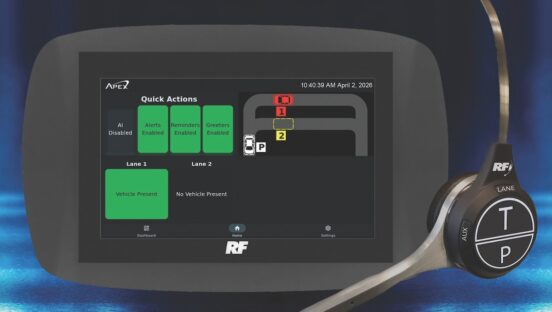



Drive thrus can make or break quick-service restaurants, with up to 75 percent of revenue in US fast-food restaurants now coming from them, according to the National Restaurant Association. Average drive-thru service times are decreasing year over year, heightening competition across the industry. As speed of service becomes a key measure of success—and technology drives major gains in efficiency—operators must focus on how tech can help keep drive-thru times consistent while also revealing hidden bottlenecks. Simply put, outdated technology in the drive thru is no longer an option.
“Many operators still rely on in-ground sensors that provide binary yes/no data—there’s a car or there isn’t,” says Kyle Vanderlinden, senior product manager at Envysion. The unknowns with these technologies can be challenging for employees and operators alike, especially during peak hours when there could be 10, 20, or even 30 cars in the drive thru. “That doesn’t reliably capture dwell times, abandonments, or total journey time. Those are critical blind spots in today’s operations.”
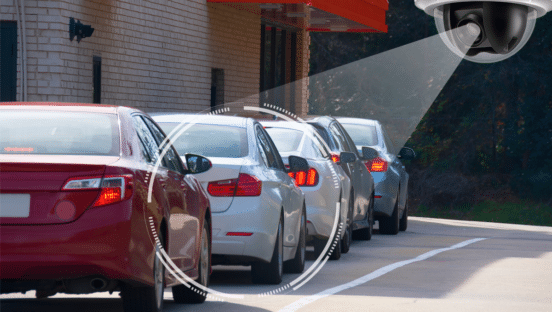
In a data- and tech-driven industry, understanding what information is available is key; it comes down to finding the right solution. “Current systems only give a couple of data points, often inaccurate,” Vanderlinden says. “Cameras give you the full picture so operators can make both real-time and future planning decisions.” Envysion’s AI-driven insights use a restaurant’s existing cameras to provide visibility into bottlenecks. With AI, operators don’t need to guess what is going right and what issues need addressing.
“Many solutions focus only on speed—like tracking average service time per car—while ignoring visibility gaps or predictive analytics,” Vanderlinden says. “We’re different because we use AI on camera feeds to provide comprehensive metrics that actually drive fixes, not just alerts.” This is all accomplished without the need for extra investments on the part of operators, which is key when looking for solutions that put operators and restaurants first.
Where AI fits into today’s restaurant landscape is a discussion few can afford to ignore. But good AI tools can still be challenging to find. “Patterns like abandonments, weather impacts, or lane usage inefficiencies come to light,” Vanderlinden says. “That visibility is the foundation. Once operators can see the patterns, they can align staffing to demand—sending people home early during slow periods and ensuring all hands are ready for a rush. The result: less wasted labor, fewer frustrations, and stronger team morale.”
It is also vital to consider how solutions can scale and grow, especially in the quick-service world, where multiple locations are the backbone of the industry. “Camera systems are plug-and-play compared to sensors,” Vanderlinden says. “No digging up pavement—just mount and connect. That cuts costs, scales easily, and with cloud-based updates, we can improve performance without replacing hardware.”
Operators can no longer afford blind spots or outdated tools. Speed alone isn’t enough; visibility, accuracy, and adaptability define the next era of quick-service restaurant success. By turning existing cameras into powerful data engines, Envysion shows how AI can transform everyday video into actionable insights—helping restaurants cut inefficiencies, enhance customer experience, and protect the bottom line. In an industry where seconds translate into sales, the winners will be those who embrace technology not just to keep up, but to stay ahead.
For more information, visit connect.envysion.com/rev-up-your-drive-thru.
By Ya’el McLoud