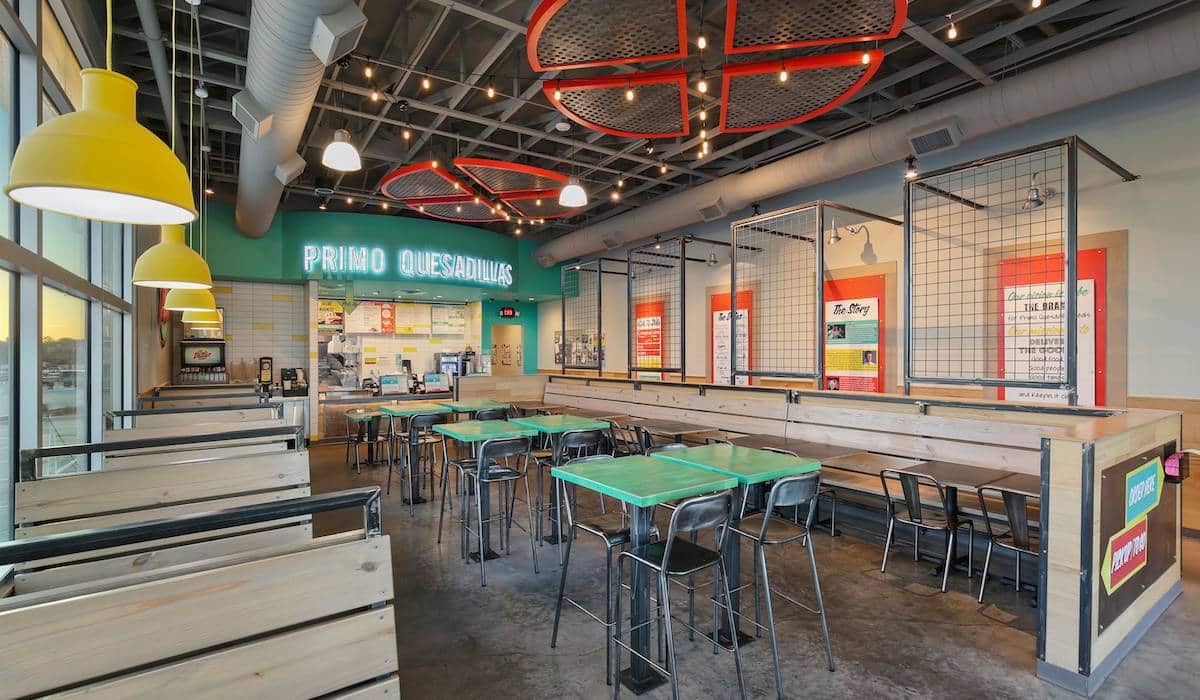
A line of 20 to 30 cars should have been a welcome sight for Dillas Quesadillas founder Kyle Gordon. Instead, it became a warning that his growing chain had a serious problem.
Gordon was standing outside one of Dillas’ newest restaurants in the Dallas-Fort Worth area, watching customers arrive during what initially seemed like a promising opening day. The drive-thru line kept growing, but the first car wasn’t moving. When he walked inside to investigate, he discovered an operation struggling to keep up with demand.
Employees were overwhelmed, preparation tasks were unfinished, and the shift leader looked terrified. This wasn’t an inexperienced team, either. Several employees had spent eight to 10 weeks training at established Dillas restaurants because construction and signage delays had pushed back the opening.
The restaurant eventually recorded approximately $15,000 in sales that day and between $70,000 and $75,000 during its opening week. Those numbers should have been cause for celebration. Gordon saw something else.
Dillas had ambitions of becoming a chain capable of producing $3 million to $4 million in average unit volumes. If a restaurant couldn’t handle the demand it was already attracting, expanding the concept would only multiply its problems.
“My goal at Dillas, our goal, is to do this every single day,” Gordon says.
The experience became a turning point for the Texas-based quesadilla chain. The brand didn’t accelerate expansion. Gordon made the difficult decision to pause development and rebuild the business from the inside out.
The effort, internally known as Dillas 2.0, would eventually touch nearly every part of the operation, including menu complexity, food preparation, labor deployment, technology, and the brand’s identity.
The results have been significant. Dillas has reduced drive-thru service times, improved labor efficiency, stabilized food costs, and returned to positive same-store sales and traffic growth. With 11 restaurants in its system, the company is preparing to resume expansion with a more disciplined strategy and a renewed focus on franchise development.
Gordon says the original opening exposed weaknesses that had been manageable when Dillas was smaller but would become difficult to overcome as the brand grew.
The restaurant’s employees were dealing with complicated preparation procedures, inconsistent production forecasts, and a menu that required customers to navigate numerous combinations. Even with a relatively focused product category, the operation had become unnecessarily difficult to execute.
At the time, Dillas offered 10 quesadillas and five side options through a customizable combo system. Customers had to select their quesadilla, decide whether to add a combo, and then choose among the available sides. The variety created opportunities for order inaccuracies and extended the time employees needed to become proficient.
The company also relied on experienced employees to estimate how much food needed to be prepared each day. Those estimates weren’t always sufficient during periods of unusually strong demand.
Gordon recognized that the system had reached its practical limits.
“We basically decided we’re going to keep that quality, but we’re going to lean 100 percent into QSR plus, which is great quality, but you can you can lean on us for convenience, and you can trust us for a level of speed that you just can’t get at a fast casual,” he says.
That decision represented a significant change in how Dillas viewed itself. The chain had previously operated with many of the characteristics of a fast-casual restaurant that happened to have a drive-thru. Gordon wanted convenience and consistency to become defining features of the customer experience.
Achieving that required rethinking the operation, even if it meant delaying growth.
Gordon acknowledges the decision was difficult, particularly given the expectations that accompany an expanding restaurant business. Dillas had operated successfully for approximately a decade under its existing model, and there was no guarantee that an extensive overhaul would produce the desired results.
The company could have continued operating restaurants with approximately $2 million in average unit volumes. Gordon believed that accepting those economics would limit the brand’s potential.
“If we were just going to be happy with $2 million AUVs, great, they would have been fine, right? But when you have an eye to the future, and when you’re like, well, we want to do $3 million AUVs, what what has to change?” he says.
Gordon ultimately decided the company needed to prioritize its long-term potential over near-term expansion. He accepted responsibility for the financial risks and committed to maintaining payroll during the transition.
The overhaul also created an opportunity to engage employees in improving the business. As Dillas evaluated new suppliers and implemented operational changes, team members became involved in building a system that would make their jobs easier.
One of the earliest priorities was simplifying chicken preparation.
Dillas uses fresh chicken, but its previous process required employees to manually cut large chicken breasts before marinating and grilling them. The breasts could weigh approximately 14 ounces, making additional preparation necessary to meet cooking specifications and food safety requirements.
During the troubled restaurant opening, Gordon witnessed a 17-year-old employee struggling to slice raw chicken at 11:30 a.m., long after preparation should have been completed.
The process was labor-intensive, created bottlenecks, and diverted employees from serving customers during the busiest part of the day.
Dillas began working with suppliers to eliminate that step from the restaurant kitchen.
“We got to find a vendor. I don’t care what it costs. If we have to charge more for this, we have to find somebody who’s gonna be able to do this little piece of the you know process for us,” Gordon says.
Menu simplification became another major initiative.
Dillas reduced its primary quesadilla lineup from 10 offerings to five, eliminating much of the complexity associated with training, preparation, and order assembly.
The decision wasn’t easy for Gordon, who had developed an attachment to the original menu. Removing several quesadillas meant saying goodbye to products that had been part of the brand’s identity.
But the smaller lineup allowed employees to become more knowledgeable and confident when explaining menu items to customers. It also made the ordering process easier to navigate.
Dillas preserved some discontinued offerings as off-menu options for loyal customers. The Bluebonnet, a vegetarian quesadilla, can still be ordered by customers who request it, even though it no longer occupies space on the main menu.
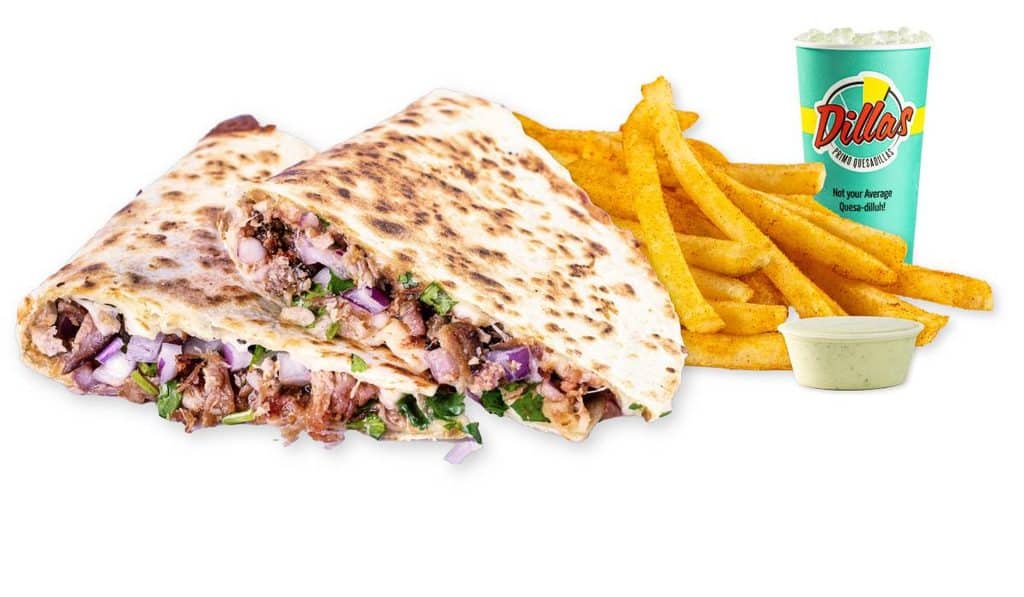
The company also simplified its meal structure. Instead of requiring customers to choose among several side combinations, meals now include fries and a drink.
That adjustment has improved kitchen predictability. Employees can anticipate demand for fries more accurately, allowing them to prepare the product consistently and serve it hot.
The operational changes extended into technology.
Previously, Dillas relied on a preparation board where shift leaders manually estimated daily ingredient requirements. Those decisions depended substantially on experience and familiarity with individual restaurants.
Gordon wanted a system that could use actual business data to determine preparation needs, reducing the guesswork associated with inventory and production.
Dillas partnered with PreciTaste, an AI technology provider, to implement forecasting tools that analyze approximately 100 data points and integrate with the chain’s Toast point-of-sale system.
The platform provides employees with daily preparation guidance through a tablet, identifying the quantities of ingredients needed based on projected sales.
That information helps restaurants avoid preparing excessive inventory or running short during busy periods. It also allows employees to complete preparation tasks earlier and move into service positions before lunch demand arrives.
The improvements have changed how restaurants deploy labor. Employees who previously spent extended periods preparing ingredients can now assist with drive-thru operations, food production, dining room cleanliness, and other tasks.
Gordon says the changes initially helped Dillas reduce labor costs by one to two percentage points across the brand. Further improvements have allowed individual restaurants to achieve reductions of two to three points in 2026.
The operational efficiencies have also made scheduling decisions easier for restaurant operators, who can adjust staffing with greater confidence because daily production needs are more predictable.
The most meaningful improvement for Gordon, however, has been drive-thru speed.
Dillas previously averaged approximately four minutes and 30 seconds across its drive-thru operations. Following the changes, many restaurants now average between four minutes and 10 seconds and four minutes and 15 seconds over an entire week.
Some locations have achieved reductions of approximately 30 seconds, although the company has more consistently recorded improvements of 11 to 15 seconds across the system.
Those averages include different dayparts, weekdays, and weekends. During peak periods, Gordon says many transactions are completed in approximately two to three minutes.
“To me, if you have a drive-thru, you’re signaling speed,” Gordon says.
The improvements are contributing to stronger sales performance.
Dillas’ same-store sales are up more than 2 percent in 2026, and traffic has increased approximately 3 to 4 percent at certain restaurants. Gordon attributes part of that performance to improved throughput, which allows restaurants to serve more customers and deliver a more dependable experience.
He estimates that a seven-second improvement in service time can contribute approximately 1 percent to long-term same-store sales growth, making the chain’s recent gains meaningful.
The efficiencies have also improved the working environment. With fewer preparation bottlenecks and a simpler menu, employees are less likely to encounter the chaotic situations that once complicated busy shifts.
Gordon believes that greater predictability creates a positive cycle. Employees become more confident, service improves, customers receive a better experience, and restaurants are positioned to handle additional demand.
Food costs have benefited from the operational changes, although Gordon says the impact is more accurately described as improved consistency than a dramatic reduction in expenses.
Commodity fluctuations continue to influence the cost of ingredients such as chicken and steak. But Dillas now has greater control over waste, production quantities, and inventory usage.
The company has been able to maintain more predictable cost-of-goods performance, generally ranging between 28.5 and 29.5 percent, including paper costs.
That stability makes financial planning easier and allows the company to evaluate additional opportunities through vendor negotiations, purchasing contracts, and menu pricing.
“Predictability [for food costs] in the restaurant business is, I wouldn’t say more important than it being low or reducing, but it it gives your accounting department the peace of mind of like, OK, if you can deliver me between a 28.5 and a 29.5 [percent] COGs with paper, I feel really good about how I can forecast cash flow,” Gordon says.
With those operational improvements taking hold, Dillas is turning its attention back to development.
An important part of that effort involves Michael Mabry, who joined the company in 2025 and was recently promoted to chief operating officer.
Mabry had known Gordon and his wife, Maggie, for years through the Dallas-Fort Worth restaurant community. He initially joined Dillas to oversee development and franchise expansion, helping establish the infrastructure needed to attract new franchise partners.
His responsibilities included supporting the company’s development strategy and bringing on a public relations partner to increase awareness of the brand.
As Dillas began seeing the results of its operational overhaul, Gordon and Maggie, who serve as CEO and president, respectively, recognized the need for an experienced restaurant operator to help guide expansion.
The couple had overseen the business together for approximately 13 years. Adding Mabry to the senior team introduced another perspective and established clearer responsibilities across operations, marketing, purchasing, development, and franchising. Gordon characterizes the promotion as a sign of the company’s maturity and its preparation for a larger restaurant system.
The company is now evaluating new development opportunities in Dallas-Fort Worth and other markets, with franchising expected to play an important role.
Dillas has approximately six additional restaurants under consideration through potential partnership agreements in the Dallas-Fort Worth area. An existing franchisee also has two additional deals in the pipeline.
Those opportunities could bring the system close to 20 restaurants in the relatively near future.
The company has also discussed a goal of reaching 50 locations by 2028, although Gordon is careful not to push that figure as a firm opening commitment.
He acknowledges that Dillas could have approximately 50 restaurants in its development pipeline by that period without necessarily opening every location on the original schedule.
The experience of the past two years has changed how he evaluates growth. Restaurant count is no longer the primary measure of progress. The financial performance of individual locations and the quality of franchise partners carry greater importance.
“It has nothing to do with unit count and everything to do with unit economics,” Gordon says.
The distinction is especially important as Dillas seeks to expand through franchising.
Gordon wants to work with operators capable of developing multiple successful restaurants, creating a system where existing franchisees can support continued expansion through their own growth.
He sees greater value in establishing a smaller group of financially successful franchise partners than signing numerous agreements simply to reach an aggressive restaurant-count target.
That strategy could push the 50-unit milestone back by a year or two. Gordon believes the trade-off would position Dillas to accelerate development later, potentially creating a more sustainable path toward 150 restaurants.
The company is also preparing for what Gordon hopes will be a productive 2027, supported by a simpler operating model, improved financial consistency, and a growing development pipeline.
After spending nearly two years addressing the weaknesses exposed during that difficult restaurant opening, Gordon believes Dillas is better equipped to handle the demand it hopes to attract.
The goal is no longer simply to open more restaurants. It’s to establish a business capable of delivering the same experience, operational performance, and profitability as the system grows.
“I would rather have a really successful group of 10 franchisees that are helping grow throughout the Southeast, instead of signing up to hit our number 45 franchisees,” Gordon says. “I’m not going to do that. Right. That’s not the goal. To be able to achieve that goal, it’s going to be about quality over quantity.”