Urban Plates has figured out how to make a complicated restaurant business look surprisingly simple.
Behind the scenes, the California fast casual prepares its food from scratch, serves customers across multiple channels, and offers a menu that stretches from nutrient-dense meals to burgers and chicken tenders. The result is a $4.5 million AUV.
Fifteen years after opening its first location in Del Mar, Urban Plates has grown to 22 restaurants across California, with locations in San Diego, Orange County, Los Angeles, and Northern California.
Now, cofounder Saad Nadhir is preparing to take the concept outside its home state again, armed with lessons from the pandemic and a model that has evolved considerably since 2011.
Urban Plates previously operated three restaurants in the Washington, D.C., area as part of a national expansion plan. COVID interrupted those ambitions, prompting the company to exit the market and concentrate on California, where it had established infrastructure and operational expertise.
Over the past year, Urban Plates has conducted a nationwide market analysis to identify cities with customer demographics and economic characteristics similar to those of its most successful California restaurants.
The company expects to select one to three metropolitan markets outside California over the coming 12 months, although Nadhir has not disclosed specific locations or opening dates.
“We think the concept is absolutely portable outside of California,” Nadhir says. “So the question is, can you get the volumes? And what are your operating costs outside of California? So we’re going through that analysis right now.”
The expansion plans follow a period of significant operational changes.
When Urban Plates debuted, customers moved along a service line, selected food displayed in front of them, and carried their meals to tables. Dine-in accounted for approximately 70 percent of sales before the pandemic.
COVID forced the company to rethink that model. Urban Plates switched to counter ordering with food delivered to tables and invested in kitchen display systems to coordinate orders from different channels.
Today, dine-in represents approximately 40 percent of sales, delivery accounts for 30 percent, and the remainder comes from takeout and catering. Digital transactions account for more than half of the business.
The shift required new systems to maintain accuracy, speed, and food quality across channels. Nadhir says the company’s delivery error rate is approximately 1.5 percent, a result he attributes to its operational investments.
“We’ve had to alter our systems to be able to accommodate the inflow of orders along those segments, and then us being able to fulfill them efficiently,” he says.
Despite those changes, Urban Plates has preserved the scratch-made preparation and hospitality that distinguish it from other fast-casual concepts.
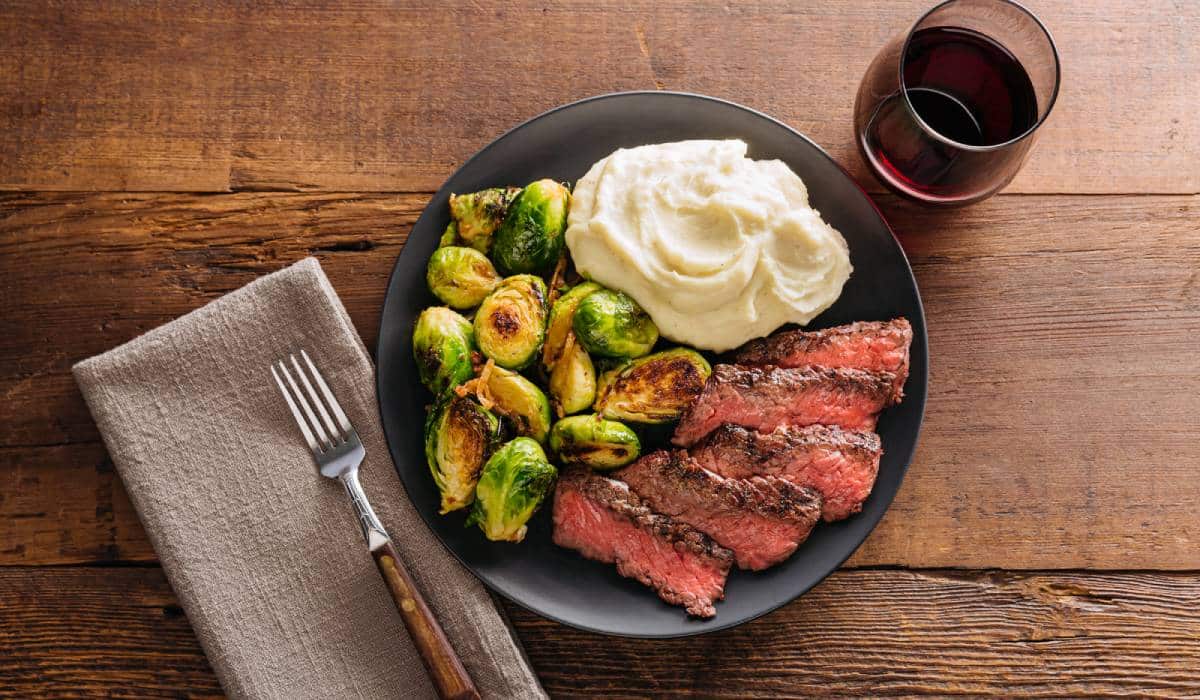
The chain’s menu is built to accommodate different dietary preferences without creating unnecessary complexity in the kitchen. Proteins such as steak, chicken, and fish appear across plates, sandwiches, and salads, allowing the company to offer variety without requiring entirely different ingredients for each dish.
Small-batch cooking and consistent preparation methods help the company maintain quality across its high-volume restaurants.
Urban Plates also draws from full-service dining expertise. President Joe O’Donnell previously oversaw the western U.S. for Ruth’s Chris Steak House, and culinary chief Jim Cannon held a senior culinary role with the steakhouse chain.
Their experience has helped Urban Plates incorporate elements of full-service hospitality into a fast-casual setting, including traditional plateware, silverware, and table delivery.
Nadhir believes that combination contributes to the chain’s sales performance. Lunch and dinner each account for approximately half of the business, giving Urban Plates a more balanced mix of visits throughout the day.
“Listen, the food tastes better and is perceived to be better if you’ve got great hospitality that goes along with it,” he says.
The menu’s flexibility has also positioned Urban Plates to benefit from changing consumer preferences, including growing interest in protein-rich meals and the use of GLP-1 medications.
Nadhir says the chain’s existing offerings align with many of the nutritional priorities associated with those medications, including lean proteins, vegetables, legumes, and minimally processed ingredients. Customers can choose a grilled chicken plate with two vegetable sides or opt for more indulgent meals without leaving the restaurant’s menu.
“We are absolutely tailor made for it, and stay away from processed foods, which is the bedrock of us,” Nadhir says.
Urban Plates has also expanded into categories it previously avoided. Burgers and chicken tenders were introduced after the pandemic to appeal to customers seeking more familiar comfort foods.
The burgers use grass-fed, grass-finished beef, and the chicken tenders are made with hormone-free, antibiotic-free poultry. The additions have been successful, according to Nadhir, especially among groups whose members have different dining preferences.
The company continues experimenting with flavors through its Chef Spotlight program, which serves two purposes. It introduces customers to existing menu items they might otherwise overlook and provides a testing ground for new products.
Limited-time offerings allow Urban Plates to evaluate demand and pricing before considering permanent additions. Scratch-made sauces also provide a way to introduce new flavors without adding numerous ingredients or complicating kitchen operations.
Nadhir says the strategy is intended to increase visit frequency by giving customers more ways to enjoy familiar ingredients.
“People get bored quickly because there’s lots of food choices out there,” he says.
Another tool for driving repeat visits is Plate Pass, the subscription program Urban Plates launched in 2021.
Unlike traditional loyalty programs, Plate Pass offers members ongoing discounts in exchange for a subscription fee. The company initially charged $10 per month before reducing the price to $5 to encourage participation.
Members receive a 20 percent discount, which Nadhir acknowledges may be more generous than necessary. However, the company has found that subscribers visit more frequently, helping justify the economics of the program. Urban Plates has also attracted substantial participation in its six-month and annual memberships, with nearly as many longer-term subscribers as monthly members.
“The point wasn’t to get the subscription fee. That’s just a sense of commitment from the guest to the program, but to get you in more often,” Nadhir says.
Those customer relationships will become important as Urban Plates prepares to expand into unfamiliar markets.
Nadhir says the company is evaluating potential cities based on restaurant sales potential, operating costs, and the ability to replicate the conditions that have supported its California business. The chain is also resisting the temptation to accelerate expansion by simplifying its food preparation or relying on more prepackaged ingredients.
That discipline comes as competition intensifies across the better-for-you fast-casual segment. Nadhir acknowledges that Urban Plates faces far more competitors than it did in 2011, but believes the challenge is less about introducing entirely new ideas than executing consistently.
The company has spent 15 years building a system capable of serving scratch-made food at high volumes without abandoning its service standards. Nadhir sees preserving those qualities as essential to its future growth.
“We don’t want to have to move so quickly that you start to sacrifice the pillars that really support the brand,” he says.
Urban Plates is not rushing to announce its next market, but the company has made clear that its long-term ambitions extend outside California.
Nadhir believes the opportunity is significant, provided the company can maintain the operational consistency and hospitality that have supported its performance.
“It’s one thing to say I’m going to serve made from scratch. I’m going to keep my prices reasonable, and I’m going to deliver high quality hospitality, high quality ingredients. Hey, let’s see who does that at scale. That’s who’s going to win, in my opinion,” Nadhir says.