

Thirteenth-century bakers may have handled shrinkflation more transparently than many restaurants do today.
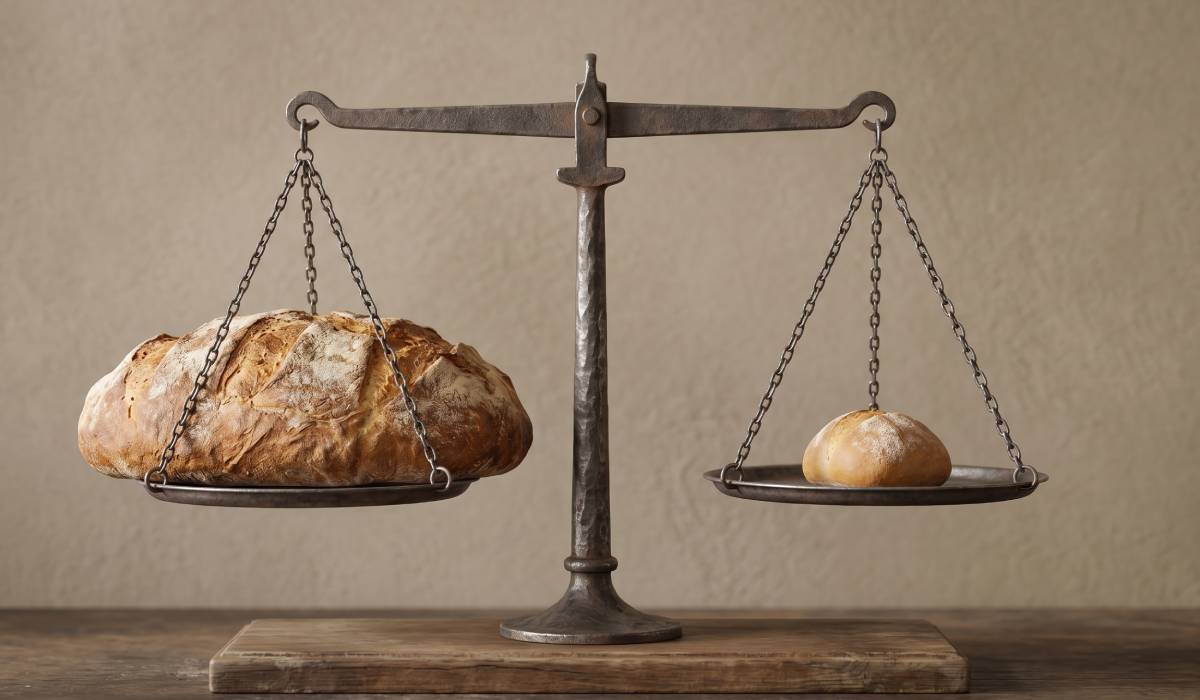
Pricing scholar Utpal Dholakia recently wrote about the Assize of Bread in medieval England. When grain prices rose, bakers could reduce loaf weights, but the change followed a public formula. Customers knew why the loaf was smaller.
His article made me wonder how today’s restaurant customers react when portions shrink without explanation.
In July 2026, I surveyed 312 U.S. consumers who had purchased from a fast-food or quick-service restaurant during the previous 30 days. Thirty-seven percent said they had definitely noticed receiving less food, a smaller item, or fewer included items for approximately the same price during the past year. Another 29 percent said they had probably noticed it.
The survey measures perceived rather than verified shrinkflation, but perception matters because customers respond to what they believe happened.
Among the 207 respondents who definitely or probably noticed shrinkflation, 98 percent said the restaurant had not clearly disclosed the change. Ninety-one percent said the item represented worse value, 79 percent felt misled, and 75 percent said the experience reduced their trust in the restaurant. Across the full sample, 94 percent agreed that reducing a portion without telling customers was deceptive.
About one-third of those who noticed shrinkflation said the reduction was understandable given rising restaurant costs. More importantly, 73 percent said an explanation would make a smaller portion more acceptable. Customers may understand why an adjustment is necessary while still objecting to discovering it after the purchase.
Why operators are tempted
Restaurant operators are caught between elevated costs and fragile traffic. The National Restaurant Association reported that 60 percent of operators experienced softer traffic in 2025 and estimates that the average restaurant’s total expenses have risen 36 percent since 2019.
Revenue Management Solutions’ Q1 2026 consumer research points to the same risk. One-third of QSR customers said they had cut back, up eight percentage points from the prior year. Among those spending less, half were visiting restaurants less often, 48 percent were ordering fewer items, and 44 percent were choosing less-expensive restaurants.
Against that backdrop, reducing a portion while holding the price steady can seem like the least damaging option. A slightly smaller burger, less protein on a sandwich, or fewer fries in the container lowers food cost immediately without crossing a visible price threshold.
That is why shrinkflation remains attractive: the savings are immediate and measurable. Any effect on customer frequency is delayed and much harder to connect to the portion change.
Sixty-six percent of the respondents who reported shrinkflation also said they had visited the restaurant less often. That measure was retrospective and should not be interpreted as proof that the portion reduction caused the change. But it illustrates the measurement problem. A restaurant can calculate the savings from removing half an ounce of protein. It is far harder to identify a customer who quietly begins visiting once a month instead of twice.
Give customers a visible choice
The most useful survey finding was not simply that consumers disliked undisclosed reductions. It was what they preferred restaurants to do instead.
Forty-eight percent wanted restaurants to retain the original portion and raise the price. Another 25% preferred offering a smaller portion at the current price while continuing to offer the original portion at a higher price. Only 5 percent preferred the classic shrinkflation approach of keeping the price unchanged while reducing the portion.
These responses reflect what consumers say is the fairest approach, not necessarily what they would purchase when faced with a higher price. Given that many QSR customers are already cutting back, some may choose the smaller portion, switch items, or visit less often rather than pay more for the original size.
Combined, 73 percent preferred some form of explicit price-and-portion structure rather than quietly shrinking the existing item.
The two-size option is particularly practical for QSR operators. It preserves an accessible entry price but makes the trade-off clear. Customers who want the lower price can choose the smaller size, while those who value the original portion can continue buying it at the higher price.
From a revenue-management perspective, this is a fence. The restaurant creates differentiated offers for customers with different price sensitivities instead of giving every customer less.
A two-size structure could also be tested. Operators can measure mix by size, contribution margin by option, attachment rates for sides and beverages, repeat purchase behavior, complaints, and whether the smaller size attracts value-oriented demand or simply cannibalizes the original item.
Five questions before changing a portion
Before reducing the size of an established item, operators should ask five questions.
- Is the change noticeable? Reducing an ingredient customers cannot easily observe is different from making the burger visibly smaller or noticeably reducing the fries. The more central the component is to the item’s identity, the greater the customer risk.
- Are we protecting a meaningful price point? A portion reduction may make sense when crossing a highly visible threshold would materially reduce demand. It is less defensible when the price is being held simply because changing it is inconvenient.
- Can we offer a choice instead? A smaller size at the existing price and the original size at a higher price preserves value access without disguising the change.
- Are we measuring frequency as well as food cost? The business case should include more than savings per transaction. Track repeat visits, item reorder rates, loyalty behavior, complaints, and substitution after the change.
- Who owns the full result? If a portion change is mandated by the brand, the local operator may still absorb any traffic effect. Measure the result locally rather than assuming someone upstream will connect the change to customer behavior.
The savings from reducing a portion will appear in the next food-cost report. Any effect on the next visit will be much harder to see. Operators should make sure they are measuring both.
Sherri Kimes is an Emeritus Professor at Hotel School at Cornell and specializes in pricing and revenue management. She has actively involved with teaching, conducting research and consulting in restaurant revenue management for the past 25 years. She is passionate about helping restaurants increase profitability. She can be reached at [email protected].