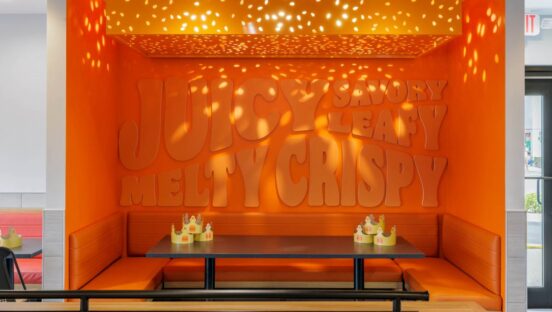

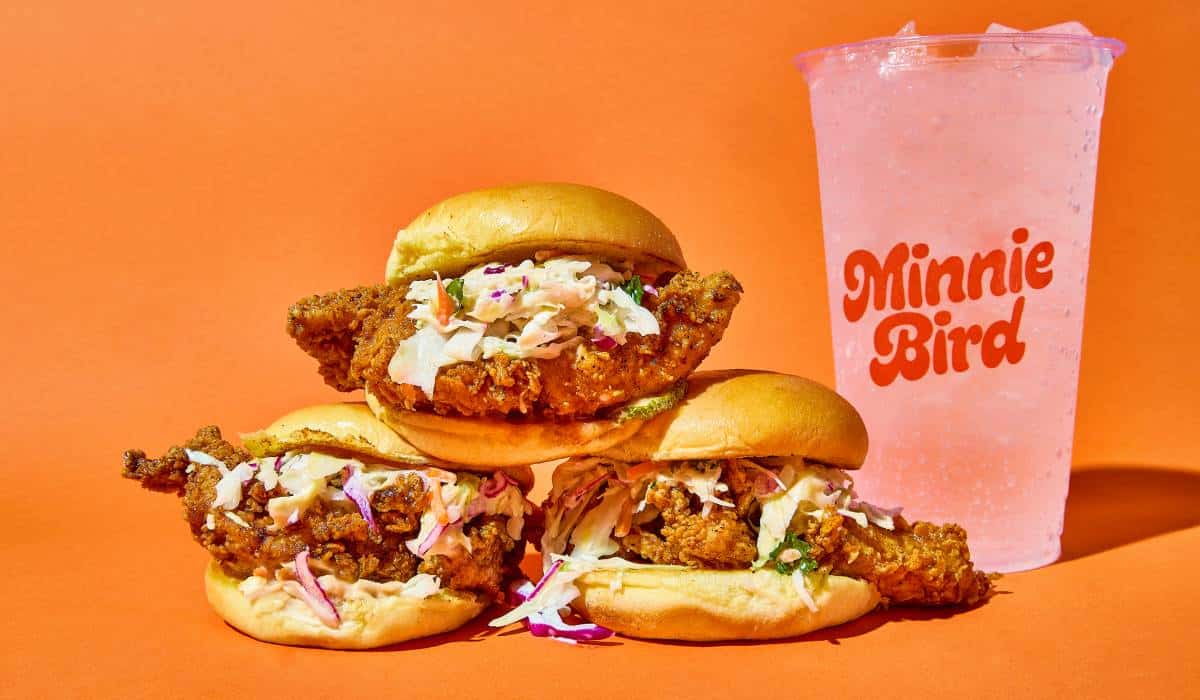
Most guests experience Minnie Bird through what is directly in front of them: hand-breaded chicken, a friendly team and a restaurant that feels energetic and easy.
Behind the scenes, we are working on something much less visible: building the infrastructure that will allow the same experience to travel far beyond our first few restaurants.
For an early stage brand, preparing for national growth may sound premature. But we know the complexity that comes with scale and we’d rather build for it before it arrives. The strongest foundations are built while we’re close enough to the restaurants to understand what works, candid enough to recognize what doesn’t, and nimble enough to improve quickly. A prospective franchisee is not simply buying a menu, a logo or the energy surrounding an emerging concept. They are betting that what works in the founders’ restaurants can be transferred to theirs, possibly hundreds or thousands of miles away..
An early stage brand does not need the executive team, overhead or bureaucracy of a 300-unit chain, but it does need the systems that make 300 units possible. The goal is not to cosplay as a large chain. It is to build a company whose systems can expand faster than its complexity—a brand that still has the energy and momentum of an emerging concept, but is steadily reducing the operational risk of being one.
Here is an inside look at five things we are building now to prepare Minnie Bird for national franchise growth.
1. We are turning founder knowledge into a repeatable operating model
What feels like flexibility at three restaurants can become inconsistency at thirty. One restaurant teaches a process one way, another adapts it, and a third creates its own shortcut. In isolation, those differences can feel harmless. At scale, they compound, creating operational friction, inconsistent execution and ultimately an uneven guest experience.
The first step toward scale is defining what must be true in every restaurant, on every shift, regardless of who is working or who owns the location.
For us, that means everything from how food is prepared and stations are set up to how shifts open and close, what great hospitality looks like, and what a team member must demonstrate before becoming certified. We are taking the hundreds of small details that make a Minnie Bird restaurant delight guests and turning them into clear, teachable standards another operator can consistently execute.
But defining the standards is only part of the work. The next step is building systems that ensure those standards actually show up in the restaurant. Documentation preserves knowledge. Systems preserve execution. A binder or video can show someone what good looks like. A true system makes good execution teachable, verifiable and self-reinforcing, regardless of who is running the shift, leading the team or opening the next restaurant.
That is what allows a brand to grow without diluting what made it successful in the first place. If a process can be taught, observed, verified and reinforced until it becomes part of how the restaurant naturally operates, it becomes self-reinforcing and truly scalable.
2. We are building a training system that does not depend on founders
Small concepts often train through proximity. A strong operator stands next to a new employee and shows them what to do. It works, especially when the founder or best general manager is nearby.
But proximity does not scale.
We have worked to turn training into a sequence that can transfer from one capable leader to the next: explain the standard, demonstrate it, let the trainee perform it, coach in the moment and verify readiness in the restaurant. Our station guides, digital learning and in-store certification all work together, but operational readiness ultimately has to be demonstrated through observed behavior.
That approach does two things. It protects the guest experience, and it creates more trainers. A 300-unit brand cannot depend on a few exceptional people personally teaching everyone. An early stage brand with national ambitions should not either.
The real test of a training program is not whether an employee completed it. It is whether that employee can consistently perform the job—and eventually teach someone else to do the same. For a franchisee, that multiplier effect is what turns opening support into lasting capability.
3. We are creating one operating language across every restaurant
When a company is small, leaders can solve ambiguity through conversation. Someone texts a photo, calls a manager or drives to the restaurant. As the company grows, that informal communication becomes noise.
Scalable brands create a shared operating language. The opening checklist means the same thing everywhere. “Certified” has one definition. A store assessment measures the same standards across every location.
This is where technology can help—but only after the process is clear. We use systems for learning, checklists, food and labor visibility, and performance reporting. The point is not to accumulate software. The point is to create one source of truth and make the right action easier for the operator.
A useful rule: never use technology to disguise an undefined process. If the team cannot explain the workflow simply, putting it into an app will only digitize the confusion. The best technology stack makes it easier for franchisees to run the restaurant—not easier for the franchisor to generate reports.
4. We are building visibility before a bad month happens
Emerging brands naturally focus on sales and profit. They should. But those numbers arrive after the shift is over. By then, the decisions that created them have already happened.
The most useful operating scorecards connect financial outcomes to the behaviors teams can directly control, including labor deployment, guest experience, operational readiness, cleanliness and training progress.
That does not mean drowning managers in dashboards. A restaurant leader should be able to look at a short list of measures and know three things: Are we winning? Where are we off standard? What should I do next?
Large chains have mountains of data. Emerging brands have an advantage: they can decide early which information actually changes behavior and build around it. Five measures that drive action are more valuable than 50 that create reporting theater.
That visibility matters even more to a franchisee. Good systems should not simply tell an owner what went wrong. They should help the owner and franchisor see where performance is drifting while there is still time to correct it.
5. We are designing the business for owners who were not there at the beginning
Founder-led organizations carry enormous invisible context. The people who created the menu, opened the first restaurant and solved the early problems understand why decisions were made. Future general managers and franchisees will not.
That is why every scalable system must be designed for the person who was not in the room.
Could a new operator understand the standard without calling a founder? Could a trainer prepare for a station without relying on memory? Could a franchisee see what is required before opening, who owns each step and how readiness will be measured? Could the support team identify a problem before it becomes a bad month?
If the answer is no, the system still depends on institutional memory rather than organizational capability.
This is especially important in franchising. A franchise agreement may create the legal right to grow, but it does not create the operational ability to support growth. That ability comes from clear standards, durable training, reliable data and a repeatable opening and stabilization process—from the months leading up to opening through the point when the restaurant can perform without the entire support team standing inside it.
The strongest emerging brands are not asking franchisees to recreate the founders’ journey. They are taking everything learned the hard way and turning it into a clearer path for the next owner.
Building ahead without getting ahead of ourselves
There is a danger on the other side of this effort. Small brands can overengineer themselves. They can create meetings, approvals and reports for a company that is not large enough to need them. That slows decisions and pulls attention away from the restaurants.
The answer is not to act like a 300-unit chain. It is to ask how a great 300-unit restaurant brand would solve a recurring problem—and then build the version that works at our current stage.
Create the checklist, but leave the corporate jargon out of it. Track the metric, but ensure someone will act on it. Document the standard, but improve it when the restaurant teaches you something. Add a role when the work requires it, not because the org chart looks incomplete.
At our current stage, our advantage is speed, access and the ability to improve quickly. At 300 units, the advantage is consistency, purchasing power and brand awareness. Our job now is to preserve the first set of advantages while steadily building the second.
The work is not glamorous. It is deciding what “good” looks like, capturing it for posterity, teaching it well, measuring whether it happened and improving it without losing the core standard.
Do that while the company is still small, and each new restaurant becomes an opportunity to strengthen the model rather than reinvent it.
National growth will not happen because we put pins on a map or sign development agreements. It will happen only if a Minnie Bird restaurant can open in a new market, train a new team, protect the guest experience and produce a healthy business for its owner.
That is the real work happening inside the brand today: building the playbook before growth demands it, so every new restaurant strengthens the system rather than tests its limits.
Franklin Buchanan is the cofounder of Minnie Bird and a Partner at Venture Kitchen.