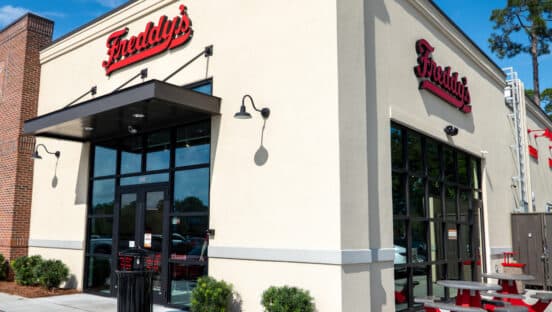

In today’s quick-service landscape, drive-thru performance is everything. Every strong drive-thru looks effortless from behind the wheel. But long before the first customer orders a meal, hours of careful study have made that experience possible. Much of the success of a drive-thru comes down to the building design—QSR brands invest heavily in standardized prototypes that are engineered to keep cars moving—but location is also key and more complicated.
While the building may be consistent, the site never is. I help national QSR brands account for these differences, identifying sites that will support long-term growth across the Eastern Seaboard and Southeast. Even the strongest concepts still depend on what happens outside the four walls—the traffic patterns, circulation, and community context that shape the customer experience.
Brands that succeed are the ones who treat drive-thru siting as a strategic process: evaluating queuing capacity at the outset, collaborating early with municipalities, and approaching prototype placement with flexibility rather than rigidity. A poorly chosen site can undermine the best operations plan, which is why getting it right starts with understanding a few essential realities.
Drive-Thru Queuing Shapes Everything
For QSRs, the most defining challenge is managing drive-thru queuing and traffic. A parcel can look ideal based on acreage, visibility, and access, yet become unworkable once peak-hour flow is mapped. Innovative operators have maximized the number of customers they can serve in a day, but no amount of operational efficiency can compensate for a site that isn’t physically capable of holding a queue.
The central test is whether all vehicles can be contained on site without spilling into public roads or shared drive aisles. That depends on the orientation of the building, the length and shape of the queue lane, how cars enter and circulate, and how local traffic behaves during peak periods. Two half-acre parcels may perform entirely differently depending on whether they sit on a sleepy rural corridor or a high-pressure suburban arterial.
Traffic context is as influential as geometry and failing to plan for queuing is the fastest way for a seemingly viable site to fall apart. It’s also the most common reason QSRs abandon parcels late in due diligence.
Small Sites Bring Big Constraints
Many QSR concepts today are intentionally compact, but that doesn’t mean every compact site is viable. Parcels that look workable on paper often suffer from subtle limitations. They are too shallow to wrap a drive-thru around the building, too narrow to accommodate circulation, or too irregularly shaped to create safe turning movements. Some are simply overwhelmed by adjacent traffic volumes, making entry and exit challenging during peak times.
These compact concepts are also ideal for pad sites carved from big-box parking lots, an increasingly common site for QSRs. These locations can offer several advantages: existing infrastructure, predictable access, and an opportunity to replace underused asphalt with something more visually engaging. When pad sites are selected and planned thoughtfully, they can create high-performing locations with a smaller footprint and a built-in customer base.
But the benefits of a pad site come with constraints. Shared access roads limit drive-thru placement. Internal drive aisles introduce additional queuing sensitivities. Utility lines may need relocation. Stormwater systems may already be at capacity. And any backup into the shared circulation affects not just the QSR but every tenant in the center.
Curb Appeal Still Matters—and Municipalities Are Paying Attention
Even when zoning permits a drive-thru, municipalities often scrutinize how the queue interacts with the streetscape. Many towns resist having lines of cars visible from the main road and expect QSRs to present a storefront-like appearance along public frontages. That expectation shapes how a building can be oriented and how the site must be screened.
We’ve permitted drive-thrus on the street-facing side of a building, but rarely without negotiation. Success often requires a blend of enhanced landscaping, discreet fencing, minor berming, or architectural adjustments that soften the presence of vehicles. Screening isn’t just aesthetic; it’s a way to satisfy community standards and maintain momentum through design review.
Some QSR prototypes also face resistance on signage or corporate branding, especially when a town wants buildings to reflect local character. Flexibility early in the design process helps keep projects on track.
Retail Challenges Still Apply
All of these considerations are reasons why early site review is indispensable. The sooner a development team knows what the site can and can’t support, the better their chances of staying on schedule and preventing surprises.
This includes an understanding of the land-development issues that impact any commercial endeavor, including grading, contamination, wetlands, stormwater, utility capacity, political approvals. These don’t go away in QSR. They simply compound more quickly. QSR timelines are fast, margins are narrow, and small sites offer less room to engineer around problems. A single constraint, such as grading or an underground stormwater requirement, can turn a promising site into a dealbreaker.
Ultimately, the QSRs that thrive are the ones built with intention. When brands take the time to evaluate their sites rigorously and make disciplined decisions early, they set themselves up for smoother development, stronger operations, and long-term success in an industry that doesn’t slow down.
Michelle Carlson is executive director of land development and survey at BL Companies, a 100 percent employee-owned firm delivering integrated architecture, engineering, environmental, and land surveying services.