
KFC’s Kentucky Fried comeback is coming to life in the U.S.
On September 27, the legacy brand will unveil its newest restaurant concept in McKinney, Texas. Dubbed “Open House,” it’s a place to serve guests, experiment with new approaches, and identify what can be scaled across KFC’s 3,500 U.S. units.
“KFC is such an iconic brand … there is so much love for it, but it’s almost as if KFC lives in people’s memories and not so much in the moment,” Catherine Tan-Gillespie, president of KFC U.S., says. “With our Open House, we are inviting America to come in and try us again.”
The opening is the latest step in a global reset. In June, KFC unveiled its next chapter, a multipoint update built around boneless chicken, sauces, and a refreshed brand identity that includes a new logo and modern restaurant design. Open House is where that vision takes physical form in the U.S.
Inspired by the Colonel’s belief everyone was welcome at his table, Open House is as much an innovation hub as it is a signal of where the brand is headed: an upgraded menu with approachable value, modern design, and expanded dayparts, all still rooted in KFC’s heritage, the company says.
Designed to be seen
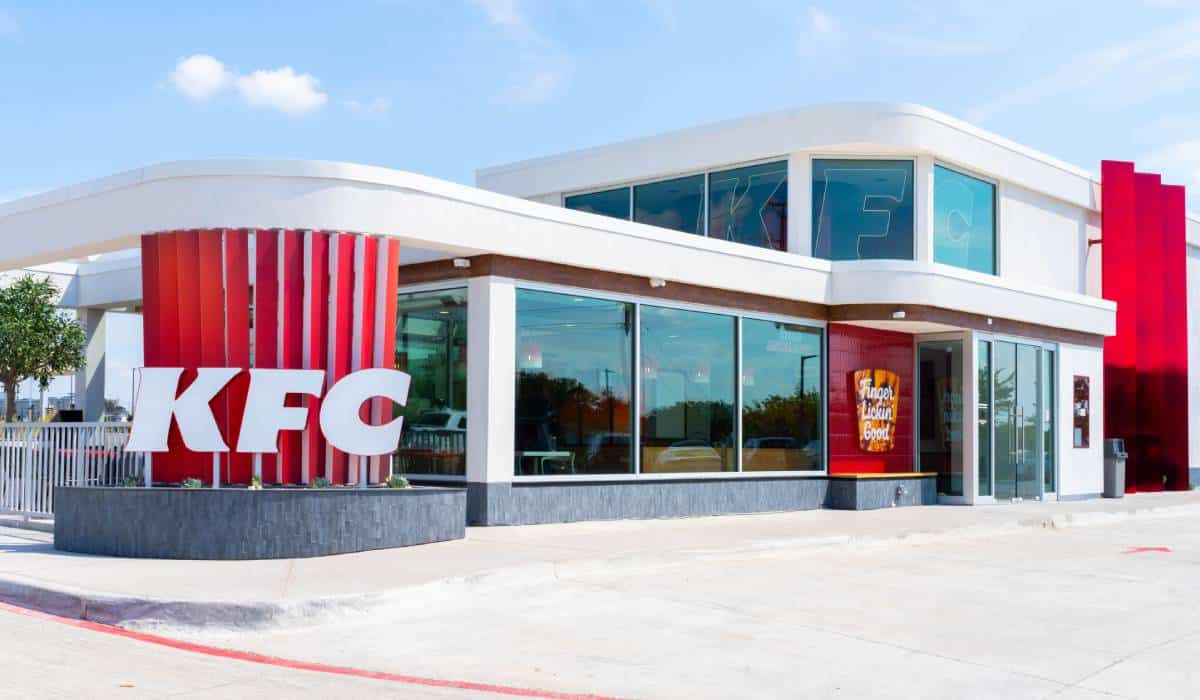
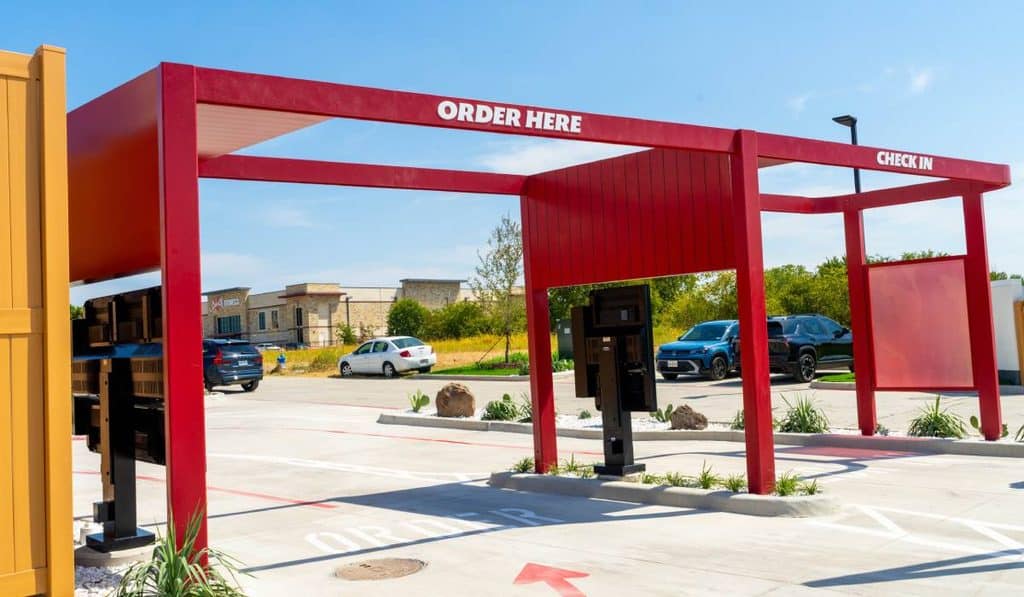
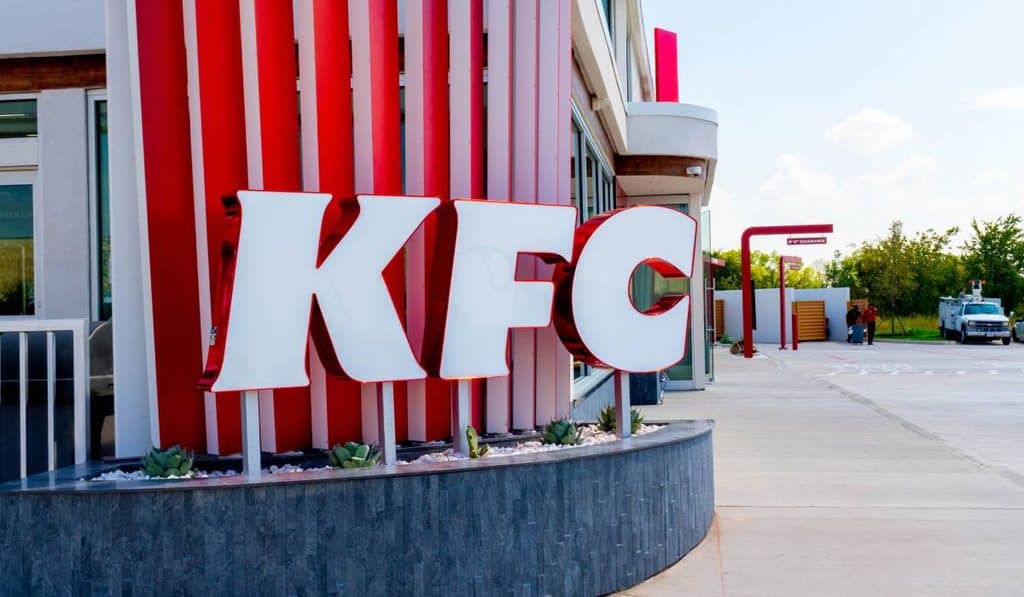
The 3,400-square-foot restaurant draws on midcentury modern design as a nod to the brand’s history. And from the outside, it’s nearly all glass.
“The design of the restaurant is atypical … QSRs typically don’t have many oversized windows, but people need to see and trust what’s happening inside,” Tan-Gillespie says. “This is important to get more customers into the restaurant.”
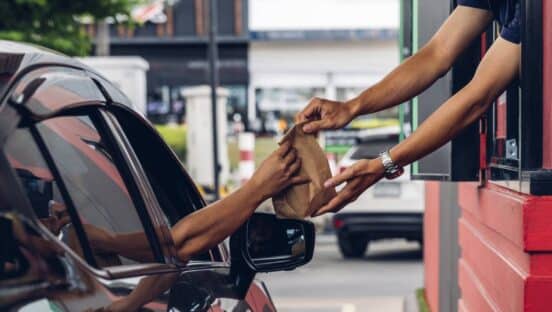
Outside, there’s a patio and breezeway, dual drive-thru lanes, and a dedicated mobile pickup zone. Even the drive-thru gets the Open House treatment: Music plays through the lane to set the vibe and make the wait feel less like a transaction and more like part of the experience.
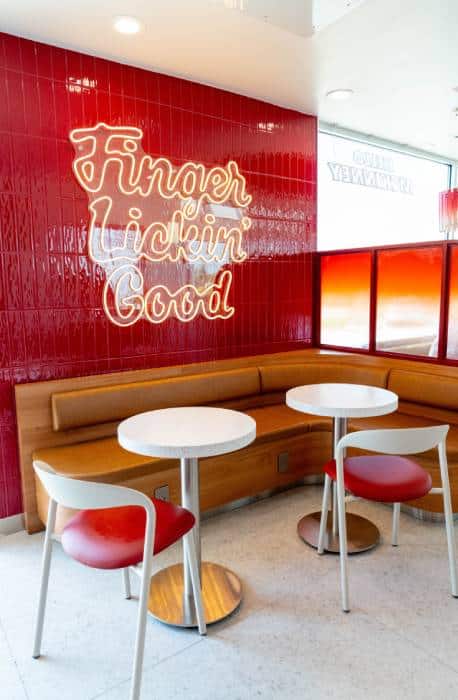
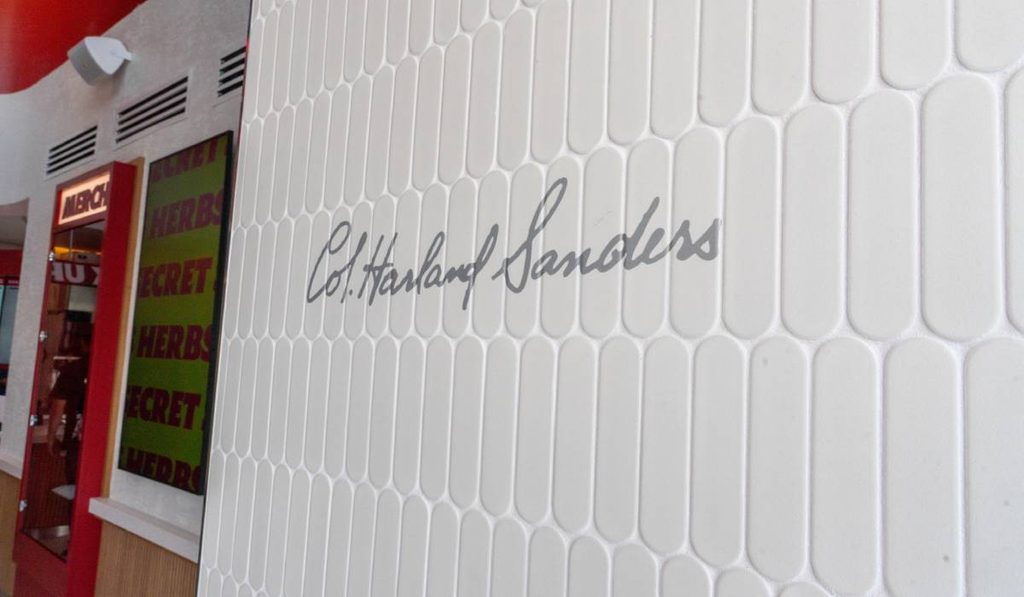
Inside, warm timber accents meet pops of KFC’s signature red. The 52-seat dining room feels like someone’s home, with cozy corner booths, flexible seating, and succulents set in white rock, a nod to the Texas landscape.
The signature is the store’s “Celebration Booth”—a glass-fronted nook wrapped in digital screens that rotate through themes. At any moment, guests might be surrounded, quite literally, by golden fried chicken. It’s free, requires no reservation, and doubles as regular seating when not in use.
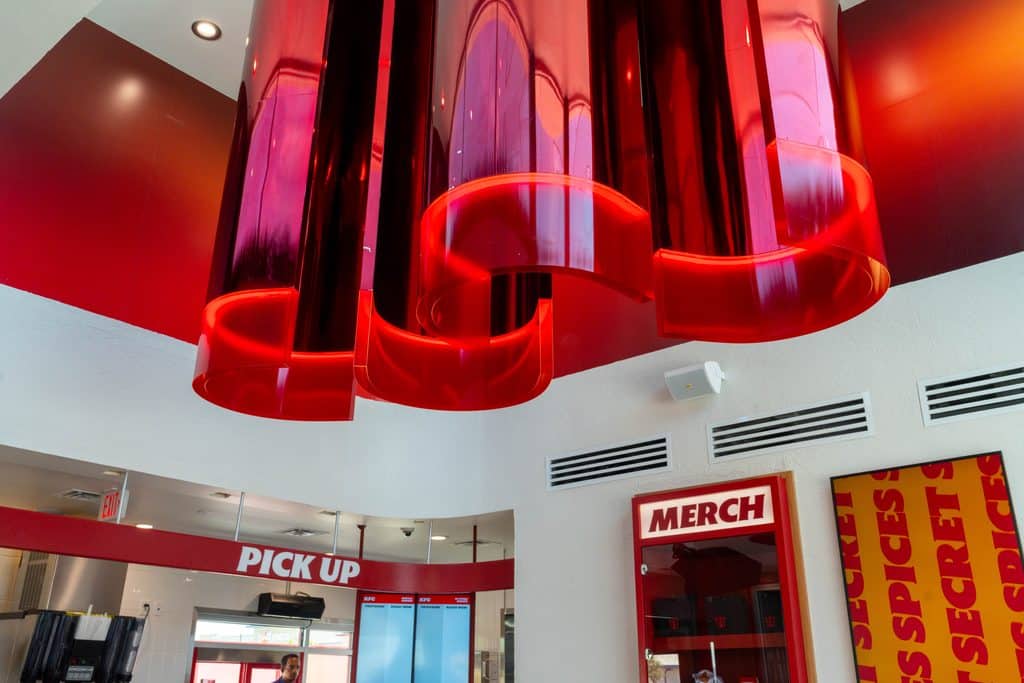
There’s also the “Swag Bar,” stocked with exclusive KFC apparel and souvenirs. By putting its iconic merch front and center, the brand gives guests one more reason to linger and spend.
Digital where it helps
Inside and out, Open House runs on a simple philosophy: “digital where it helps, human where it matters.” Externally, the digital half means self-order kiosks and menuboards. But the bigger bet may be the one guests never see.
Luke Jackson, chief operating officer of KFC U.S., calls the back of house an “operations playground,” one where the smartest upgrades aren’t always the flashiest.
“When we talk about simplification, we often think about new, big, shiny pieces of equipment,” Jackson says. “Actually, this is just about being ergonomically smart … What do [team members] do first, second, third, without telling them? And then you’re able to design around that.”
Take the fry line. In many KFCs, open and pressure fryers sit under separate hoods, and cooks can walk 10 or more paces to get finished chicken to the warmers. At Open House, it’s all under one hood, steps from the warmers. That’s no small thing when chicken, still hand-breaded in-house, is cooked nearly every hour.
The breading tables received the same treatment. Instead of running a different flavor on each, both now hit a single flavor, so the crew isn’t juggling two nearly identical flours.
Further down, the pack line was redesigned into three stations: sandwiches; drizzles and hot sides; and a chicken packer who doubles as an accuracy checker before orders are handed off. Every scoop, pair of tongs, and piece of packaging has a designated spot, down to custom wire frames. Much of it is also modular, so KFC can rework the flow or bring in new equipment as tests evolve.
Where new tech does show up, it earns a spot. An automatic sauce pod machine from a California startup dispenses, lids, and seals dipping cups in batches; team members load it and walk away. A combination oven and rethermalizer—a first for KFC—gives franchisees one piece of equipment where they’d otherwise need two and opens the door to new menu items.
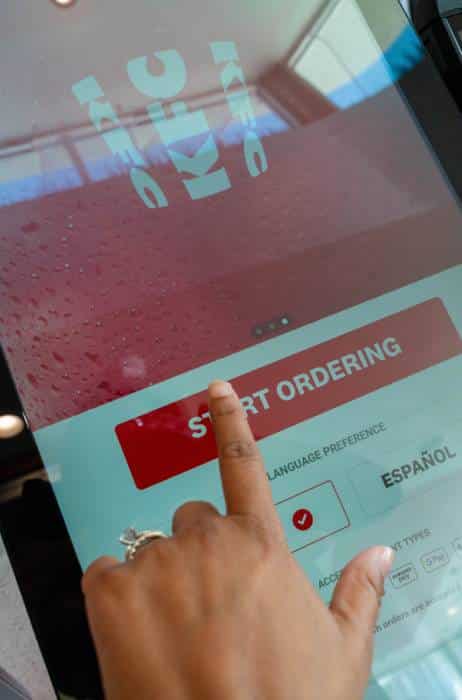
The restaurant also runs entirely on Byte by Yum!, from kiosks and registers to kitchen display screens. Unlike the high-mounted, bump-bar screens in most KFCs, these sit within reach and are fully interactive: Team members can customize their view and swipe away orders once their station’s part is done. At the expediter station, a sticky receipt printer makes sure whoever delivers the food knows exactly what’s in the bag.
Human where it matters
The other half of the philosophy starts with the guest. Aaron Hedi, KFC U.S.’s market manager, says the brand’s business splits roughly 60/40 between drive-thru and dine-in, but the McKinney market is unique in that it over indexes on dine-in.
“With everything we’re doing here, we do intend to have more people come in for a dine-in experience because it’s a place that has vibes, feels inviting, and looks nice for people to want to sit and eat,” Hedi says. The goal, he adds, is to elevate both the drive-thru and dine-in experiences, so every guest feels welcome, however they order.
The biggest people change is a brand-new role: the lobby host, who makes the experience feel, in Tan-Gillespie’s words, “fast-casual without the fast-casual price tag.” Lobby hosts will greet customers and delivery drivers, bring food, refill drinks, clean tables, and guide guests through their entire visit.
Adding a position isn’t a small ask in today’s labor climate, but streamlining the back of house allowed KFC to redeploy labor to the front and bring genuine hospitality into the equation.
“Even if a customer uses a kiosk or mobile pickup, they’ll still see a human at the end of their journey. We’re allowing digital to complement guests’ experience, and then really elevate the human touchpoints,” Jackson says. “[With this new role,] we aren’t putting too much pressure on the KPIs from day one. We want to learn what the customer’s response is and see what their likelihood is of returning.”
Even the uniforms got a redesign, with flowier fits and more intentional materials. The goal is to have a uniform team members are comfortable in and proud to wear inside and outside the restaurant’s four walls.
More variety, less complexity
Adding menu items usually means adding complexity. KFC is betting it doesn’t have to, and that heritage, operational efficiency, and innovation can coexist.
“It is all about how we offer variety without complexity,” Tan-Gillespie says. “It feels like there’s a lot of new variety, but actually, back-of-house, this is simpler to execute than our existing restaurants.”
Original Recipe fried chicken and the bucket remain central, but the menu offers more choices through new formats, flavors, and pairings.
“It’s the same products guests know and love from our iconic Original Recipe but offered in new ways that can be customized. The goal is to have variety without complexity, and that is because we know our customer experience is never going to exceed our team member experience,” Sarah Crow, KFC’s chief strategic partnerships officer, says.
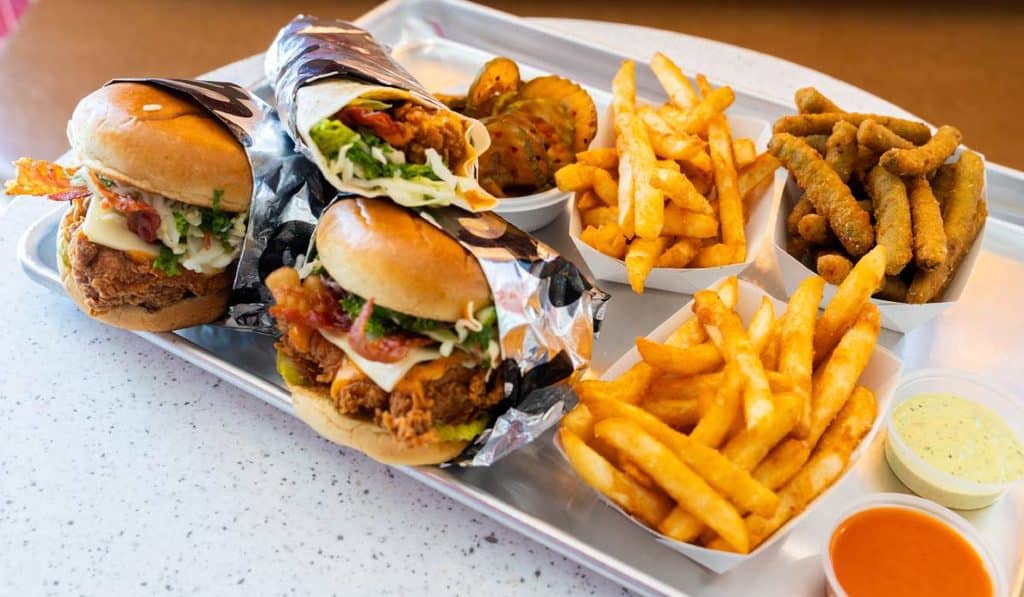
Sauces do much of the heavy lifting. Guests can go “Dipped,” pairing Twisters, Snackers, and sandwiches with a lineup that runs from classics like Kentucky BBQ, Buffalo, and ranch to bolder picks like jalapeño ranch, sweet heat ranch, and garlic Parmesan. Or they can go “Drizzled,” with sauce built right onto Original Recipe chicken, tenders, wings, and fries. Behind the counter, it’s the same sauces either way: One bottle of each flavor covers the dipping cups, the line, and the drizzles.
Sides get a refresh, too. Southern staples like improved mashed potatoes and gravy and Southwest corn sit alongside newer additions like fried green beans and spicy pickles.
Breakfast, served starting at 6 a.m., is a new occasion for KFC, and the menu is deliberately small: breakfast sandwiches made with two Original Recipe tenders, hash brown sticks, mini cronuts, and hot coffee and iced lattes. Tenders are the only morning protein served, which keeps execution simple and cuts waste.
Beverages play a bigger role as well. Open House marks the U.S. debut of KFC’s global beverage strategy, with lemonades, boba refreshers and Krunch Shakes. Many of the sauce and beverage offerings draw inspiration from other KFC initiatives, including Kwench and Saucy, Ana Maria Basurto Garcia, KFC U.S. director of food innovation and technology, says.
Along with earlier openings and later closings, snacks and drinks are meant to draw in guests outside the traditional lunch and dinner rushes.
“That helps you smooth the flow of operations throughout the whole day,” Jackson says. “So, your peaks feel less peaky, and your non-peak times feel easier to operate.”
Built to scale
For now, all of it lives in one McKinney restaurant. The bigger question is how much of it makes its way to the rest of the system.
For Tan-Gillespie, Open House is a response to how the industry shifted since the pandemic.
“Coming out of COVID, there was a big swing toward digitization of absolutely everything,” she says. “We have digitized the ordering, and we have opened up every single channel, but we’re also putting as much weight on the dining experience, because we feel that has maybe been forgotten.”
The same thinking shaped the menu. “There’s still a huge love for fried chicken,” she adds. “It’s a fast-growing category, and people just want more formats, more flavors, and more ways to access fried chicken.”
Open House is where KFC will figure out which of those answers work, and the concept is built to keep changing. “What we start with on day one isn’t where we’ll end the year,” Jackson says.
The model has already piqued franchisee interest, with one Minneapolis operator investing early. For now, though, KFC is using corporate funds to pioneer the concept, with the goal of rolling out what works across the system in phases.
“Our well-capitalized franchisees are excited about having an investable proposition. Everyone is curious to know what we’re going to learn and what parts we’re going to scale across the system,” Tan-Gillespie says. “If it works for the customers, team members, and commercially, that is what success looks like for us.”
Open House isn’t a blueprint just yet. It’s a learning lab, and a look at what’s possible for KFC.
“The screening criteria for what happens here is that it’s all in service of the system as a whole. What you’re seeing here isn’t just LTOs to create a buzz,” Tiffany Furman, chief growth officer of KFC U.S., says. “This is about ideas that we think could have legs to scale nationally. We wouldn’t put it here if we didn’t think that scaling was a possibility.”