
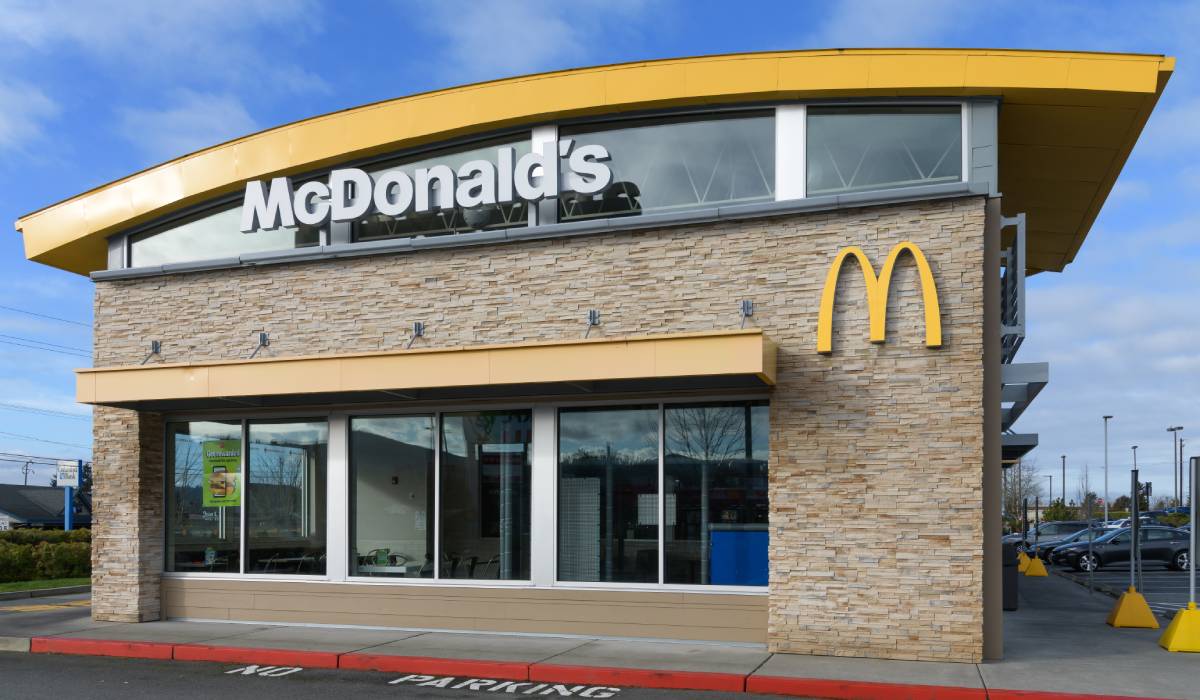
McDonald’s is preparing its largest menu quality upgrade on record as part of a new companywide strategy designed to win traffic in an industry the chain expects to produce little traffic growth.
The company unveiled McDonald’s > Next during its investor day, presenting a multiyear plan built around menu improvements, personalized marketing, redesigned restaurants, artificial intelligence, and employee training. The goal is to make McDonald’s the first choice for more customers and improve restaurant productivity enough to fund continued investment.
McDonald’s expects industry traffic across its wholly owned markets to stay flat, making market-share gains a greater source of future growth. CEO Chris Kempczinski said companies will have to create demand and serve it with greater efficiency.
“The winners will be the companies that create more demand and deliver it more efficiently,” Kempczinski said.
READ MORE: McDonald’s Plans $8.5 Billion in Franchisee Support Under New Growth Strategy
The strategy follows Accelerating the Arches, which McDonald’s introduced in 2020. Since then, core menu sales have increased more than 50 percent, mobile orders have reached roughly 40 percent of systemwide sales, and the company has added more than 6,000 restaurants.
McDonald’s now serves more than 70 million customers per day and counts nearly 220 million regular app and loyalty users. Its global estate exceeds 46,000 restaurants, with a long-term target of 50,000.
Menu > Next concentrates on beef, chicken, and beverages. Those categories account for most of McDonald’s business and offer different growth opportunities. The company holds more than 40 percent share of a roughly $50 billion beef category across its 10 largest markets. Its share sits in the high teens for chicken, a nearly $130 billion segment growing more than 5 percent annually. McDonald’s holds high-single-digit share in beverages, a category valued near $230 billion.
The chain is targeting roughly 1.5 percentage points of share growth in chicken and beverages by 2030, along with continued dominance in beef.
Its chicken plan includes adjusted cooking procedures, expanded McNuggets flavors and sauces, additional McCrispy sandwiches, McWings in more markets, and grilled chicken sandwiches and wraps. McDonald’s is also testing hand-breaded chicken after building expertise across 10,000 restaurants in Asia. Tests will expand to more U.S. and Ireland restaurants with advertising support in 2027.
Chicken McNuggets account for nearly $15 billion in annual systemwide sales. McCrispy produces more than $2.5 billion, and McChicken contributes nearly $4 billion.
Beverages have become a distinct traffic opportunity following lessons from CosMc’s and market tests. New specialty drinks are available in nearly 18,000 restaurants. More than half of beverage visits occur after lunch, when stores have unused capacity, and checks are roughly 50 percent higher when customers add food to their drinks.
“Beverages are no longer just an add-on but a reason to visit,” global chief restaurant experience officer Jill McDonald said.
The platform will move into most European markets during the first half of 2027 and reach additional international developmental licensee markets throughout that year. McDonald’s is also improving coffee with fresher beans, new recipes, updated equipment and more customization.
Beef initiatives include tighter cooking procedures, dedicated training and possible expansion of fresh Quarter Pounder patties and hot-off-the-grill preparation into more countries. The chain is studying flexible portion options such as burger bowls and plans to extend the Quarter Pounder, Double Quarter Pounder, and Big Arch platforms.
Consumer > Next will use loyalty data, partnerships, and personalized offers to encourage more visits. McDonald’s wants to move occasional guests toward greater frequency and make its app experience more individualized. The company is also testing a commerce media network across 450 company-owned U.S. restaurants and sees the network becoming a billion-dollar system business over time.
Restaurant > Next brings the plan into store operations. New layouts include dedicated beverage workstations, delivery lockers, assembly areas, more open kitchens and fast-forward drive-thru windows where space allows. The windows could add up to 25 percent more capacity.
McDonald’s is connecting those physical changes with ArchIQ, its AI-powered restaurant operating system. The platform combines automation, diagnostics, predictive alerts, and coaching. Its tools include drive-thru voice ordering in English and Spanish, automated inventory tracking, connected equipment, and order-accuracy scales.
The company says its voice assistant, Archy, exceeds 90 percent order accuracy and could save at least 50 labor hours per restaurant each week. Automated inventory could save another five hours and reduce food waste by 15 percent. Accuracy scales already operate in more than 10,000 restaurants, with that count expected to double by 2028.
“This is why we’re excited to show you all of this in action today and give you a firsthand look at how Arch IQ is making it easier for the crew and better for our customers,” global chief information officer Brian Rice said.
McDonald’s expects the restaurant program to deliver roughly 250 basis points of gross restaurant-level efficiency in wholly owned markets. That equals approximately $100,000 in annual gross cash flow for an average U.S. restaurant once the changes are fully installed.
The complete package is expected to require roughly $800,000 in incremental investment per traditional U.S. drive-thru restaurant, on top of a standard lobby remodel. Comparable investment in top international operated markets is estimated at $650,000 to $700,000.
McDonald’s plans to provide $8.5 billion in rent relief and capital support through 2036, including roughly $5 billion by 2030. The company expects franchisee payback in approximately four years after its contribution, compared with five to six years for McDonald’s.
“When franchisees have stronger economics, our system is stronger,” CFO Ian Borden said.
People > Next completes the strategy through Make It Golden, a training and hospitality program launching October 5, Ray Kroc’s birthday. McDonald’s plans to equip 2 million people with new tools and training. The company said U.S. restaurants in the top quartile for employee engagement and retention deliver 10 percent more guest counts, 15 percent higher sales and 20 percent more cash flow than bottom-quartile locations.
New restaurants will adopt the Restaurant > Next design beginning in the first quarter of 2028. McDonald’s projects net restaurant growth near 4.5 percent in 2027, followed by annual growth between 3 and 3.5 percent through 2030. The U.S. and international operated markets are expected to add more than 550 combined restaurants annually through 2030.
The company also plans to increase its global franchise mix from roughly 95 percent to 98 percent by the end of 2028. It projects adjusted operating margin in the low-to-mid-50 percent range and free cash flow conversion in the mid-to-high-80 percent range by 2030.
“We’ve spent the last six years building new capabilities,” Kempczinski said. “Now it’s time to put them to work.”