
The drive-thru was once a convenience attached to the restaurant. For a growing group of limited-service brands, it now serves as the primary dining room, digital pickup counter, and most frequent point of contact with guests.
That shift has made the lane a test of nearly every part of the business. Menu complexity shows up in ticket times. Kitchen design determines how many cars a site can process. Digital orders compete for production capacity. Accuracy can decide whether a family returns. Technology can remove delays, but it can also strip away the human connection that gives a brand its identity.
For franchise systems, the challenge carries another layer. Any solution must work consistently across hundreds of kitchens, diverse real estate, varied labor pools and different levels of operator experience.
Ziggi’s Coffee, Hawaiian Bros, Tropical Smoothie Cafe, and Freddy’s occupy different corners of the quick-service market, but each is working through the same equation, which is that guests want speed, convenience, accuracy, and hospitality in a single visit. Winning more drive-thru occasions requires all four, not a trade of one for another.
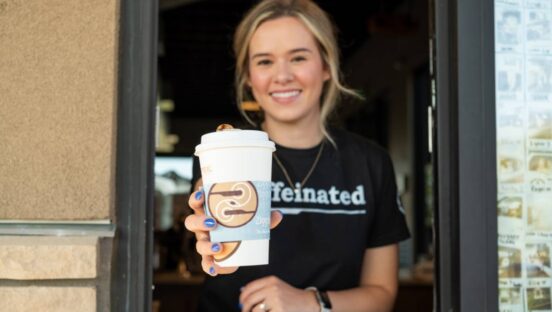
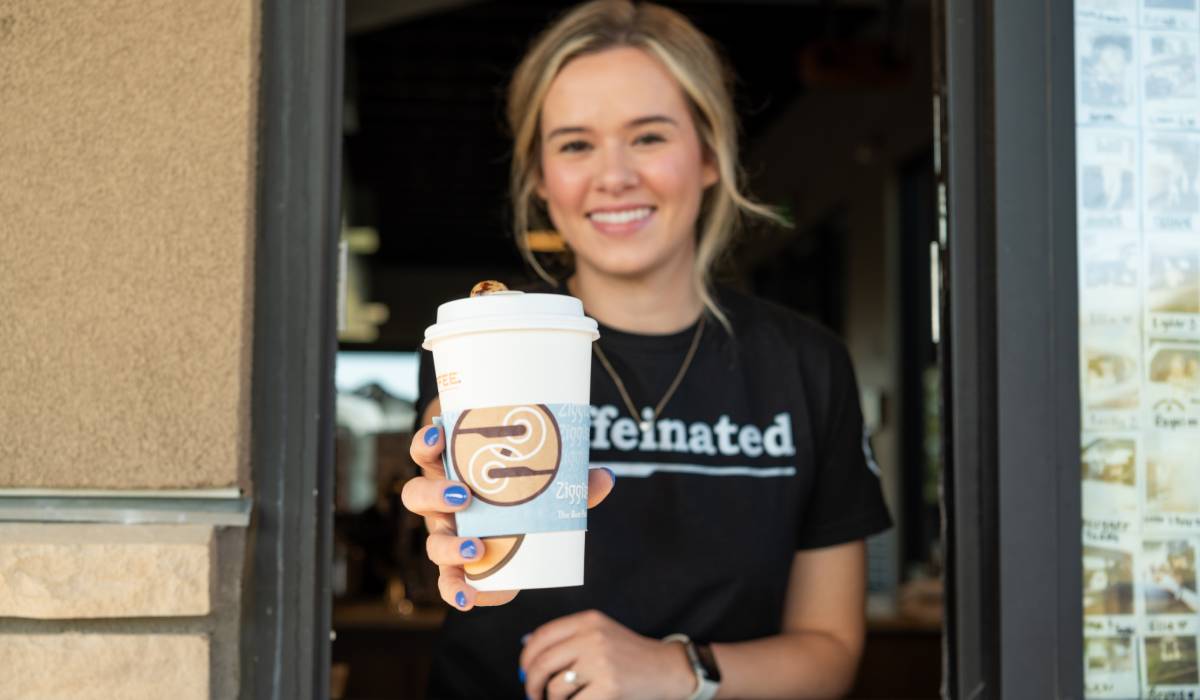
At Ziggi’s, every restaurant has a drive-thru, and many pair it with a walk-up window. The Colorado-based coffee chain built its system around convenience, but cofounder and CEO Brandon Knudsen does not view the fastest possible transaction as the brand’s ultimate goal.
“Speed is not number one at all. I’m not saying it’s not important, but I want to have a really, really authentic relationship. I want there to be a daily routine of coming by to say hi, how are your kids yesterday, how was work, like just total relationship building,” Knudsen says.
That conviction influences Ziggi’s technology choices. The company uses tools that help employees learn an expansive menu and find information quickly, including a mobile learning platform that can function as an on-demand reference. Its point-of-sale system supports the transaction, and data helps the chain control staffing. Knudsen sees practical uses for artificial intelligence in corporate analysis and decision-making, but he is reluctant to hand the guest conversation to a machine.
“I want Ziggi’s to be a place where they get away from that and they go and interact with people,” he says.
Ziggi’s also accepts that a wide range of choices can add seconds. Its drinks are made individually, giving guests the ability to select cold brew, dairy alternatives, decaf, half-caf, and sugar-free options. That creates a more involved production process than systems built around premixed bases. Knudsen considers that flexibility part of the value proposition, not an operating flaw to remove.
“We make every drink handcrafted, and that takes more time, right? And so you could look at us in a drive-thru speed report and we’re getting our ass kicked. But at the end of the day, I think that people want what’s important to them. When you go to Ziggi’s, you’re going to have a huge menu. It’s going to take maybe a little bit longer, but you’re going to eat exactly what you want,” Knudsen says.
Mobile ordering adds another test. A prepaid drink can turn a visit into a silent handoff, eliminating the exchange Ziggi’s wants to protect. Employees are coached to acknowledge those guests instead of treating the pickup shelf as the end of the service sequence.
“Don’t let them pick that drink up without eye contact conversation. ‘Hey, thanks for being here,’” Knudsen says.
Hawaiian Bros starts with simplicity. The chain, with roughly 80 restaurants at the time of the interview, has a focused menu and a kitchen built to reproduce a narrow set of plates at volume. SVP of operations Chris Habiger says the operating model gives the company room to pursue speed without putting product execution at risk.
“We built an operating system that’s easy to execute and so we’ve got a focused menu, it’s a highly executable kitchen, and the layout really minimizes unnecessary movement,” Habiger says.
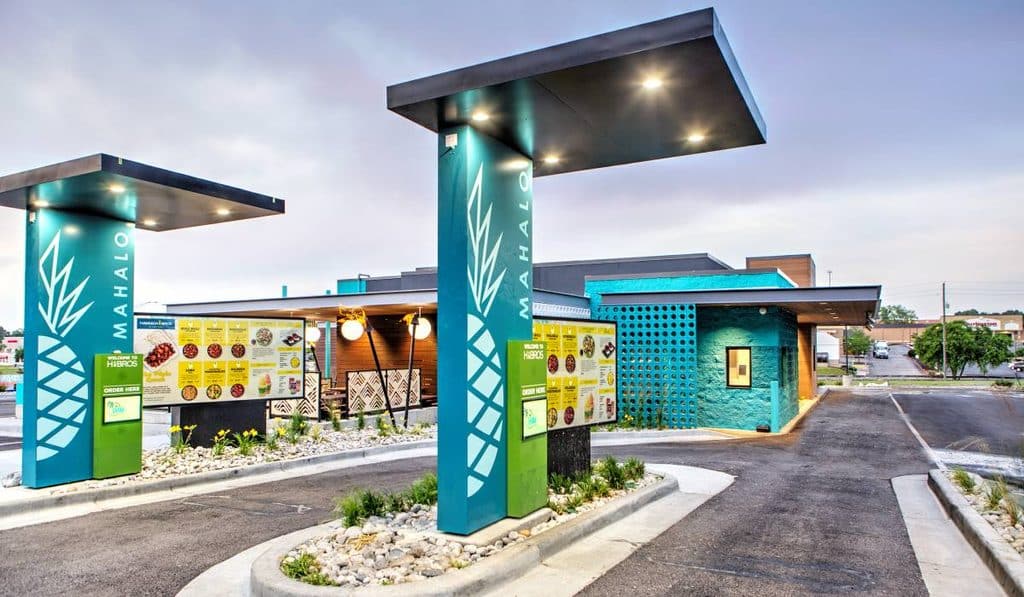
The company designs its sites to hold as many vehicles as possible before the order point. Once an order reaches the kitchen, the production line can usually keep pace. During busy periods, employees equipped with handheld devices move into the queue and take orders before cars reach the speaker. Timers supply detailed service data, and analytical tools help operators locate restaurants, shifts, and steps that create unusual delays.
The target is precise. “Yes, 30 seconds at the window is our target, and we evaluate it every day, every week,” Habiger says.
Digital demand has prompted Hawaiian Bros to separate traffic streams in newer buildings. Instead of asking app customers and delivery couriers to join the conventional lane or walk inside, some prototypes place a pickup window on the other side of the restaurant. The dedicated window protects the main lane from interruptions and makes the handoff clearer for couriers.
Hawaiian Bros uses AI to identify opportunities and give a smaller organization analytical reach that once required a large support staff. Habiger calls the technology useful when it turns store data into action.
“We use AI every day, and it’s really become what we think is a force multiplier for our brand. It gives us an opportunity to punch above our weight class,” he says.
Automated order taking is not an immediate priority. The chain wants the economics and guest experience to prove out first.
Each week, Hawaiian Bros reviews a scorecard and studies restaurant performance in a companywide “film room.” CEO Scott Ford participates in the call, creating direct accountability for results. Service time is one measure, but accuracy carries greater weight because a wrong order turns a convenient trip into a costly disappointment. The final window exchange also may be the employee’s only chance to give the transaction a personal note.
“If you have one opportunity at that present window, you better make the most of it,” Habiger says.
Tropical Smoothie Cafe is tackling the same channel collision from inside the kitchen. COO Jonathan Biggs says customers do not separate a brand into drive-thru, counter, app, and delivery experiences. They judge whether the transaction works, regardless of where it begins.
The company’s work falls into two major initiatives. Smooth Operator reorganizes food production to improve consistency and speed. Unified Experience seeks to make digital ordering and handoff feel consistent across restaurants and channels.
Smooth Operator took Tropical Smoothie back to basic kitchen mechanics. Teams established standard builds, revised oven settings for individual menu items, and removed preparation steps. The production line became shorter, and the chain sought to have smoothies, bowls, and food finish in sync instead of forcing one component of an order to wait for another.
“It’s pretty incredible work,” Biggs says.
More than 200 cafes had deployed the system as of early August. The gains have reached several parts of the guest experience.
“It’s been improving quality. It’s improving speed. It’s improving consistency to our guests,” Biggs says.
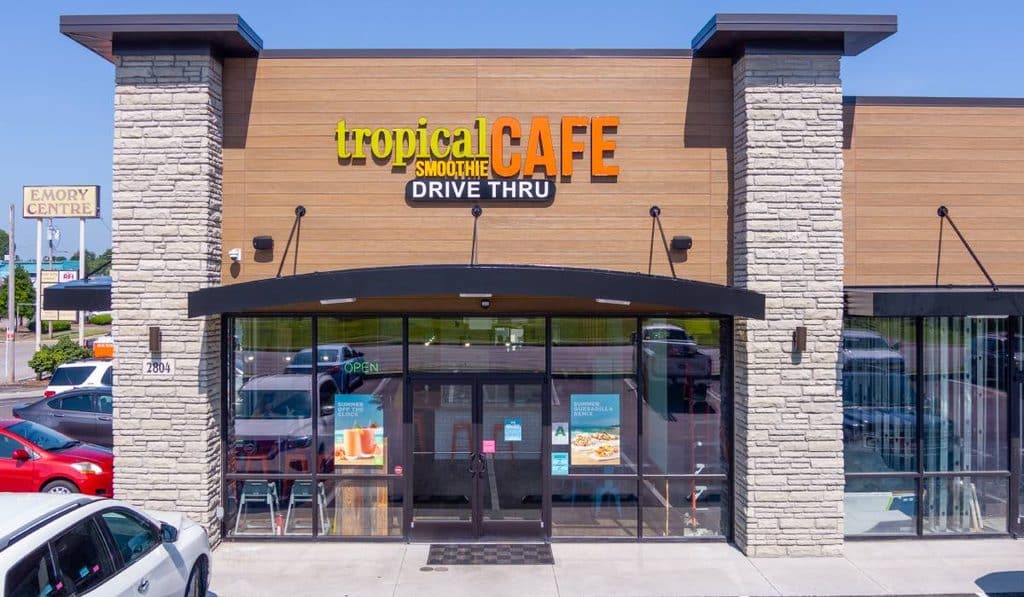
Drive-thrus account for roughly one-third of Tropical Smoothie Cafe’s footprint. Making those units easier to run could influence where franchisees place future capital. The brand is examining equipment, smaller building footprints, and a more linear workflow, with technology wrapped around the production system.
“The more franchisees are going to want to invest in drive-thru, the more we’ll continue to be able to expand that as part of our overall percentage of our portfolio,” Biggs says.
Tropical Smoothie has standardized pickup and checkout procedures for delivery drivers, reducing uncertainty once they arrive. It is also testing kiosks in a small group of cafes. Biggs says early use has been encouraging.
“It is showing really good adoption, and we really like where it’s going,” he says.
No single installation can fix every service gap. The brand’s menu, labor routines, kitchen layout and ordering interfaces must support one another across all occasions. New products also need to travel well and fit existing preparation demands. Tropical Smoothie’s Toasted Snack Rolls, for example, offer portability, simple execution, and an accessible price point.
According to Biggs, those connected details matter more than searching for one transformative device.
“There are just no silver bullets in the industry anymore to be successful. And in order to really have success, you have to focus on every single channel across all dayparts,” Biggs says.
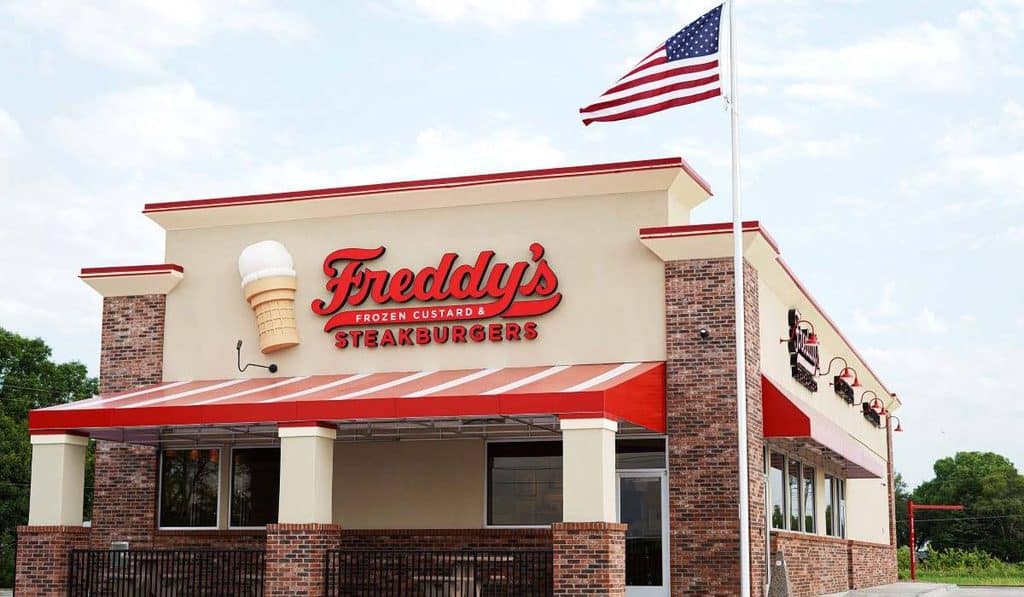
Freddy’s faces the issue at a much larger drive-thru scale. Ninety-five percent of its restaurants have a lane, CEO Chris Dull says. Before the pandemic, the channel represented roughly one-third of sales. It briefly became the only transaction mode at stores equipped for it, then settled near 46 percent. It is now the chain’s largest individual ordering channel.
Freddy’s began its current work with a strong focus on speed, but the company soon elevated accuracy. Its operating standard can be stated in two short instructions: “Get the order right. And then get it right on time,” Dull says.
The sequence matters because Freddy’s steakburgers are cooked after the order arrives.
To cut production time without changing that promise, the chain installed an innovative griddle press from AccuTemp. The equipment cooks patties consistently and relieves employees of manually pressing each one. From placement on the grill to movement toward the make line, a patty can be ready in roughly a minute.
Freddy’s also replaced text-dense make instructions with pictograms. An employee can follow the visual build instead of translating abbreviations and modifiers under pressure, which supports newer workers and reduces language barriers.
“They simply have to do what a picture tells them versus read a ticket, decipher what the ticket means, and then take that to the execution of the build,” Dull says.
At the bagging station, prompts remind workers to include items such as utensils and napkins. Fry timing is built into the production rhythm, too. Because fries need three and a half minutes, employees are instructed to drop them roughly one minute into the ticket so they finish close to the rest of the meal.
Digital orders contribute 12 to 13 percent of Freddy’s sales through first- and third-party platforms. Moving those customers through the site is a more difficult real estate question. Many existing restaurants were not built with exit doors and circulation patterns that support a separate pickup lane. The company has not forced a solution where the physical design does not support one.
Technology adoption follows a similarly measured cadence. Many restaurants use digital exterior menu boards, and order-confirmation screens are standard. Some franchise groups are testing voice AI, but the company is watching larger chains establish reliability and value before committing across the system. Freddy’s is also preparing a new menu-board layout intended to make ordering easier.
In high-volume queues, the simplest solution can still be a person with a tablet. Employees walk back through stacked cars, take orders face to face, and recognize guests earlier in the visit. Clear audio at the speaker is another form of hospitality. Customers should know the cashier heard them, and cashiers need confidence that they captured every request.
To Dull, the final handoff reveals whether all the kitchen systems, screens, and service routines have succeeded.
“Having a great presence in [the drive-thru], making sure that the voice is clean and clear and that the orders are right and on time, that’s really what’s important for us,” Dull says.