
Brand purpose used to be the thing every marketer chased. Now many have quietly backed away.
In a divided America, the lesson most companies have taken from recent marketing failures is to avoid purpose entirely. But that retreat means missing the kinds of opportunities that create distinction and consumer connection, and can drive sales. Two years of research by Bailey Lauerman points to a better approach: leaning into togetherness. Over 90 percent of Americans want a more unified country, and 54 percent believe brands have a role to play—up from 49 percent two years ago.
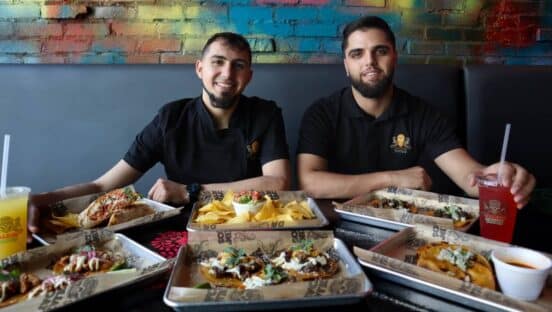
Because food is the original communal experience, restaurant brands can play in this space authentically without running afoul of core consumers with varied beliefs. Even in a time driven by drive-thrus and delivery apps, food is a social glue. Meal packs feed watch parties. Solo deliveries fuel social media posts while watching the game.That’s permission not to pick a side, but to help bring people together. For restaurant brands, the shared experiences food and restaurants create are the natural answer.
This summer offered two live tests of that brief—and one case that points to where the opportunity goes next.
Be a participant in the moment. Don’t sell it.
The brands that won during the 2026 FIFA World Cup didn’t just run generic ads and offers, they participated like fans. As a co-host, the U.S served as a massive stage for the tournament, with throngs of international visitors making first-time food discoveries and posting online. This thrust restaurants right to the front of the cultural experience, with positive social sentiment for restaurant brands up 722 percent versus the lead-in period, with “surprise” mentions up 2,825 percent and “joy” up 816 percent.
Look at Chipotle’s hydration-break surprise and $1 million free-burrito promotion during the championship game. It put the brand directly inside a moment fans were already living in real time. Social mentions rose 168 percent, with a 145 percent jump in positive volume. Chipotle didn’t need to explain that the World Cup brings people together. Instead, the brand joined the moment and gave fans a reason to participate.
Authentic Action vs Aesthetics
America’s 250th anniversary was tougher as it asked brands to interpret the meaning of the celebration. The brands who succeeded demonstrated genuine shared values rather than simply adopting a patriotic aesthetic.
Cracker Barrel and Chick-fil-A won by rooting their efforts in giving back. Cracker Barrel, with Americana at its core, donated roughly 10 million pounds of food to food banks (boosting positive mentions 1,269 percent) and Chick-fil-A’s “America Gives” initiative centered on community service (driving a 1,713 percent spike). Both executions went beyond flagwashing to take tangible actions that helped Americans.
On the other hand, Steak ‘n Shake’s $17.76 Liberty Meals and $2.50 “Patriot” Milkshake made patriotism about a price tag. Negative mentions jumped 3,622 percent with conversation calling the effort inauthentic. By failing to leverage the moment to unify people through shared values and beliefs, it left a vacuum that consumers filled with cynicism.
The takeaway? Empty aesthetics will be outed by today’s consumers. If you want to capitalize on a cultural moment, you have to earn the credibility to slap a price tag on a menu item. Tapping into shared values can help you get there.
Build the mindset, not just the moment
These major cultural moments prove the concept. But the real growth opportunity is turning “shared experience” into something that shows up in the P&L, not the usual discount instinct, which trains customers to show up for the deal instead of the brand.
Noodles & Company found another way, posting its strongest Q2 same-store sales growth since going public in 2013, up 10.3 percent systemwide with 7.6 percent of that from more guests walking in the door, not from raising prices.
CEO Joe Christina stopped separating traffic from brand. The clearest proof point is Boost Week: two dishes for $12, available only to rewards members—meaning the deal only works if two people show up and eat together. Noodles didn’t dress that up in language about unity; it just built the promotion around what people were already doing and let the format carry the meaning. Rewards members now generate roughly a quarter of total sales, with digital comps up 18 percent in Q2.
That’s “shared experience” on the balance sheet: a family bundle, a group meal deal already on the menu, attached to a moment customers already care about.
Togetherness across the calendar
For years, brand marketers treated brand purpose as a position. That gets riskier every year, since a position that unites one group can alienate another. But there are many opportune moments coming up—Super Bowl LXI, the 2027 Final Four, the Academy Awards, LA28 further out that, if you strip away the event marketing, are simply excuses for people to get together.
Brands that only borrow the date will treat each occasion as a fresh campaign and start from zero. Brands that build around what the occasion represents (connection) build on the same insight every time, because togetherness is the one thing on the calendar that repeats every single time.
Consumers have already provided the mandate. With 90 percent of them wanting unity and believing brands have a role to play in delivering it, the strategy is obvious. Brand purpose doesn’t have to mean inventing a new corporate stance. It is simply showing up, again and again, for what already brings people to the table.
Greg Andersen is CEO of Bailey Lauerman, an independent advertising agency headquartered in Omaha, Nebraska. The agency’s proprietary research platform, BL INTEL, along with its in-house social intelligence team, informs the data in this piece.