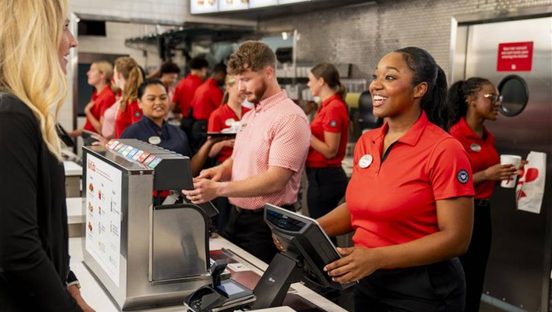
The restaurant industry is navigating change at an accelerating pace. Legacy brands are evolving to remain relevant, while emerging brands are constantly adapting to shifting consumer expectations, labor challenges, rising costs and new technologies. In this environment, the ability to lead through change has become just as important as the ability to execute it.
After spending decades in foodservice, first with PepsiCo and now working alongside many of the industry’s leading brands, along with time in the chemical manufacturing industry, I’ve found that making the business case for change is usually the easy part.
You can explain the numbers, the strategy and why change is necessary.
The emotional side of change is much more challenging.
That’s because people naturally wonder what the change means for them. Will my role change? Will my team change? Will what made us successful still matter? Those are the questions leaders have to answer if they expect people to embrace change instead of simply enduring it.
One question I’ve found especially helpful is asking, “What’s the opportunity of doing this, but maybe more importantly, what’s the impact of not doing it?” That reminds people that standing still is a decision. It helps them see what’s at stake and become part of shaping the future instead of protecting the past.
I’ve never seen restaurant leaders asked to navigate as much change as they are today, and the speed at which it’s happening is unlike anything I’ve seen before. Even limited-time offers have accelerated dramatically. Many brands that once introduced six or eight promotions a year are now launching three or four in a single month. Every new item creates a ripple effect throughout the operation.
I’ve come to believe organizations don’t struggle because they’re changing too much. They struggle when they lose sight of what shouldn’t change.
At McLane, we’ve completed dozens of business transitions over the past year alone. Each required us to think differently and move quickly, but all were guided by the same principles that have defined our company for more than a century.
The work changes; the technology changes; the values don’t.
People can handle a remarkable amount of change when they know what isn’t changing.
I’ve also learned that leadership isn’t about having all the answers. It’s about creating an environment where the best answers can emerge.
A few years ago, a customer came to us after learning its distributor could no longer support their operations. They had only a couple of weeks to find another solution. Under normal circumstances, onboarding a new customer involves hundreds of individual tasks and takes multiple weeks to complete.
So I brought together leaders from operations, procurement and customer service and laid out the challenge: “We can’t do it the way we’ve always done it, so how do we make this work?”
The ideas that came out of that discussion were remarkable. The team challenged assumptions, built on one another’s ideas and found solutions none of us would have developed individually. It reinforced something I believe strongly today: Some of the best ideas come from the people closest to the work.
That’s why I often challenge our teams to step out of their lane. I want people to be experts in their own responsibilities, but I also want them to think beyond their individual perspective. I ask teammates to bring forward ideas built around two simple questions: “What if?” and “Why not?”
Some of our best improvements have come from people looking beyond their own areas and asking how they can help another part of the business succeed.
Another lesson I’ve learned is that speed matters, but judgment matters even more.
For many internal improvements, I’m comfortable moving forward with 80 percent of the information because we’ll learn faster by doing than by waiting. If something doesn’t work, we adjust, learn from it and move forward. When customer trust is involved, however, I slow down, gather more perspectives and make sure we’ve considered every angle.
I’ve learned some of these lessons by getting them wrong.
In one major initiative, we didn’t include the people who had the most knowledge early enough in the process. That was the wrong thing to do. Since then, it’s changed how I approach major decisions. The people closest to the work often see challenges and opportunities leaders in the office can’t.
That’s also why I believe leaders should spend time in their customers’ world. There’s no substitute for seeing firsthand what your customer experiences every day.
Years ago, I worked a Friday evening shift inside a Pizza Hut restaurant. Things were quiet until it started raining. Suddenly, pizzas were flying down the line faster than I could cut and box them. I remember hearing Pizza Hut’s “Every pizza will be perfect” guarantee playing in the background and thinking, “Maybe not tonight.” It didn’t take long to appreciate the pressure restaurant teams face every day. That experience has stayed with me ever since.
The restaurant industry isn’t slowing down, and I find that exciting.
Every challenge is another opportunity to improve. If we stay grounded in our values, invite people to contribute beyond their own lane and continue asking “What if?” and “Why not?”, we won’t simply keep up with change.
We’ll help lead it.
Susan Adzick is president of the Restaurant division for McLane Company, Inc., the largest systems distributor in the U.S. McLane Restaurant operates 45 distribution centers across the country delivering more than 13 billion pounds of goods to more than 34,000 QSR, fast casual, casual and fine dining restaurants, including many of the industry’s top chains, while employing 8,500+ teammates.