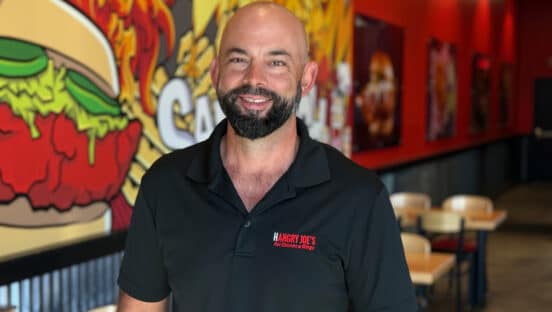
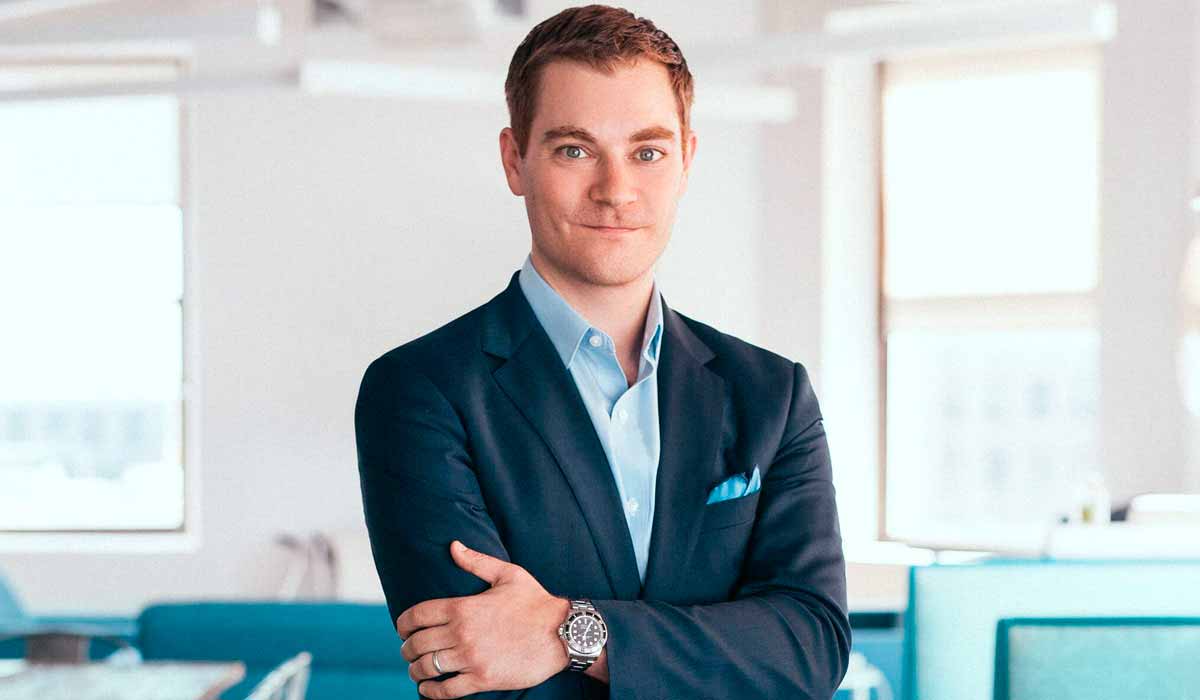
More than two decades after Noah Glass first envisioned a digital network connecting restaurants and their customers, the Olo founder and CEO is preparing to bring that idea directly to consumers.
On Tuesday, Olo will launch its namesake mobile app, giving customers a single destination to order pickup and delivery from restaurants across its network. The platform introduces what Glass calls “second-party” ordering, a model that combines the convenience of third-party marketplaces with the economics and customer relationships associated with restaurants’ direct ordering channels.
The proposition is straightforward. Customers can browse multiple brands without paying inflated menu prices, and operators receive the full profit from each order without marketplace commissions. Olo, meanwhile, collects a 5 percent fee from consumers.
The launch represents a significant expansion of Olo’s business, taking a company known primarily as a behind-the-scenes technology provider into a consumer-facing market dominated by DoorDash and Uber Eats.
Glass says ttthe concept dates to an executive summary he wrote in December 2003, years before Olo became an established restaurant technology provider.
“To say that this is like a nearly 23-year dream come true this launch Tuesday is not hyperbole,” Glass says.
Olo’s acquisition by private equity firm Thoma Bravo helped accelerate the initiative. Glass says the shift from a publicly traded software provider to a privately owned company created greater flexibility to pursue a network business model. His conviction was significant enough that he and his family reinvested 75 percent of their transaction proceeds into Olo.
The immediate opportunity lies in addressing longstanding friction in restaurant digital ordering.
Individual restaurant apps can be expensive to acquire customers for and difficult to sustain engagement with. Third-party marketplaces offer considerable consumer reach, but restaurants sacrifice margins through commissions, advertising expenses, and limited access to customer information.
Olo believes there is an underserved audience between dedicated restaurantttt loyalists and consumers committed to subscription programs such as DashPass and Uber One.
“There’s a big group in the middle, I would argue, and probably the majority of the overall population that wants the convenience of being able to order from many different brands in one place,” Glass says.
Glass doesn’t view the app primarily as a vehicle to shift existing transactions away from restaurant-owned channels. He expects the lower cost of ordering to encourage additional occasions among consumers who have become discouraged by delivery prices.
The potential savings are a significant component of Olo’s consumer pitch. Glass says menu markups on traditional marketplaces frequently range from 15 to 30 percent, adding costs that customers may mistakenly attribute to restaurants.
He points to an $85 delivery order he recently placed through the Olo app that cost $19.34 less than the equivalent marketplace transaction, even after Olo’s 5 percent fee.
The platform will disclose that fee during checkout and inform customers that ordering directly from a restaurant is the least expensive option.
Delivery fees and tips still apply when customers choose delivery, but Olo avoids the additional menu markups that can make marketplace orders considerably more expensive.
Another advantage is that Olo isn’t starting its consumer network from scratch.
The company has spent several years building Olo Accounts, a shared login system introduced in 2022 that allows customers to authenticate across participating restaurant brands using an email address or mobile number.
The system has expanded to 40 million guest accounts, creating an existing audience that can access the new app without establishing an entirely separate identity.
Customers who log in can see restaurants they’ve previously ordered from, access their transaction histories, and retrieve saved payment methods and delivery addresses, subject to their permissions.
That infrastructure also helps Olo address the familiar marketplace challenge of attracting enough restaurants to interest consumers and enough consumers to attract restaurants.
“The nice thing about what we’re doing here with Olo app is that because of what we’ve built up over the last 21 years and more specifically over the last four years, we’ve overcome that cold start problem,” Glass says.
The network could also become a customer acquisition tool for participating brands.
When someone discovers a restaurant through Olo’s app and places an order, that customer can become part of the restaurant’s marketing database, subject to the guest’s preferences. Operators receive transaction information that allows them to recognize the customer and pursue future engagement.
That distinction is particularly important to Glass, who sees the ability to identify new customers as a competitive advantage over conventional delivery marketplaces.
It also creates opportunities to connect the app with restaurant loyalty programs. Olo is exploring ways to incorporate existing rewards and potentially introduce a network-wide cash-back system similar to Shopify’s Shop Cash.
Such a feature could allow restaurants to offer incentives that encourage customers to try their brands. It won’t be available at launch, but Glass sees considerable potential in connecting Olo’s existing account holders with restaurants they haven’t visited.
“I’ve never seen any brand, national or regional, that has more than 10 million guests that overlap with Olo Accounts, which means that there’s at least 30 million new to access. How do we get those guests to place their first order at your restaurant?” Glass says.
On the operational side, Olo is relying on technology it has developed over the past decade.
Its Dispatch product, launched roughly 10 years ago, connects restaurant orders with third-party delivery couriers without requiring operators to maintain their own fleets. Glass says Olo secured agreements with delivery providers ahead of announcing the consumer app in March, allowing that existing infrastructure to support the launch.
The company is also integrating charitable giving into the ordering experience through No Kid Hungry. Customers can round up their purchases to the next dollar, with the additional funds supporting efforts to combat childhood hunger.
Olo has previously offered the feature through restaurant-owned ordering experiences, where Glass says approximately 10 percent of customers participate, contributing an average of 36 cents.
The company has also measured a 25-basis-point improvement in checkout conversion when the donation option appears, suggesting the initiative could benefit restaurants financially as well.
Olo will initially judge the app’s performance through gross merchandise volume, customer adoption, ordering frequency, average transaction size, and the incremental sales it delivers to restaurants.
The company’s access to customer-level transaction data should also make it easier to distinguish genuinely new business from orders that might have occurred through another channel.
Glass acknowledges that building a consumer ordering destination will take time. His longer-term ambition is to eventually process 1 billion annual orders through the app, a figure he believes is attainable given the enormous size of the U.S. restaurant industry.
“We’re going to be iterating like crazy as this comes to life and we learn and we adjust,” Glass says.