Shake Shack’s newest restaurants are bringing in customers—and making its growth story harder to read.
A lower weekly sales average and narrower restaurant margins accompanied the burger chain’s biggest third quarter of company-operated openings. But CEO Rob Lynch sees those pressures as the cost of building toward 1,500 company-operated restaurants, with new locations developing their sales and absorbing training expenses before reaching maturity.
The test is whether Shake Shack can keep existing restaurants growing through that expansion. Third-quarter results offered evidence it can. Same-store sales increased 2.5 percent, including 0.8 percent traffic growth, marking its fifth consecutive quarter of positive traffic and 23rd straight quarter of comparable sales gains.
READ MORE:
How Shake Shack is Owning the Beverage Conversation
Shake Shack Keeps Traffic Growing
Shake Shack Eyes Growth Investments Amid Volatility
Revenue climbed 15.2 percent to $423.3 million, and adjusted EBITDA increased 16 percent to $62.8 million. Those results came against a 5 percent same-store sales increase a year earlier, when Shake Shack introduced its Dubai Chocolate Shake and substantially increased paid media spending.
This time, the chain cleared that comparison with a smaller marketing investment.
“We’re building the engine that can replicate that year in and year out without needing a big additional infusion of marketing,” Lynch said.
Shake Shack opened 21 company-operated restaurants during Q3, bringing its year-to-date total to 54, compared with 30 at the same point in 2025. Its first South Carolina restaurants opened in Charleston and Greenville. The company expects 60–65 company-operated openings this year.
Average weekly sales declined 3.8 percent to $75,000 as newer restaurants accounted for a larger share of the business. Lynch said new locations typically open with annual sales volumes of $3 million–$3.5 million and restaurant margins in the high teens. System average unit volumes have held at $4 million, supported by comparable sales gains at established restaurants.
The company evaluates development against a longer horizon.
“Our objective when we approve any project regardless of which market or which format is always to deliver 30 percent cash-on-cash in year three,” Lynch said.
New restaurants also affect existing stores through delivery. Outside Manhattan, most projects are more than 10 miles from another Shack, Lynch said. Nevertheless, delivery territories controlled by third-party providers can overlap, shifting orders from an established restaurant to a new one.
Lynch estimated new openings create a 20–50-basis-point headwind to comparable traffic. That transfer is incorporated into the company’s plans, including its expectations for low-single-digit same-store sales growth and restaurant margins of 22–23 percent this year.
Third-quarter restaurant-level profit reached $91.7 million, with a margin of 22.5 percent, down 30 basis points. Higher delivery commissions and labor investments offset some benefits from lower food and paper costs.
Labor expenses rose 50 basis points to 25.4 percent of company-operated sales. Shake Shack is investing in training and development to supply the GMs needed for its opening schedule. More than 20 new GMs attended a training event in Atlanta during the week of the earnings call.
“We do not want to be a brand that has to make their EBITDA number by cutting labor that negatively impacts our team member or guest satisfaction,” Lynch said.
Supply chain improvements offer another source of savings. Food and paper costs fell 100 basis points to 28.3 percent of sales, helped by menu pricing and lower costs for buns, chicken, and dairy. Beef costs increased in the low single digits.
Some savings came from competitive bidding and changes to ingredient production and distribution, Lynch said. The company is reviewing its long-term margin expansion expectations as it weighs procurement opportunities against the expenses associated with new restaurants.
Shake Shack added a 1 percent menu price increase in October. Gross pricing was approximately 4 percent during Q3, but promotions and changes in sales mix limited the net price/mix contribution to 1.7 percent. With earlier pricing scheduled to roll off in December, the chain expects to exit 2026 with roughly 2 percent gross pricing.
The consumer divide persists. Higher-income customers drove traffic gains that offset weakness among lower-income guests, especially in urban markets. Lynch said Shake Shack’s real estate portfolio and premium positioning limit its exposure to that pressured segment.
Its menu strategy seeks to give existing customers additional reasons to visit and spend. The Baby Back Rib Sandwich supported trial, frequency, and check growth, followed by a West Coast-inspired platform in July and the Reese’s Peanut Butter Cup Shake in September. The Black Truffle menu returned near quarter’s end.
Shake Shack runs four major limited-time menu windows annually, with products typically available for three or four months. Lynch said the company is examining ancillary shakes, sides, and chicken bite variations to reduce operating demands without cutting those major launches.
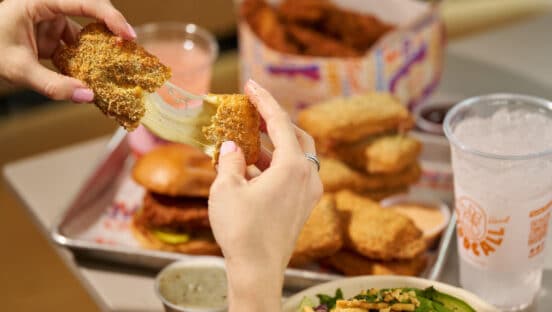
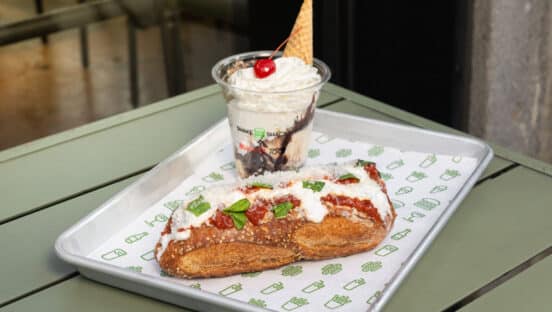
Smaller collaborations, including its partnership with New York pizzeria Mama’s TOO!, serve a different purpose. They give the brand access to culinary conversations and audiences without requiring a systemwide rollout.
Digital investments are supplying more information on what brings guests back. Shake Shack changed its digital sales definition to include kiosks, its app, and its website, excluding third-party delivery. Those owned channels accounted for approximately 60 percent of company-operated sales during Q3.
Most in-restaurant orders now come through kiosks, where customers registered for the chain’s app or offers can redeem promotions. That connects dining room transactions to purchasing histories and gives Shake Shack another way to tailor incentives.
Lynch expects marketing dollars to increase alongside revenue, allowing the chain to expand its spending without another major step-up as a percentage of sales. Fourth-quarter marketing expenses will rise sequentially as Shake Shack laps last year’s promotions and Big Shack launch.
Its licensed business provides another avenue for growth. Partners opened 16 restaurants during Q3, bringing year-to-date openings to 32. Licensing revenue increased 4.7 percent to $15.3 million, and licensed restaurant sales rose 8.3 percent to $236.8 million. The company expects openings near the high end of its 40–45 target, with fourth-quarter debuts planned in Panama, Vietnam, and U.S. regional casinos through PENN Entertainment.
A loyalty program could begin beta testing in late 2026 or early 2027, but Lynch would not commit to a deadline. Shake Shack is prioritizing personalized recognition over an immediate sales lift. The program is part of Project Catalyst, which also encompasses restaurant systems, data infrastructure, and AI tools.
Lynch cautioned that loyalty programs initially tend to serve existing guests, potentially creating costs before delivering additional business. Shake Shack wants its version to carry the hospitality associated with founder Danny Meyer into digital interactions.
“We are really investing a lot of time and energy to make this more than just a point-based program,” Lynch said. “We want it to be an engagement tool, harkening back to Danny Meyer’s Union Square Hospitality Group, when someone walks in and they know your name and they know what you’ve ordered in the past, they know that it’s your anniversary or your birthday, like that’s our aspiration.”