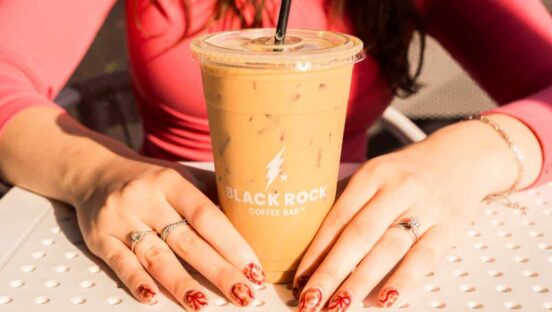
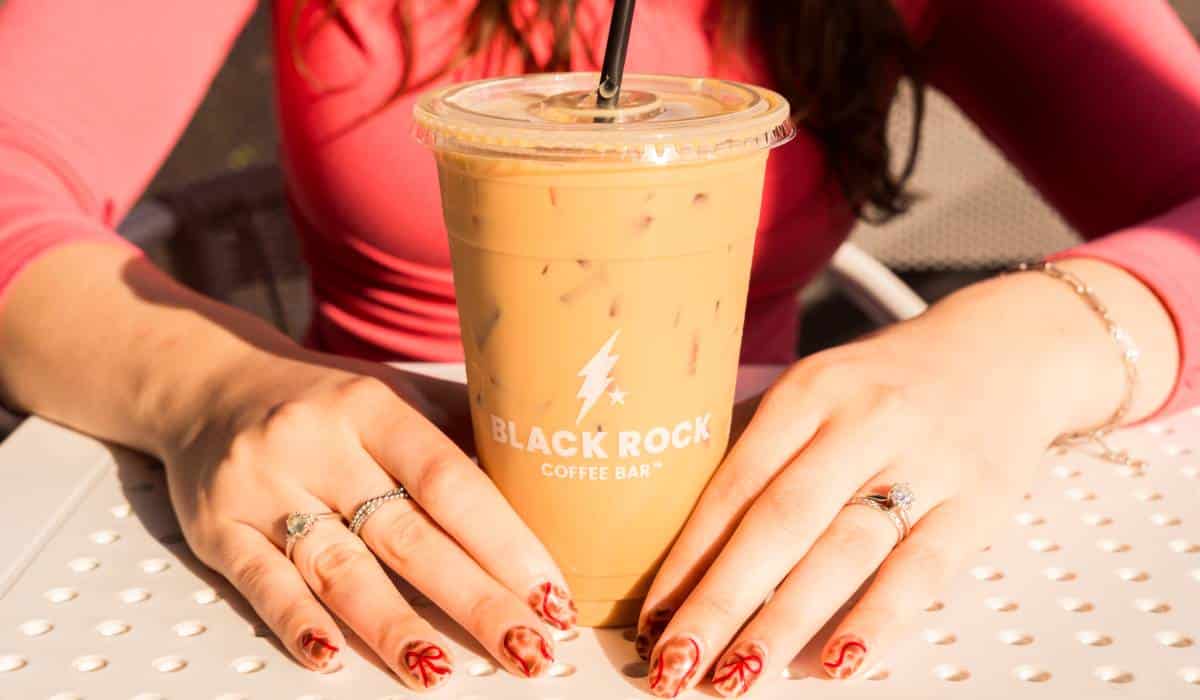
Black Rock Coffee Bar is giving customers more reasons to visit later in the day. It’s also giving them more time to do it.
The chain has made extended hours permanent at roughly 70 percent of its stores after testing the initiative beginning in late June and early July. New locations are opening with the longer schedule, too. Alongside a growing food menu, the move is helping Black Rock build sales beyond its morning business.
The benefit hasn’t been limited to the added hour. CEO Mark Davis said sales have also grown in the hours leading up to it, while the later business is attracting a younger customer.
“When we made the decision to make them permanent, they are definitely profitable, they are contributing to the same store sales, and they are contributing to the transactions,” Davis said during Black Rock’s third-quarter earnings call.
READ MORE:
Guest Experience Continues to Drive Black Rock Coffee Bar’s Growth 200 Stores In
Black Rock Coffee Bar Adjusts to Life in the Spotlight
Inside the Early Phases of Black Rock’s 1,000-Store Growth Journey
The company hasn’t quantified the initiative’s contribution to comps. But it’s one piece of a broader traffic improvement as Black Rock works to get more business from existing stores.
Same-store sales rose 5.8 percent in Q3, up from 4.2 percent in the prior quarter and marking Black Rock’s 15th consecutive positive period. Transactions increased 2.4 percent, and the two-year same-store sales stack reached 16.6 percent. Revenue climbed 29.7 percent to $66.8 million.
Traffic turned positive after declines in the first half, when Black Rock was comparing against activity surrounding its loyalty rollout. Transactions improved from 1.7 percent growth in July to 2.4 percent for the full quarter. Davis expects Q4 to deliver the year’s strongest same-store sales and transaction growth.
Food is becoming a larger part of that story. It represented 14.2 percent of Q3 sales mix, while Black Rock’s Fuel energy platform accounted for 26.3 percent. Food attachment has increased across every daypart in each quarter of 2026.
Grilled cheese and cake pops are helping build afternoon and evening orders. The latter earned a permanent place on the menu, with rotating seasonal flavors providing additional news. Black Rock has also begun rolling out an enhanced core menu with more sweet, savory, and snackable options.
The goal isn’t to keep adding complexity.
“We want to have a menu that does not grow substantially,” Davis said. “I think as we bring things on, we take things off.”
Limited-time offerings serve as a testing ground for both customer demand and store execution. Cake pops, for instance, offered something new without creating a difficult preparation process for employees.
Black Rock’s lobbies provide another way to build food occasions alongside its drive-thru business. Still, Davis said later-day food attachment isn’t where the company wants it yet, leaving room to improve as the menu evolves.
The chain is becoming more targeted in how it encourages those visits, too. Loyalty represented approximately 69 percent of transactions in Q3, holding steady as Black Rock opened stores and added customers.
Personalized campaigns can follow specific behaviors, such as sending an offer after a food purchase to encourage another visit. About 90 days into testing a customer data platform, Black Rock is also using point-of-sale information to reach previous visitors outside its loyalty program.
Davis described the early results as promising, although the company did not disclose engagement or redemption rates. Black Rock also sees room to increase paid media investment in 2027 following a regional campaign spanning video, search, streaming audio, and connected television.
Building those visits comes with near-term costs. Labor increased 110 basis points to 22.1 percent of revenue as Black Rock staffed extended hours and invested in larger teams to support openings, particularly in California.
“We want to make sure we are showing up, supporting the team, and providing a great guest experience,” CFO Rodd Booth said.
Booth expects productivity to improve as afternoon and evening sales build. Store-level profit grew 26.5 percent to $19.3 million, with a margin of 28.9 percent. Lower beverage, food, and packaging costs helped offset the labor investment.
Adjusted EBITDA increased 22.1 percent to $8.5 million, trailing revenue growth. Black Rock expects that relationship to reverse in Q4 as it laps public-company costs, improves opening processes, and builds later-day business.
The chain opened 11 stores in Q3, finishing with 211, and raised its full-year opening target to 40 from 38. Its 2027 store-lead pipeline is already in place, supported by a system in which 98 percent of store leaders were promoted internally.
“Our ability to attract, develop, and retain team members continues to differentiate Black Rock and supports the guest experience, operational consistency, and growth that drive our financial results,” Davis said.
The company reaffirmed full-year revenue guidance of $255 million to $257 million and adjusted EBITDA of $34 million to $35 million.