
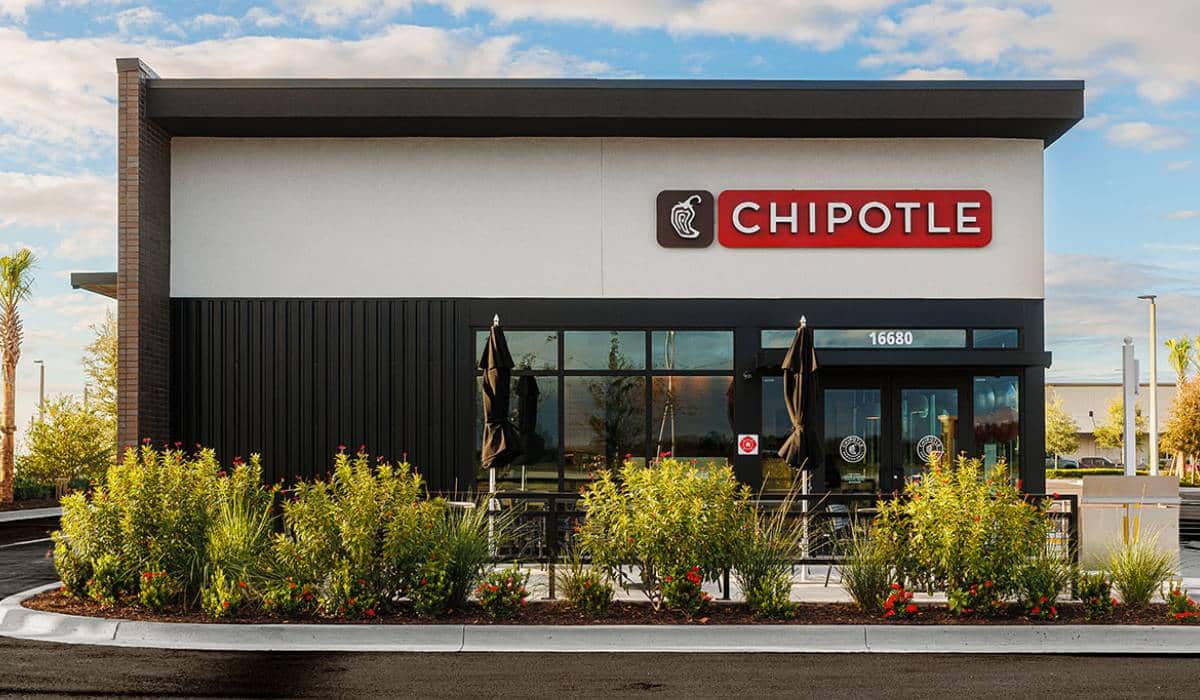
Chipotle’s pickup lane journey quietly began in late 2018 when it started piloting an earlier generation of what became known as the “Chipotlane.” The following November, at CNBC’s Evolve Summit in Los Angeles, then-CEO Brian Niccol shared a comment hinting fleet-changing potential.
He claimed it was taking Chipotle “all of 12 seconds” to deliver food through the format, which was a notable comment for more than the obvious.
Chipotle wasn’t a brand that built “drive-thrus.” Fast casual, in general, was historically a category that viewed the channel as a reflection of pre-made food delivered quickly without customization. How could a guest walk the line and see a burrito being crafted while driving outside a restaurant? The same was true of menuboards and the friction of shouting builds through a speaker box. This, too, as digital orders surged inside restaurants.
Chipotle, though, viewed the possibility through the lens of customers carrying kiosks in their pockets. Scott Boatwright, the brand’s current chief executive who was COO at the time, was working out of Chipotle’s Denver office when he observed customers heading to a downtown restaurant and ordering through digital channels.
But when they showed up, they seemed lost. Should they wait in line? Cut to the front? Boatwright and his team decided to cut a hole in the wall, place a pickup sign over it, and have employees pass bags through the entry point. Sales via the channel popped 50 percent (this store still exists today).
In a sense, it’s where the Chipotlane’s true vision began to bubble. First, however, it led to the mobile ordering pickup shelving units so ubiquitous today through the category. Those allowed order-ahead diners to wayfind without disrupting in-store queues.
And so, the next question became, could Chipotle solve the same problem for people who didn’t want to get out of their cars?
MORE:
Chipotle’s Operational Reset is Driving Clear Results
The Story of Where Chipotle Got Off Track, and How it Found its Way Back
Scott Boatwright Charts the Future of Chipotle as CEO
During an office brainstorm, the idea of “a drive-thru, but not a drive-thru,” surfaced.
With technology flooding QSR and consumer preference leaving behind the old days of “drive-thru equals food as fuel and nothing but food as fuel,” Chipotle took this kiosk-in-the-pocket notion and developed an approach where guests had to order ahead and pull up for pickup. No ordering at the store.
It reconfigured layouts so employees serving the window had to shuffle just a few feet.
And as noted, Chipotle tested “Chipotlanes” in five restaurants and saw immediate performance. Early openings hit the market with sales 20 percent higher and 200 basis-points of store-level margin improvement. They also drove 15 percent loftier digital sales mix—a vital lever when you consider the impact third-party delivery burdens on this corner of the business.
Come summer 2021, Chipotle had 250 of them. A year later in November, there were 500. Milestone Chipotlane No. 1,000 arrived November 2024, meaning the company took roughly five years to build (or tack on) a fleet of pickup-lane restaurants roughly the size of concepts like Zaxbys, Culver’s, and Carl’s Jr.
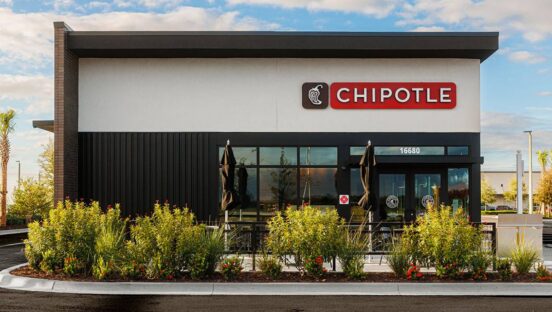
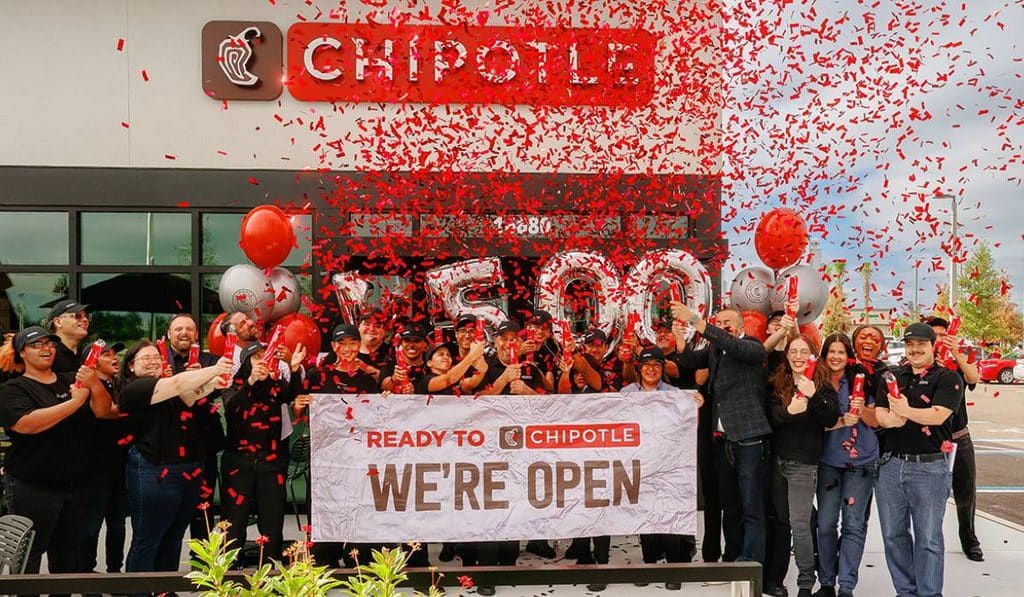
And, the company announced Tuesday, it needed less than two more years to get another 500 in operation. Chipotle’s 1,500th Chipotlane arrived in Bradenton, Florida, a Gulf Coast city of about 60,000 that wedges south of Tampa and north of Sarasota along the Manatee River.
Chipotle said the restaurant opened amid continued growth across Florida, where it plans to lift the chain’s footprint by about 17 percent this year and create 1,500 jobs.
The larger success of “Chipotlane,” though, has quickly brought it deeper into the brand’s development mix. It opened 100 corporate restaurants in Q2 (Chipotle only has licensed stores overseas) and expects to debut roughly 350 this year. About 80 percent of those will include a Chipotlane—a number its stuck to for years now. The Q2 figure was 101 new restaurants (80 Chipotlanes) and one international partner-operated location.
For 2025, Chipotle opened 334 company-run stores, of which 257 included the order-ahead capability. The long-term goal remains 7,000 North America restaurants.
Going off year-end 2025 data, 1,500 locations would make the Chipotlane the country’s 27th largest QSR, slotting ahead of Hardee’s (1,492) and behind Five Guys (1,511).
“Chipotlanes are a powerful growth engine for Chipotle, delivering greater convenience and access for our guests while driving strong restaurant performance,” Jason Kidd, COO, said in a statement. “As we expand across North America, the format will remain central to our development strategy and our ability to bring Chipotle to more communities.”
To celebrate the opening, the first 53 guests to pick up a digital order through the Chipotlane on opening day will get a limited-edition Chipotle-branded speaker, a nod to the brand’s 53 real ingredients.
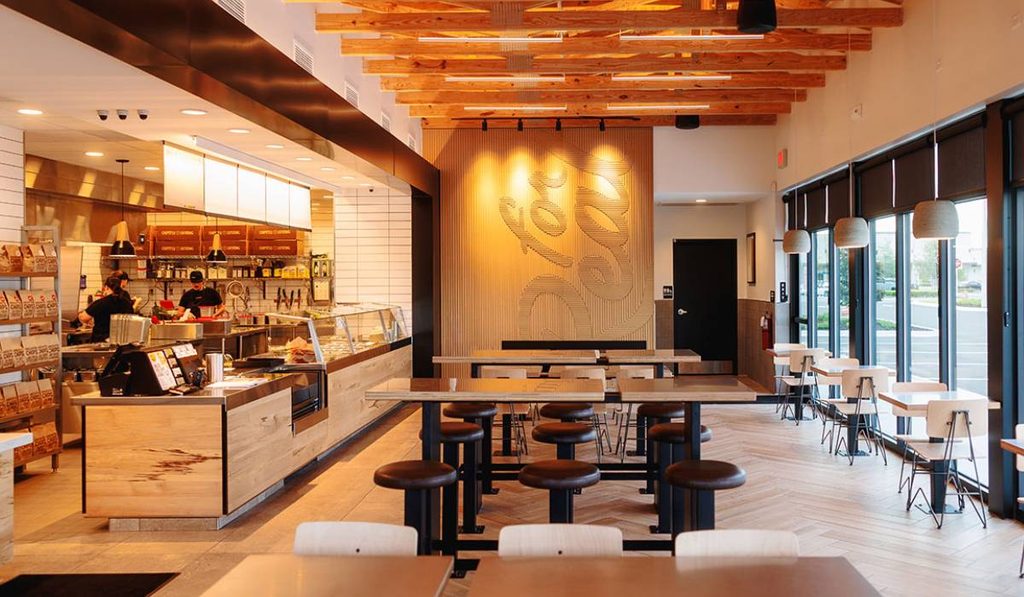
Chipotle’s 1,500th restaurant also features the brand’s new Habanero store design and high-efficiency equipment package, or what it calls “HEEP.” That incorporates advanced systems to improve efficiency.
HEEP, when Q2 ended, was live in more than 1,000 restaurants, with a plan to reach 2,000 by calendar’s close. Chipotle said units with the tools outperformed the system by two to three completed entrees in their peak 15-minute period.
The package features a dual-sided plancha, three-pan rice cooker, and high-capacity fryer. It can be installed overnight and doesn’t require a unit to close. Chipotle previous noted it’s plug-and-play and takes teams about a month to get up to speed.
Sales thus far are 2–4 percent higher and there’s improved throughput, taste of food, and OSAT scores. The package enables restaurants to get prep tasks done more efficiently in the morning. Crew can take breaks and cash in on the free meal they get for working a shift. And then, they’re back on the line before crowds show up and staff is fully deployed.
It costs roughly $100,000 to retrofit an existing restaurant.
Chipotle has exceeded Wall Street projections in recent quarters after a run of challenged results.
After topping projecting in Q1 with positive same-store sales and transactions, Chipotle achieved the same in Q2, with comps rising 2.2 percent and traffic bumping 1 percent. It was the fast casual’s best same-store sales performance since Q4 2024.
Average-unit volume came in at $3.102 million, up from $3.094 million the prior period. The company added it saw outsized improvement from younger consumers and lower-income guests, two cohorts the brand has struggled with.
Chipotle carried momentum into early July before results veered thanks to a multistate cyclospora outbreak. The company reports Q3 results on October 28.
Chipotle more recently announced enchantments to its apprentice program that places greater emphasis on developing talent and building the bench for expansion. It’s aiming to add an apprentice to each of its 4,200-plus company-owned stores by the end of 2027.
Related: A look at turnover metrics for Chipotle
Today, they support about 75 percent of Chipotle’s units. More than 85 percent of restaurant managers began with the brand.