After more than a decade of steady expansion, Bubbakoo’s Burritos is ready to accelerate.
The New Jersey-born fast-casual brand, which has grown from its Jersey Shore roots to more than 140 locations across 16 states, is now building the infrastructure to support a more aggressive national push following its acquisition by Thompson Street Capital Partners.
The goal is to reach 300 units over the next four to five years.
For CEO Chris Ives, the transition marks a clear inflection point in how the business operates.
“Obviously the brand was a founder-run company since ’08, so a little over 17 years,” says Ives, who joined the team in November 2019 and was promoted to chief executive in June 2025. “Founders always run businesses different than probably private equity companies do. The biggest change instantly was infrastructure and data… Founders fully exited the system, so they’ve done a great job. It just came at a point in time where they brought it to where they felt it could go and now it’s time to invest.”
That shift—from a founder-led concept to a private equity-backed platform—is increasingly common across the restaurant industry, as investors look to emerging brands with strong franchise models and room to scale. In Bubbakoo’s case, the foundation was already in place. The brand opened 18 new locations in 2025, expanding into new markets like Utah and Indiana while continuing to deepen its presence in core states such as New Jersey, Pennsylvania, and Maryland.
But while the brand has built a following through steady growth and a distinct menu identity, leadership is now focused on refining the systems that support it. That starts with franchisees, who make up roughly 95 percent of the system.
“Couple biggest things for me is communication and transparency with the franchise base. It’s really making sure, how can I make their life easier from an operational front while contributing to margin at the bottom line,” Ives says. “It was, let’s rip the band-aid off. It’s been founder-run, which there’s high emotions with founders, and let’s remove the emotions out of it and let’s start to look at decisions that can move the business from a top line up, and at the same time, move the bottom line up.”
Instead of relying heavily on discounting in a value-driven environment, the brand has leaned into consistency by focusing on food quality, portion size, and hospitality to maintain performance. The strategy has held up. Coming out of the transaction, the brand posted one of its strongest years, with comps up more than 4 percent and traffic holding flat.
“I would say that we strategically haven’t had an overall discounting type of approach,” Ives says. “It’s just been, hey, we’ve been doing this for the past 18 years. We know what we deliver on, and as long as we deliver on the hospitality service side and our food, we’re going to come out on the other side.”
Additionally, the company has worked to improve unit-level economics through operational changes that are less visible but equally impactful. A recent overhaul of the supply chain added margin for franchisees, while menu simplification efforts have reduced complexity in the kitchen by eliminating slower-moving items and cutting down prep times.
“It’s not the sexy stuff, but we’re focusing on stuff that makes [franchisees’] lives easier while also focusing on profitability,” Ives says.
Those changes are paired with a growing emphasis on technology and data—areas that had historically been underdeveloped. The company has invested in a new guest data platform, revamped its loyalty program, and is working toward a more personalized marketing approach.
“It’s really focusing on the frequency of what our guests are ordering and why they’re ordering it. And really personalizing that, whereas historically it’s been a spray and pray type of approach,” Ives says.
Digital improvements extend beyond marketing. The brand is also investing in training systems and point-of-sale technology to improve order accuracy and provide better operational insights at the restaurant level.
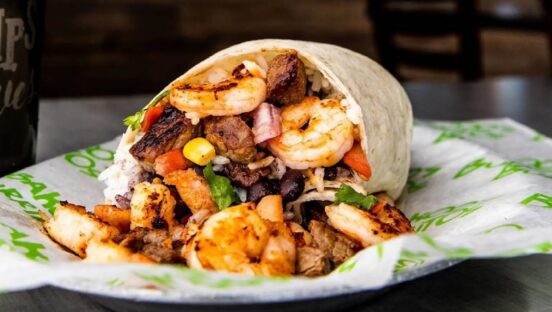
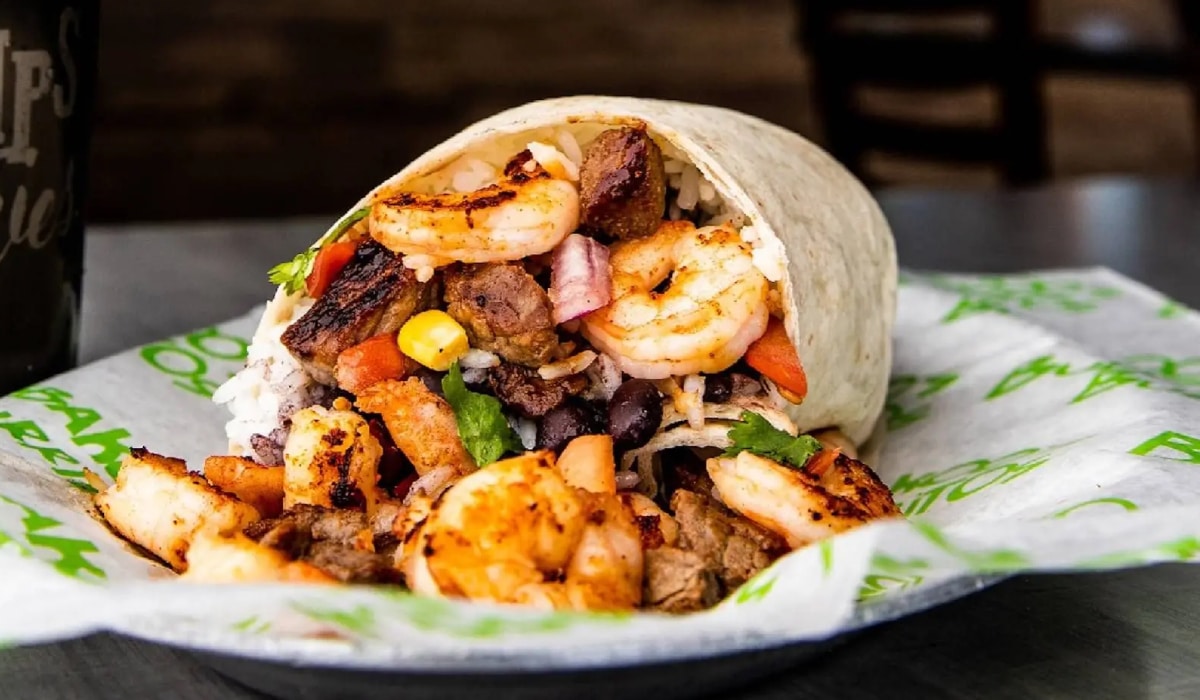
At the center of Bubbakoo’s growth strategy, however, remains its menu—long a differentiator in the crowded fast-casual Mexican segment. Built around its “Create Something Different” ethos, the concept emphasizes customization and bold, fusion-style flavors, from hibachi-inspired burritos to Nashville hot chicken variations.
“Menus are definitely our North Star,” Ives says. “We have the sauce and then we have proteins that competitors don’t make. Then we also make our premium proteins made to order hibachi style. When that’s done well, and we execute it all well, it’s a home run with the guests.”
Unlike many competitors, Bubbakoo’s doesn’t rely heavily on introducing entirely new ingredients for limited-time offers. Instead, it builds innovation from within its existing pantry—combining sauces, proteins, and formats in new ways, often inspired by franchisees themselves.
“I don’t want to take any of the credit. The franchisees actually promote and make a lot of the crazy stuff. There’s a lot of crazy stuff that we see every day that they send to us, and they really fuel that creativity,” Ives says.
That model has helped the brand maintain a steady pipeline of menu innovation while keeping operations relatively streamlined. It’s a balance that becomes increasingly important as the system grows.
With new leadership in place, including hires across marketing, finance, and franchise development, Bubbakoo’s is now focused on accelerating expansion while maintaining that balance. The company has already signed multiple new development agreements this year and is targeting continued growth along the Eastern Seaboard, with Virginia and the Carolinas emerging as key markets.
Longer term, the goal is to significantly expand the footprint.
Even so, leadership acknowledges that scaling the business will require more than just opening new restaurants. It will depend on building the systems, tools, and processes that allow franchisees to operate more efficiently and deliver a more consistent guest experience.
“I think it’s finally time where the brand puts on their big boy or girl pants,” Ives says. “We’re focusing on our franchisees’ profitability as well as their overall lifestyle, making sure that they’re successful and they can continue to build with us.”
After years of steady, measured growth, Bubbakoo’s appears to be entering a different stage.
That stage is one where momentum is no longer the question, but how fast and how effectively the brand can scale.
“I think it’s been a slow 18 years of growth,” Ives says. “But we’re starting to feel the traction where we can get this engine moving much quicker than 20 to 25 shops per year.”