
Penn Station East Coast Subs is stepping into its fourth decade with a new name and a broader menu.
The Cincinnati-based franchise, which has more than 300 locations nationwide, is now operating as Penn Station Sandwiches, a shift that comes with a new lineup of offerings that trade the traditional sub roll for multigrain bread, plus wraps, bowls, kids’ meals, value bundles, and bite-size cookies, alongside the removal of a handful of underperforming items.
The result is more formats built around the same core flavors and a menu designed for a very different reality than the one the brand was built in.
The changes trace back to a fundamental shift in how customers interact with restaurants, explains COO Craig Dunaway.
“Only about 20 percent of our food is eaten in the restaurant now, which means 80 percent of it is off-premises,” he says. “The consumer now tells us how they want to get the food, and we either adapt to that or we get left behind.”
That shift happened quickly. Before the pandemic, Penn Station didn’t offer third-party delivery. Today, it accounts for roughly 20 percent of sales. First-party digital ordering also was “pretty much nonexistent” for the brand just a few years ago but has since climbed to around 15 percent of sales.
“If most of our food is leaving the four walls, we need a menu that’s built to travel and still be awesome half an hour later,” Dunaway says.
Penn Station has long been known for hot, grilled subs—products that are at their best right off the line—but off-premise occasions reward items that hold up over time. Cold builds and more portable formats tend to travel better, especially for lunch and delivery.
The brand’s answer isn’t to abandon its core but to build around it. The new menu adds sandwiches on 9-grain bread, wraps, and bowls that remove or rethink the bread altogether. The shift is visible on the menu board, where the new sandwiches now take up roughly a third of the space that used to be dedicated almost entirely to hot, grilled-to-order subs.
Dunaway says the goal is to drive frequency and bring in new use cases, letting sandwiches grow alongside subs over time. Not every sub made the jump. Only seven, plus a grilled cheese, were chosen based on what worked best on the multigrain platform and what made sense operationally.
The same discipline showed up in what the company removed.
“We took off a few smaller items and a couple of subs that just weren’t selling,” Dunaway says. “Ultimately, what we’re selling is profitability, and you can’t be sentimental about SKUs that don’t pull their weight.”
Operationally, the changes are less complex than they might appear, he adds. Many of the new sandwiches use the same builds and ingredients as existing subs, just on a different bread, which helps limit back-of-house disruption.
The new platform was tested for nearly a year in markets including Dayton, Indianapolis, and Cincinnati, giving the company time to see how customers responded before rolling it out systemwide.
The sandwiches also anchor a clearer value ladder. A full sandwich is priced at $9.99, while a half comes in at $4.99 for a smaller, more accessible entry point. That same thinking carries into kids’ meals and bundled offers like Penn Pairs, which combine a half sandwich with fries at a lower price point.
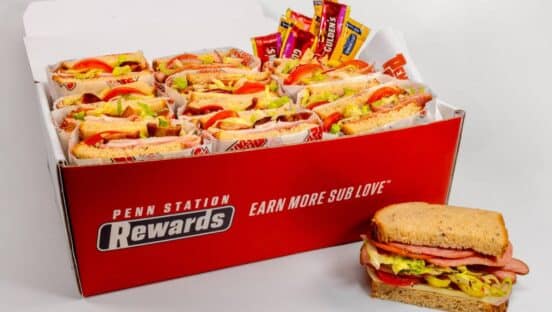
Catering is another major focus of the menu refresh. Historically underutilized, the category now is getting a broader set of options, including both subs and sandwiches, along with bowls designed to fill a long-standing gap.
“Any time someone is ordering for five, 10, or 15 people, there’s always that person who doesn’t want bread or is dieting,” Dunaway says. “Before, we really didn’t have anything for them. Now we do.”
All of it ties back to the brand’s repositioning.
“Taking ‘East Coast’ out of the name makes it a lot easier to travel, and moving from ‘subs’ to ‘sandwiches’ gives us a much broader permission set for what we can be in the future,” Dunaway says.
That flexibility matters as the category evolves.
“‘Sandwiches’ carries a different connotation than ‘subs.’ It lets us play in more spaces, do more LTOs, and not get pigeonholed as just a one-lane sub shop,” he says. “If we wanted to introduce a hamburger now, we technically could. We’re not going to, but that’s the kind of flexibility the word ‘sandwiches’ gives you from a brand standpoint.”
Alongside the customer-facing changes, Penn Station is taking a more disciplined approach to its footprint.
“For years we tried to will bad locations and poor operators into success with more support and more marketing,” Dunaway says. “At some point you have to admit you bought a bad stock. You sell it and move on.”
Rather than slamming the brakes on a bunch of restaurants overnight, Dunaway says the brand will wind down underperformers gradually as leases and franchise agreements come up for renewal, looking at each location’s trajectory over the past few years and working with operators on an exit plan if the numbers don’t justify a remodel. That means closing somewhere between 10-15 of the chain’s roughly 320 units over time, with new openings in stronger markets keeping the overall unit count roughly flat but leaving the system healthier and more focused.
“It’s not that material in count,” Dunaway says, “but it’s very material in terms of cleaning up the system.”
Looking ahead, new unit growth will stay concentrated close to home. Ninety‑five percent of Penn Station’s restaurants are within 350 miles of Cincinnati.
“We’re focused on filling in that concentric circle—Columbus, Pittsburgh, Detroit, the Carolinas—before we go chasing dots all over the map,” Dunaway says.
Taken together, he says the rebrand, menu changes, and portfolio cleanup reflect a broader reset in how Penn Station thinks about its business: fewer underperforming assets, more flexibility in the menu, and a clearer fit with how customers actually use the brand today.
“If you’re a franchisee or somebody looking at our brand, you want to know we’re willing to shut down old, tired units and put money back into the ones that are performing,” Dunaway says. “That tells you we’re serious about protecting the brand you’re buying into.”