
World Wrapps was already serving fast-casual food before the industry had settled on a name for the category.
When the Bay Area concept opened in 1995, restaurant choices often fell into one of two camps. Customers could grab a meal from a traditional fast-food chain or commit more time to a sit-down restaurant. World Wrapps cofounder Matthew Blair and his partners saw room between those options for globally inspired food that traveled well, arrived quickly, and offered a more health-conscious alternative.
“Back then, there was really no such thing as fast casual,” Blair says. “We felt that there was a niche and we really believe we were one of the first fast-casual concepts out there.”
The company grew to more than 25 restaurants across Seattle, the Bay Area, and Los Angeles during its first five years. Its founders sold the business, but the story did not end there. Blair and Keith Cox, another original cofounder and the former CEO of Pacific Catch, bought World Wrapps back a little more than eight years ago. They believed the concept had gone stale; there are currently five restaurants in the Bay Area now. Blair and Cox saw an opportunity to rework it for a new era.

The result became known internally as World Wrapps 2.0, including a goal to double from five to 10 restaurants over the coming two to three years. The founders returned to a principle that had guided the original brand, summed up in one of its slogans, “We innovate, we don’t imitate.” In its first iteration, World Wrapps says it created spinach and tomato tortillas and was the first restaurant concept to offer a Caesar wrap. Its revival needed its own set of ideas that competitors could not easily match.
“There’s no doubt you have to stay fresh and relevant,” Blair says.
World Wrapps paired its food with boba drinks roughly eight years ago, before the beverage became common across the restaurant landscape. It has since shifted some attention to other house-made selections, including watermelon agua frescas and ube horchata. The kitchen makes sauces and beverages in each restaurant instead of using a commissary. Dough is also prepared in-house and pressed fresh for each order.
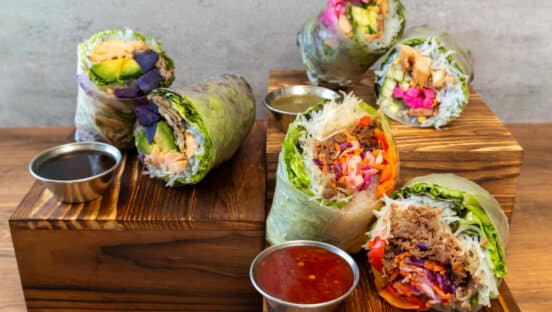
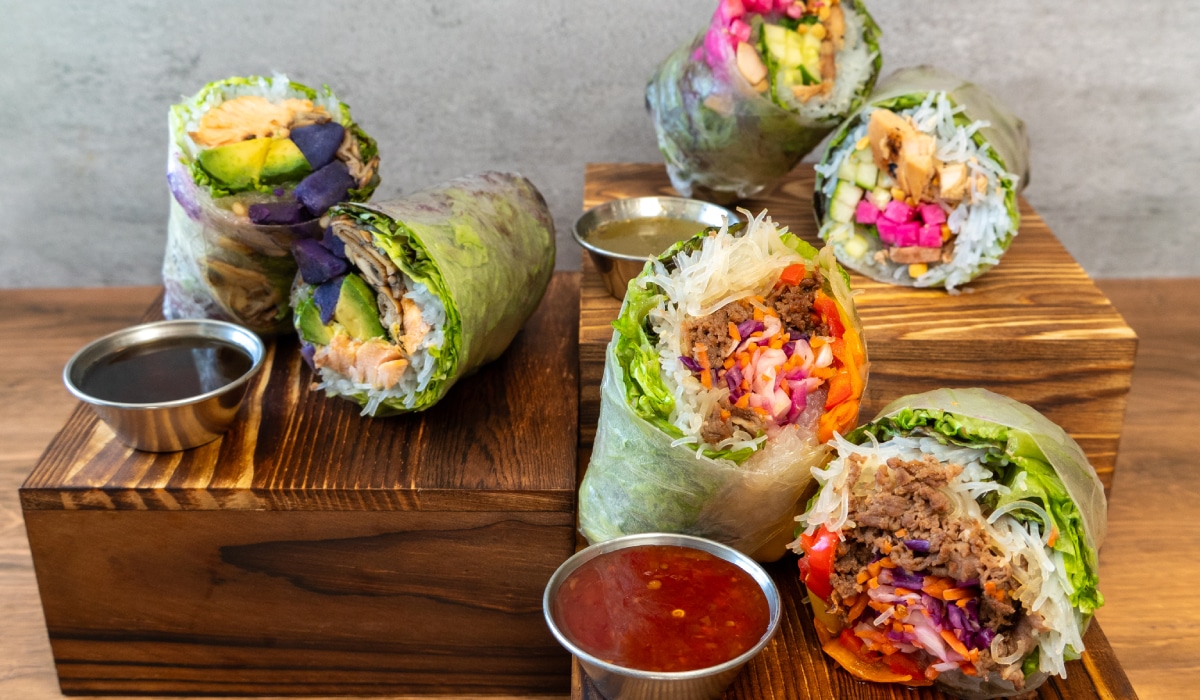
Menu development follows the brand’s name. World Wrapps has introduced items such as tikka masala and bulgogi steak wraps alongside established sellers such as Thai chicken and Caesar salad wraps. Its latest release features burrito-sized rice paper wraps with umami, satay, and Bangkok basil bases. Guests can pair them with numerous proteins, including sustainable tuna, sushi-grade salmon, antibiotic-free Angus beef, and organic GMO-free tofu.
“I feel like as long as I can create a base product, an item that’s really flavorful and delicious, and we give the guests the choice of their favorite protein—whether they’re vegan, vegetarian—we really cater to all guests,” Blair says.
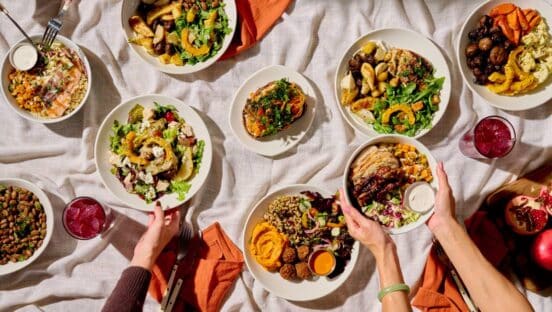
Protein bowls give customers another customizable format. Diners choose a protein and two sides, with couscous brown rice, avocado, and edamame among the options. Choices range from plant-based selections to shrimp sautéed to order instead of held in a steam table.
Fresh production creates an operational test. Pressing dough, preparing sauces, and cooking shrimp to order can slow service unless employees receive sound training and the menu stays disciplined. Blair considers the impact on restaurant teams every time the company tests an item. New products cannot simply accumulate on the menu.
“When I add something to the menu, I have to take something off,” Blair says. “You just can’t keep stacking on.”
World Wrapps removed quesadillas when it introduced the rice paper wraps. Customers could find versions at countless other restaurants. The new wraps presented a more defensible point of difference, one Blair believes can build sales through exclusivity and craveability.
The company’s five restaurants each hold Google and Yelp ratings of at least 4.5, according to Blair. He views those scores as evidence that stores can execute the menu without sacrificing hospitality or speed. Training, testing, and working through early problems support that consistency.
“It’s really important for me when I add something, when I do something maybe a little bit operationally difficult, that I make it somehow in a different way,” Blair says. “I make it easier on my team.”
Customer needs have also changed since 1995. Dietary restrictions now carry far more weight, especially in the Bay Area, where World Wrapps operates two South Bay restaurants and one each in San Francisco, the East Bay, and the North Bay. Guests can request more or less sauce, double protein, and other modifications. The menu offers gluten-free, vegan, and vegetarian possibilities, along with seafood procured from sustainable sources.
Blair says the company can accommodate nearly every common restriction without abandoning the international flavors that distinguish its food.
Technology has become another dividing line between the brand’s original run and its current form. World Wrapps has found success with self-order kiosks, which display photos, reduce mistakes, and prompt customers to consider beverages, desserts, and extra protein. Blair says the technology helps move lines faster, lifts sales, and lowers labor requirements at the register.
Blair connects the kiosks’ economic benefit to World Wrapps’ ability to add restaurants. If better unit economics support expansion, each opening creates jobs throughout the store.
“I believe that our kiosks have been so successful that we are able to actually open up more stores and every single store needs 25-30 employees, team members to work there,” he says. “That’s going to be a net plus employment situation.”
World Wrapps is preparing to test that thesis through expansion. Blair says the company emerged from the pandemic in good financial condition and is scouting opportunities across the Bay Area, including additional sites in the North Bay and East Bay.
Local conditions have helped fuel that confidence. San Francisco offices are filling again, and population demand has pushed rents higher. World Wrapps’ portable menu also suits catering, a growing sales channel for its San Francisco and South Bay locations.
Blair says the chain is recording some of its best months, giving the founders a stronger base for measured expansion. Its growth plan rests on the same proposition they saw three decades ago.
“We’re the creator of the wrap, we innovate, we don’t imitate, and then healthy never tasted so good,” Blair says.