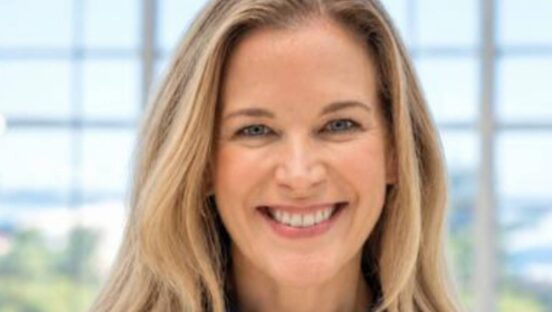

Panera CEO Paul Carbone is nothing if not honest about the state of business.
While the fast casual is still relevant with customers (and the chain has talked to thousands of them), transactions have declined and sales have been flattish. The chain has taken its fair share of price, degraded quality in certain areas, and shrunk some portion sizes.
“So when the guest comes into the cafe to buy an expensive sandwich of lower quality and a smaller size, they’re met with a cafe that we stripped a lot of labor on so there is no one to talk to,” Carbone says. “So now they’re standing there in a cafe to buy an expensive sandwich of lower quality and a smaller size. And then they look around and they go, ‘Wow, these assets haven’t really been remodeled,’ or in a consumer’s word, they would say, ‘Well, these cafes don’t really look very good, and they don’t look like the Raising Cane’s or the Chipotle I went to yesterday.'”
Carbone calls it “death by 1,000 cuts.” For instance, Panera’s salad base was 100 percent romaine lettuce. Then during the summer of 2024—back when the chain released its biggest menu overhaul in company history—the brand switched to 50 percent iceberg and 50 percent romaine for cost-cutting purposes. “No one gets that salad with 50 percent iceberg lettuce and goes, ‘Oh my God,’ look at that white salad, it’s so appetizing,'” the CEO says. Sticking with the salad example, Panera also didn’t cut its cherry tomatoes or slice its avocados.
MORE: Panera Has Been on a Zigzag Journey in Recent Years
The executive admits that much of the brand’s prior decisions were shaped around what’s best for the P&L. His goal as CEO is to switch the priority to what’s best for the customer.
The shifting mindset is represented by “Panera RISE,” a new transformation strategy that will inform all of the chain’s future actions. The framework is divided into four parts: refreshing the menu, igniting value, serving guests with excellence, and expanding the network of stores.
“It’s deliberate that it’s not a project,” Carbone says. “So this isn’t project. This is Panera RISE. This is the way we’re going to run the business for now and into the future.”
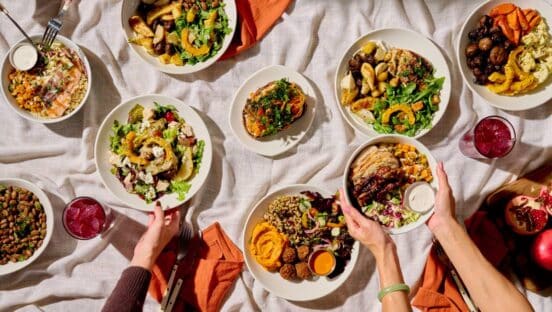
The company will begin by investing in the quality of its food, like moving back to 100 percent romaine lettuce and actually cutting up cherry tomatoes and avocados. But beyond that, Carbone wants consumers to perceive Panera as having “worth it value.” Meaning, he knows most guests can afford a $14 salad, but is it worth it? The chain’s salads have about five ingredients on average. Other competitors have roughly eight or nine. “Put more ingredients in there. Give me more abundance. So make it worth it,” Carbone says.
Additionally, Panera is in the middle of a major overhaul of its bakery options, which involves shutting down its fresh dough facilities and moving to a new system where bread is produced by third-party artisan manufacturers, partially baked, frozen, and then finished in cafes.
Under the previous model, the fast casual delivered fresh, unbaked dough daily from centralized facilities to each store. But the brand says the process created challenges with consistency and product availability as the company scaled. Dough is highly sensitive to temperature, humidity, handling, and transportation, and Carbone argues that this made it increasingly difficult to guarantee quality across markets.
The new approach allows cafés to bake smaller batches throughout the day rather than relying on a single early-morning bake. Carbone says this change improves reliability, reduces the risk of running out of key items such as baguettes during busy periods, and opens the door for a wider range of seasonal or limited-time breads that would have been harder to produce and distribute through the old system.
“The guest loves it. The guest tells us it’s better quality. The guest loves that it’s always available,” Carbone says.
Affordability is the next problem.
In the cases where guests don’t want a $14 salad, Panera also wants to develop a more distinct value platform. Carbone describes it as a “good, better, best barbell strategy,” in which the lower tier could be beans as a protein, while the next is chicken and the top is steak. The brand has performed significant testing on this idea, but the CEO says it hasn’t “cracked the code yet” on what value construct works. Previous pilots didn’t drive transactions up to expectations. But Panera isn’t giving up on it.
Another source of value will be an updated loyalty program. Panera, which uses “surprise and delight,” will test a points-based system in several markets at the beginning of next year.
“That’s the great thing about testing—the ones that work is a great test. The ones that don’t work is a great test. It’s hard to have a bad test because you’re always learning,” Carbone says.
Alongside the menu, Carbone wants hospitality to be a priority. He references years past when Panera’s dining rooms were an “oasis,” but he adds that perception has been eroded by taking staff out of the restaurant. Carbone wants employees working in the front of house so guests have an option of whether they want to use the cash register and talk to someone or use the kiosk—not be forced into the latter because there’s no one to help. Even when consumers do use kiosks, the executive wants warmth there too. Right now, the screens are small; Carbone would much prefer friendlier hardware and a software interface that makes the journey easier.
And if Panera can solve menu, value, and service, unit growth should follow, according to Carbone. As of October 28, Panera had 2,239 company and franchised locations across 48 states, Washington, D.C., and Ontario, Canada. The leadership team is considering what the next-generation restaurant looks like, and Carbone assures whatever that is will be driven by what the consumer desires.
The CEO says unit growth has been flat to 1 percent.
“Four weeks ago, I stood up and my team stood up in front of [franchisees], we rolled out Panera RISE. We told them we’re going to invest back in food. They were going to invest along with us back in labor, and they all said, ‘We’re all in,'” Carbone says. ” … Here’s what I know about franchisees—if you give them great unit economics and a strong brand, they’ll build.”
The turnaround effort is one sign of stability after constant reshuffling. Carbone is Panera’s third CEO in two years. In that same time span, the company has worked with at least four chairmen, including former CEO Niren Chaudhary, former Krispy Kreme CEO Mike Tattersfield, former Starbucks CFO Patrick Grismer, and now former RBI CEO José Cil.
The fast casual is still part of Panera Brands, a platform comprising itself, Caribou Coffee, and Einstein Bros. Bagels. German investment firm JAB Holding purchased Panera for $7.5 billion in 2017 and took it private. Caribou was acquired for $340 million in 2012, and Einstein Noah Restaurant Group was bought for $374 million in 2014.
For years, it was reported that Panera Brands would go public. After a failed merger with Danny Meyer’s special purpose acquisition company, the group confidentially filed for an IPO in 2023, but nothing materialized. Panera Brands also reportedly looked into selling off Caribou Coffee and Einstein Bros., with private equity firms and restaurant operators showing interest.
Carbone confirmed that Panera Brands still exists, but he emphasizes that he’s spending 100 percent of his time on Panera.
“We have the right team to do this, and the guest is there,” Carbone says. “That’s the most important thing. The guest is there, and we just have to deliver on that for the guest.”